
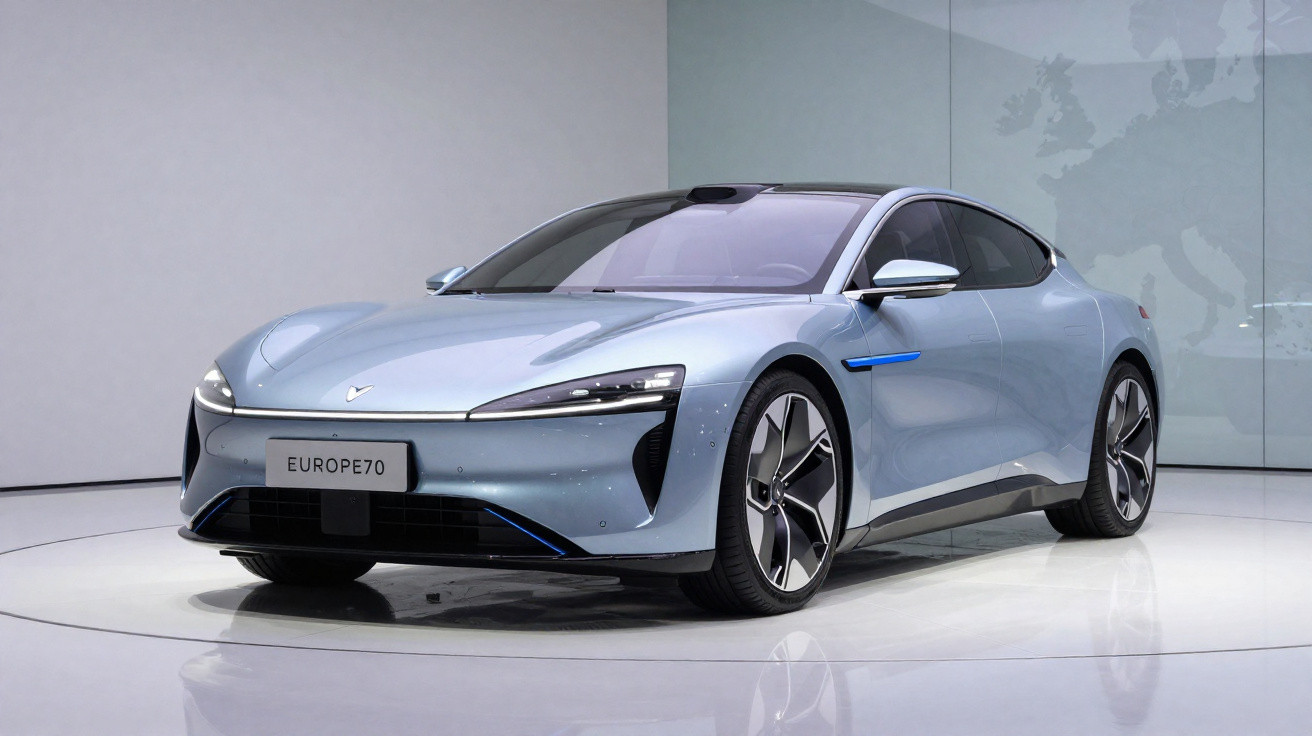
To qualify for European Union (EU) state support, car makers that receive incentives for low-emission vehicles - electric, but also hybrid and fuel-cell models - may soon have to comply with a new set of conditions. One proposal would introduce a minimum quota for European-made parts in these vehicles, although batteries are, for the time being, excluded from this requirement.
According to the Financial Times, the measure is expected to form part of the Industrial Accelerator Act. Its purpose is to shield the sector from fierce competition from China and to safeguard one of the EU’s industrial pillars, valued at €2.6 trillion.
Industrial Accelerator Act: publication date and objectives
The Industrial Accelerator Act - a legislative proposal designed to speed up the decarbonisation of European industries - is due to be formally unveiled by the European Commission on 25 February. It had originally been scheduled for 10 December, but has already been delayed twice.
Vehicles covered and the proposed 70% quota
If adopted, the rule would apply to electric vehicles, hybrids and fuel-cell cars. While a requirement to manufacture batteries within the EU has been left out, other battery-related components would still need to be produced locally. The 70% quota remains provisional and could be revised in the final text. So far, the Commission has not issued an official comment on this possibility.
The position of manufacturers
The draft regulation has sparked debate between suppliers and vehicle manufacturers. On one side, suppliers are pushing for rules that guarantee a high share of European components, arguing that the current model has structural weaknesses.
Among manufacturers, views are split. Volkswagen and Stellantis back a “Made in Europe” scheme that would encourage the purchase of locally sourced parts, whereas BMW has warned about additional costs and extra bureaucracy.
Some car makers also suggest that, for the purposes of meeting the quota, eligible parts could be sourced from markets outside the EU - including countries such as Turkey or the United Kingdom - and even beyond Europe, for instance Japan.
This would be an attempt to broaden the pool of eligible markets, allowing manufacturers to keep as many suppliers as possible available, while limiting the risk of local products becoming inflated in price and, as a result, accelerating the decline in production margins.




Comments
No comments yet. Be the first to comment!
Leave a Comment