

Donostia/San Sebastián is bringing in a new low-emission zone (LEZ) in the city centre. It introduces new access conditions for drivers, rolled out gradually over a number of years, with progressively tougher limits for older engines. The intention is simple: reduce air pollution where traffic has the biggest impact.
What the low-emission zone (LEZ) changes in Donostia/San Sebastián
The LEZ spans 1.2 km² across the central district, covering the city’s busiest streets. The approach is to restrict the highest-emitting vehicles first and then expand the limits later. Vehicles registered in Spain are governed by the national DGT environmental label system, while vehicles on foreign plates are assessed against fixed cut-off dates tied to the first registration.
Two-step rollout
- Phase 1 (2025–2027): entry is refused to vehicles that do not have a DGT environmental label. Foreign plates must meet specific first-registration dates and obtain prior authorisation.
- Phase 2 (from 2028): the rules also apply to vehicles with a DGT B label. Foreign plates are subject to stricter first-registration date thresholds.
"Foreign-registered vehicles must secure prior authorization before driving into San Sebastián’s low-emission zone."
Who can enter: eligibility by vehicle type and date
For vehicles on foreign plates, permission to enter depends on the vehicle’s first registration date. These thresholds are designed to align with the emissions categories applied to Spanish-registered vehicles.
| Vehicle category | Fuel | Phase 1 (2025–2027): earliest registration allowed | Phase 2 (from 2028): earliest registration allowed |
|---|---|---|---|
| Motorcycles and mopeds | All | 01/07/2004 | 01/01/2007 |
| Passenger cars and vans | Petrol | 01/01/2006 | 01/01/2006 |
| Passenger cars and vans | Diesel | 01/01/2006 | 01/01/2014 |
| Trucks, buses, coaches | Petrol | 01/10/2001 | 01/10/2009 |
| Trucks, buses, coaches | Diesel | 01/10/2006 | 01/10/2014 |
Foreign plates: apply before you drive
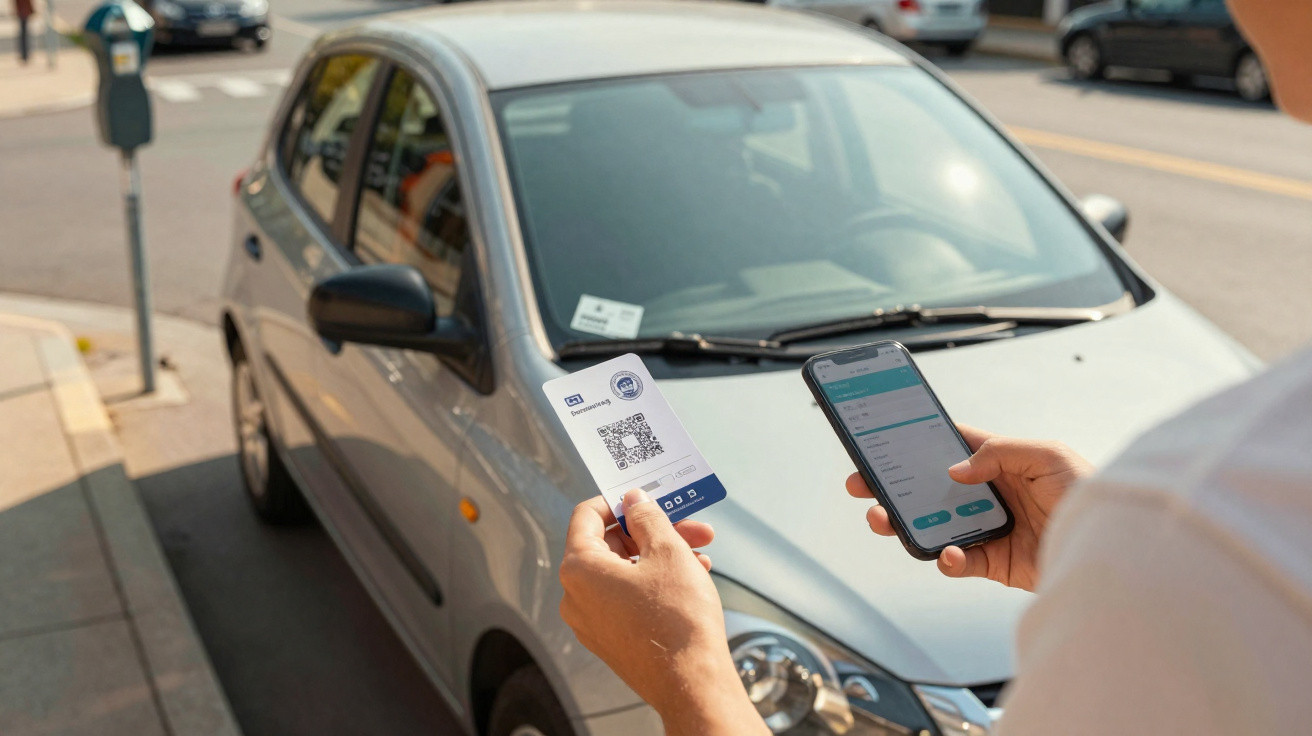
If your vehicle has foreign plates, you must request authorisation before entering the LEZ. The application checks emissions eligibility using the vehicle’s technical information and its first registration date. Submit the request ahead of your journey and keep evidence of approval in the vehicle.
What you need to provide
- The identity of the vehicle holder
- Vehicle type (car, van, motorcycle, truck, bus)
- Number plate
- Date of first registration
- Fuel type
- Full technical specification sheet
Once issued, the authorisation stays valid for the whole phase, provided there are no changes to the vehicle’s status or recorded details.
Exemptions with conditions
- Vehicles used by holders of a European disability parking card (or equivalent), subject to a prior responsible declaration.
- Certified historic vehicles, supported by the relevant documentation.
"Bring documentation. Police checks can request your authorization and supporting papers on the spot."
Penalties and what triggers them
The city is matching enforcement to the new requirements to keep the system consistent for drivers who comply.
"Unregistered entry into the LEZ can lead to a €200 fine, rising by 30% for repeat offenses within the same year."
Common ways drivers get fined
- Entering the zone without prior authorisation for a foreign plate
- Submitting incorrect information or leaving mandatory fields blank during the application
- Not carrying documentation that proves eligibility or authorisation
Why San Sebastián is doing this
The LEZ focuses on the most congested, highest-exposure routes in the centre. By filtering out older engines, the city expects to reduce nitrogen oxides and particulate emissions on streets where people shop, eat out, and use public transport. Measures that improve air quality also help protect those most at risk-particularly children and older residents living and working close to heavy traffic.
At 1.2 km², the zone is deliberately limited in size so it tackles the busiest core without cutting off the rest of the city. When the rules tighten in 2028, fleets that replace vehicles more slowly are given time to adjust.
Practical scenarios for travellers
- A French diesel car first registered on 10/05/2010: permitted in Phase 1 with prior authorisation; not eligible in Phase 2 from 2028.
- A petrol hatchback registered on 02/02/2007: eligible in both phases, with prior authorisation.
- A motorcycle registered on 15/03/2005: eligible in Phase 1 only; from 2028, it no longer meets the threshold.
- A 1999 classic with historic-vehicle certification: can enter if it meets the historic criteria and submits the required declaration.
Key dates and area at a glance
- Start: January 2025
- Area: 1.2 km², central district of Donostia/San Sebastián
- Phases: 2025–2027, then tighter rules from 2028
Tips to avoid fines if you drive in
- Compare your vehicle’s first registration date with the table above.
- Apply for authorisation before entering the zone and carry the approval with you.
- Ensure the technical details you submit match your registration documents.
- If you change vehicle or number plate, apply again-authorisations do not automatically transfer.
How this affects residents, visitors, and businesses
Hotel guests and other short-stay visitors on foreign plates should treat authorisation as a core part of planning-much like parking. Delivery vans and coaches travelling across borders will need clean paperwork and, in some cases, newer engines by 2028. Spanish-registered drivers can rely on DGT labels, but foreign drivers must use the date-based rules and supporting documents. That distinction is important if you hire a car abroad or borrow a vehicle from across the border.
Thinking ahead to 2028
If you drive a diesel first registered between 2006 and 2013, you are on a countdown: it meets Phase 1 but will not qualify from 2028. Petrol vehicles registered from 2006 remain eligible after 2028, which could shape choices for city-centre travel and car hire. Motorcycles registered between mid-2004 and 2006 face the same cut-off when Phase 2 begins.
Extra context that helps
The date thresholds in the table broadly track the Euro emissions standards used across Europe. If your registration certificate states the Euro category, you can use it as a sense-check against the date criteria. If there is any uncertainty, eligibility is determined by the first registration date shown on the official registration document.
Organisations operating mixed fleets can map each vehicle against the phase dates and allocate cleaner vehicles to city-centre routes. That kind of straightforward scheduling can reduce compliance costs while replacements are planned. Visitors can also do a quick check before a weekend trip: confirm the first registration date, gather the paperwork, and apply. A few minutes of preparation can prevent a €200 problem later.



Comments
No comments yet. Be the first to comment!
Leave a Comment