
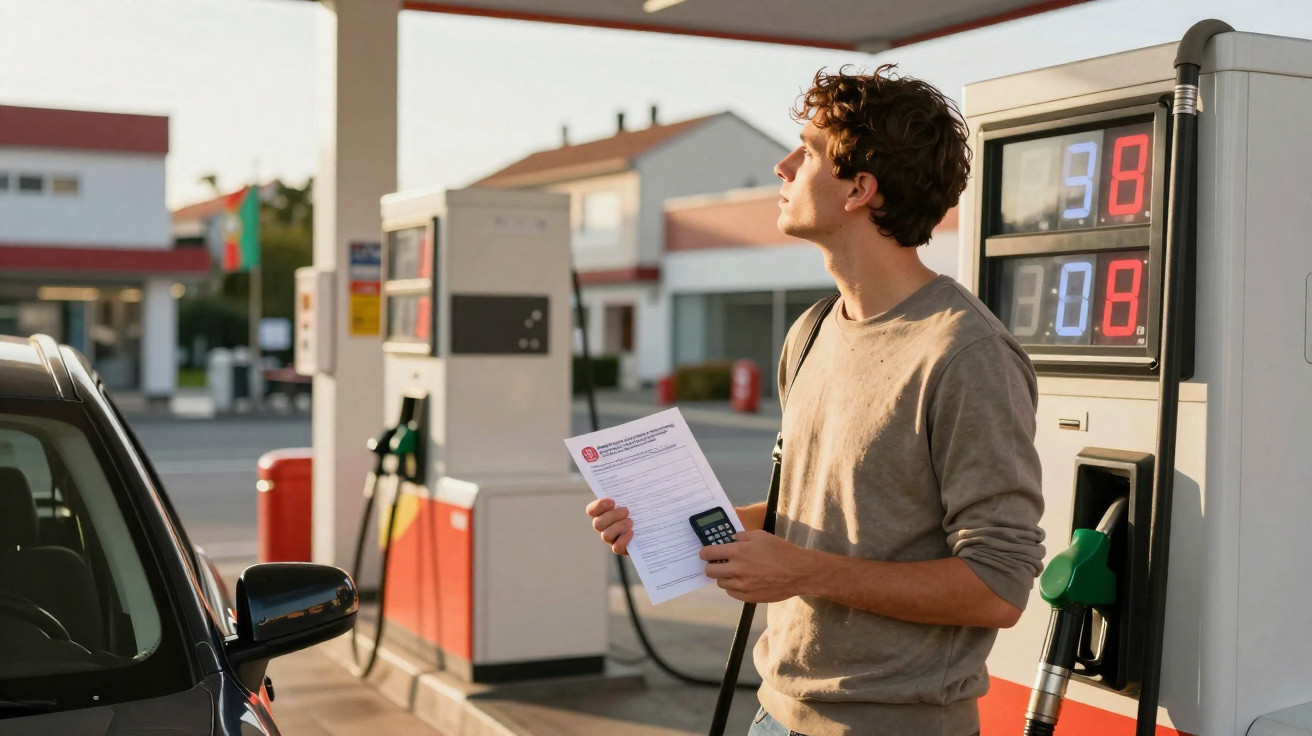
The Government has acknowledged it may introduce an extraordinary discount on ISP (Tax on Petroleum and Energy Products) if fuel prices rise by more than 10 cents per litre compared with current levels.
The option was raised today, 4 March, by the Prime Minister in Parliament during the fortnightly debate, in response to the effect that heightened tension in the Middle East could have on energy prices.
According to the head of government, the aim would be to offset the increase in tax revenue from VAT that automatically accompanies any rise in the price of petrol and diesel. In other words, if the pump price climbs sharply, the State could temporarily cut ISP to help counterbalance that increase.
Measure tied to price movements
The commitment comes at a time when additional pressure on oil prices is expected following an escalation of the conflict in the region.
Last weekend, Israel and the United States carried out military strikes against Iran, presenting the operation as an attempt to eliminate imminent threats. Tehran responded with missile and drone attacks on US bases and Israeli targets in the region.
The rise in prices is directly linked to the escalation of the conflict and the closure of the Strait of Hormuz. Although Washington has played down the impact of the blockade, maritime traffic through one of the world’s main arteries for energy trade is, in practice, constrained.
The Strait of Hormuz is a key route for exporting oil from the Persian Gulf and accounts for around 20% of global crude trade. Brent (the benchmark for Europe) has already moved above US$80 per barrel, whereas before the offensive it was around US$72. Specialists accept that the price could reach US$100.
Against this backdrop, the Prime Minister indicated the Government could proceed with an “extraordinary and temporary discount” on ISP if the increase exceeds the stated threshold of 10 cents per litre.
Tax discount in place since 2022
It is worth noting that Portugal has already had a tax discount on ISP in force since 2022, introduced to soften the impact of higher fuel prices after Russia’s invasion of Ukraine. That mechanism partially reduced the tax applied to petrol and diesel and has been progressively scaled back, in line with how fuel prices have developed.
If it goes ahead, the new discount now contemplated by the Government would be an additional, temporary relief, on top of the scheme currently in place. On the other hand, the European Commission has been putting pressure on Portugal to end these fiscal mitigation measures, arguing for a gradual return to the normal structure of fuel taxes.



Comments
No comments yet. Be the first to comment!
Leave a Comment