
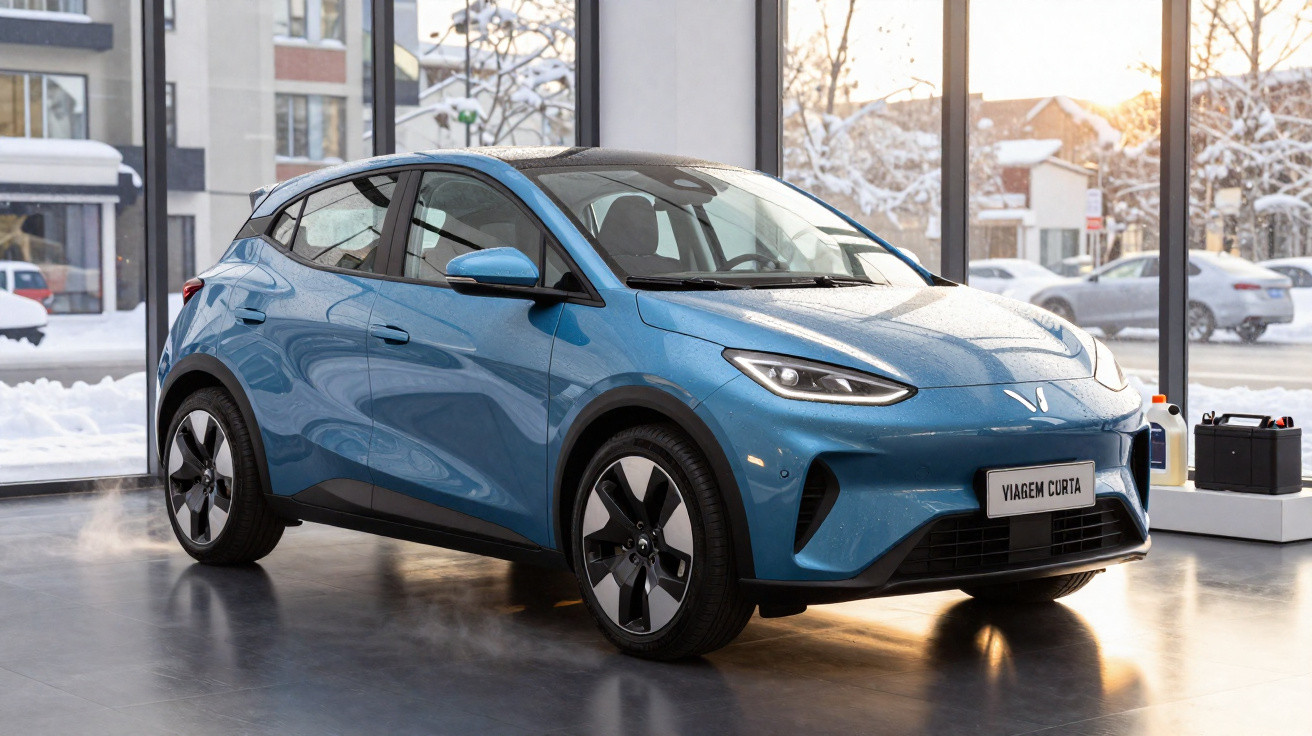
The car park is still pitch-black when the first doors start banging shut.
You tug your coat closer, chip a thin layer of frost off the windscreen with fingers that have already gone numb, and turn the engine over. Your breath shows white in the air; the tailpipe breathes white too. Two streets on, you’re at the bakery with the engine still cold and the radio only just coming to life. After that it’s the school run. Then a quick dash to the supermarket. Five, six, seven tiny hops - each one long enough to feel like proper driving. But the car never truly comes round.
By the time you finally stop for the day, the bonnet is hardly even warm. Underneath, damp lingers like an unwanted visitor. The oil is still viscous, the battery is grumpy, and the exhaust is coated with condensation. Nothing has properly expanded, loosened up, or burned itself clean.
That’s the quiet little drama that wears cars out faster than any motorway run ever will.
Why cold short trips quietly punish your car
On an icy morning, your car is essentially a metal animal hauling itself out of hibernation. The cold has shrunk every component, and every fluid moves more slowly and thickly. If you start the engine and only drive for a few minutes, you’re demanding effort from a machine that’s still half asleep. Oil needs time to heat and circulate freely, and coolant needs time to move through the system as it should.
With very short journeys, that moment never really arrives. The temperature gauge might climb a bar or two, yet the oil remains heavy and the gearbox can still feel reluctant. You switch off right as the moving parts are beginning to settle. It’s like making someone leap out of bed, sprint to the corner, and then forcing them straight back under the duvet.
Picture a typical winter weekday in a crowded suburb. A small SUV does five return trips of under 3 miles each: nursery, coffee, chemist, office, lunch. The owner assumes those miles are “easy city use”. A garage sees the pattern differently. After three winters, unburnt fuel has thinned the oil, the exhaust is corroding from the inside, and the battery has lost half its original punch. No crash, no epic road trip - just a steady diet of cold starts that never let the car complete the job it started.
Mechanics quietly like customers with this routine. They spot spark plugs wearing out early. EGR valves gumming up. Oil turning sludgy even when it’s been changed at respectable intervals. None of it is the stuff of viral videos, but the invoice from the workshop tells you what happened. The driver only notices “a bit more smoke” on chilly mornings and a starter motor that sounds weary far sooner than it should.
The reasoning is harsh but straightforward. Combustion naturally produces water vapour. When everything is properly hot, that vapour passes out through the exhaust as steam. But with repeated short trips in cold weather, the exhaust, silencer and even the crankcase stay cool enough for vapour to turn into liquid water. That water then mixes with fuel residues, soot and acids. It ends up in the oil, clings to the inside of the exhaust, and creeps into corners that are supposed to remain dry.
Engine oil is formulated to suspend contaminants and drive off moisture once it reaches operating temperature. If the engine rarely gets there, the “self-cleaning” stage simply doesn’t happen. So each short journey adds a few millilitres of trouble you can’t see. Across a winter, those droplets become sludge, corrosion and misfires. Longer drives do the opposite: they fully heat the engine, boil away moisture, stabilise clearances and let everything work where it was designed to. The irony is that the car that travels further is often the one that lasts longer.
How to protect your car when life is all short trips
There’s one straightforward tactic many winter drivers overlook: build a single longer drive into your week. It doesn’t need to be a road trip - just 20 to 30 minutes of uninterrupted running at a steady speed, once every seven days, ideally when the engine is already a little warm. That one proper stretch allows the oil to reach full operating temperature and remain there, giving moisture in the crankcase and exhaust time to evaporate as it should.
If your pattern is school–work–home, combine errands rather than splitting them into separate outings. Take the ring road instead of crawling through a corridor of red lights. After a cold start, let it idle for 20–30 seconds, then set off gently, keeping revs low for the first few miles. In practice, you’re letting the car loosen up before you ask it to do heavy lifting. These tiny habits won’t make headlines, but over a winter they can quietly preserve an engine.
Plenty of people still think “warming up” means leaving the car idling on the drive for 10 minutes. In reality, that mostly wastes fuel and fills the street with fumes. Worse still, long idling in bitter weather can leave the engine only partly warm while it continues to run rich, contaminating the oil without the payoff of a proper hot run. A brief idle followed by gentle driving is kinder to both the engine and your bank balance.
Oil changes are another underrated lever. If your winter is made up of brief, cold hops, the interval printed in the handbook is often on the optimistic side. The oil may look fine on the dipstick, but inside it can be carrying fuel, water and microscopic metal particles. Changing it a bit earlier during heavy short-trip seasons is dull, unglamorous upkeep. Let’s be honest: hardly anyone actually does that routinely. But the drivers who do are usually the ones who keep their cars out of the breakers’ yard for longer.
“Engines don’t usually die from one big mistake,” a veteran UK mechanic told me. “They die from a thousand cold starts that never warmed up properly.”
Treat a few simple winter behaviours as a cold-weather survival kit for your car:
- Plan one longer, steady-speed drive per week during the coldest months.
- Drive gently for the first few miles after each cold start; avoid hard acceleration.
- Consider earlier oil changes if most trips are under 10 minutes in winter.
- Check your battery health before each winter, not after it fails on a Monday morning.
- Let the engine reach proper temperature before using heavy electrical loads continuously.
A colder season, a different way of driving
Winter driving isn’t only about winter tyres and braking with care; it’s also about rhythm - the rhythm of how your car starts, works and cools again. Repeated short journeys in cold weather disrupt that rhythm, like making a singer clear their throat over and over without ever letting them actually sing. Once you view everyday errands in those terms, your town’s map starts to look slightly different.
You might link your stops into one longer loop. You might decide that a slightly longer route home at a steady speed is healthier for the machine that quietly carries your life around. That isn’t about whether you’re a “car person”. It’s about recognising the gap between what feels handy today and what keeps your engine, battery and exhaust alive for the next five winters.
On a freezing Tuesday morning, scraping ice in the half-dark, nobody is thinking about combustion by-products or water condensing inside a silencer. You just want the heater to kick in and the kids not to be late. Yet in cold climates, the cars that age well are rarely the ones that are merely sheltered in a garage. They’re the ones whose owners - knowingly or not - let them get properly hot now and then, swap the oil a little earlier, and treat short trips with the quiet suspicion they deserve. It’s a small change in attitude, but it can echo across thousands of miles.
| Key point | Detail | Benefit to the reader |
|---|---|---|
| Cold short trips build moisture | Water vapour condenses in oil and exhaust before the engine is hot | Explains why “easy city miles” can cause hidden damage |
| Oil never reaches full efficiency | Thick, cold oil doesn’t protect or clean as designed on tiny journeys | Shows why earlier oil changes and longer drives matter in winter |
| Weekly longer drive helps | 20–30 minutes at steady speed burns off contaminants | Gives a realistic, simple habit to extend engine and exhaust life |
FAQ:
- Why are short trips worse in winter than in summer? Because low temperatures keep the engine, oil, and exhaust cooler, water vapour condenses more, and the engine runs rich for longer, loading the oil with fuel and moisture.
- How long should a winter drive be to fully warm the engine? Usually 20–30 minutes of continuous driving at moderate speed is enough for most engines to reach and hold proper operating temperature.
- Is idling my car for 10 minutes good for it in the cold? No, long idling wastes fuel and may still leave the engine only partially warm; gentle driving after a short idle is better for both engine health and fuel economy.
- Do hybrid cars suffer the same from short winter trips? They can, especially the combustion engine part, which may run in brief bursts and cool down between them, still allowing condensation and fuel dilution.
- Should I change oil more often if I only do short trips? Yes, many mechanics recommend shorter intervals for cars that mainly make brief, cold journeys, as the oil degrades faster under those conditions.





Comments
No comments yet. Be the first to comment!
Leave a Comment