
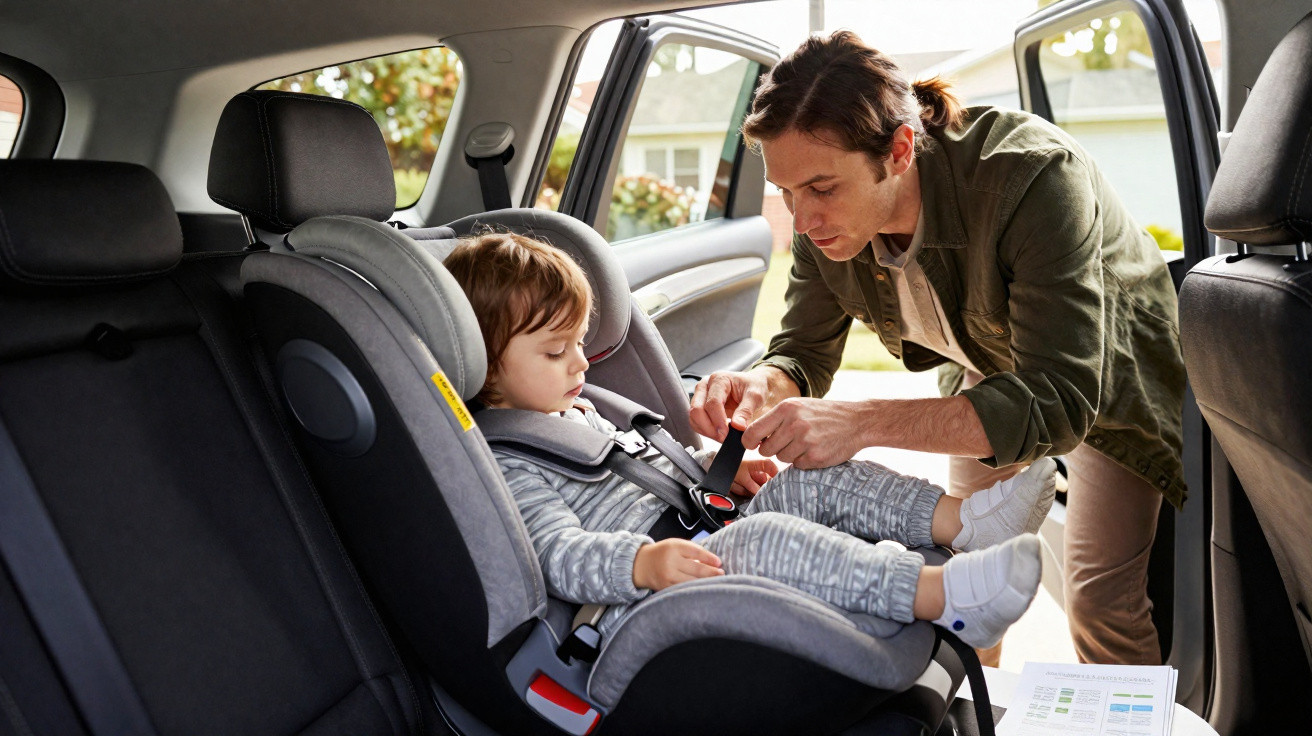
The first time a safety engineer fitted my child’s car seat, I was hit by two feelings at once: huge relief, followed immediately by a cold, creeping dread.
Relief, because the seat suddenly looked immovable. Dread, because it dawned on me that for months I’d been driving with it rattling around like a wonky supermarket trolley wheel. The engineer didn’t scold me. He simply braced one hand on the back of the front passenger seat, gripped the child seat with the other, and shook it properly. It skated several centimetres side to side. He lifted his eyebrows. My stomach seemed to drop through the floor.
Most of us think the big “responsible parent” choice is buying the right seat - ideally an expensive one - and that the rest is just clipping things in and pulling a strap until it looks sort of secure. The packaging does its job: reassuring crash-test images, carefully worded promises, plenty of confidence. Then you meet the numbers: up to 82% of child car seats are fitted incorrectly, and a single, everyday mistake accounts for much of it. That’s when the doubt starts: what if yours is wrong too?
The moment that makes parents go quiet
If you’ve ever wandered into one of those free car seat checks that councils or charities sometimes hold in supermarket car parks, you’ll recognise the mood. Slightly self-conscious parents. Children dangling a crisp in one hand. A folding table with leaflets that look ready to take off in the breeze. Then the same low-key ritual happens again and again: the engineer inspects the seat, glances up, and quietly asks, “Can I show you something?”
We all know that feeling - the one where a calm expert dismantles your certainty without raising their voice. These engineers aren’t there to shame anyone; many are parents too. Even so, it stings when they show that the seat you trusted can wobble like jelly with a gentle tug. They don’t need theatrics. A steady grip, a trained eye, and sometimes one finger slipped under the belt is enough to reveal it isn’t anywhere near tight.
What follows is a very particular silence. It isn’t defensive or angry - it’s the slow blink of understanding: if we’d crashed yesterday, this seat might not have protected my child. And the most brutal part is that you weren’t being reckless. You read the leaflet. You watched the YouTube video. You listened for the “click” and decided it “felt” right. It’s a harsh truth to sit with, but it can be the moment that genuinely improves your child’s safety from then on.
The dangerous error 82% of parents don’t realise they’re making
The headline mistake isn’t rare or complicated. It isn’t a niche legal technicality or some peculiar feature of one brand. In most cases it’s simply this: the seat hasn’t been secured tightly enough to the vehicle seat, and the harness inside is too loose on the child. That’s it - two small gaps, a few extra centimetres of slack, and the whole setup shifts from a protective shell into something closer to a catapult.
Engineers describe the problem in stark terms: “Movement equals injury.” If the car seat can slide or rock more than about an inch, that extra travel becomes distance your child’s body moves during a crash before the restraints finally catch. Their head, neck and internal organs end up absorbing the consequences of that motion. The physics doesn’t negotiate. Any looseness - a strap left a bit forgiving, a winter coat under the harness, a half-hearted pull you assumed wouldn’t matter - is converted into force on a small body.
The most common flavour of this, as one engineer told me, is “the comfort install”. The seat is attached, yes, but it hasn’t been properly driven into the car’s seat. The belt routing looks roughly right. The isofix indicators have flipped from red to green. The parent gives it a friendly wiggle, thinks “that’ll do”, and carries on. From the driveway it seems fine. From the perspective of a crash test lab, it isn’t.
What safety engineers actually do when they install a seat
If you watch a safety engineer fit a seat, one thing stands out straight away: they don’t just use their hands - they use their whole body. A correct installation isn’t a delicate, fingertip job. There’s leaning and bracing, a knee pressed firmly into the base, and a belt hauled as though you’re trying to start a stubborn lawnmower. It can look surprisingly forceful, particularly if you’re used to treating baby equipment as precious. But that firmness is the care: they’re protecting your child by being unapologetically tough on the plastic that protects them.
They begin with the fundamentals: the seat must be suitable for the child’s age, weight and height; rear-facing should be used for as long as realistically possible; straps mustn’t be twisted; nothing should be threaded through the wrong slots. Then comes the key part. The engineer forces the seat hard into the vehicle’s backrest using body weight. Keeping that pressure on, they pull the seat belt tight - or tension the isofix and any support leg - until there’s virtually no slack. Only after that do they release the pressure and re-check movement, focusing specifically on the belt path.
This is the point where parents’ mouths tend to fall open. The same seat model, in the same car, suddenly feels welded in place. There’s no specialist tool and no secret mechanic’s trick. The difference is being willing to pull harder than feels “polite”, and refusing to treat “nearly secure” as secure. The engineer I watched boiled it down with a line I haven’t forgotten: “If you’re not slightly out of breath when you’re done, you probably haven’t tightened it enough.”
The inch test that changes everything
There’s one instruction they repeat relentlessly: there should be no more than one inch of movement at the belt path or the isofix points. Not measured at the top of the headrest or the outer edge of the shell - right where the seat actually attaches to the car. They place their non-dominant hand flat near those connection points and tug firmly side to side and front to back. If it moves beyond that single inch, they tighten again.
Parents often protest, “But I don’t want it to damage the car’s seat,” or “It looked fine before.” The reality is that your car upholstery will recover. Your child’s spine doesn’t get that option. Seeing a correctly installed seat barely shift at all can make your earlier attempt feel almost painful to think about. And an uncomfortable question tends to surface: why wasn’t this demonstrated at the point of purchase?
The harness mistake we all make on busy mornings
A rock-solid fit is only half of the safety picture. The other half is the harness that holds your child inside the seat - and this is the second part of that 82% problem. Many children travel with harnesses that are just a bit too slack. Not wildly loose, simply slightly generous: a small gap here, a touch of extra strap there. Enough for comfort and fewer complaints. Enough to increase risk.
Be honest about the morning routine: almost nobody calibrates harness tension with obsessive precision on the school run. You’re not fully awake, there’s toast involved somewhere it shouldn’t be, and someone is upset because one shoe has vanished. You buckle, you give a quick tug, and you get on with it. That’s everyday life in cars across Britain. Engineers know that, which is why they teach a simple “pinch test” that takes seconds and can make a life-saving difference.
The pinch test is simple and strict. After buckling the child in, you try to pinch the harness vertically at the collarbone. If you can grasp any material between your fingers, the harness is too loose. Tighten until your fingers slide off the strap and you can’t lift a fold. Many parents flinch, worried it must be uncomfortable. Engineers respond with the same calm reminder: the harness should be snug like an adult seatbelt in a crash, not like a cosy blanket for a nap.
The winter coat trap
There’s one mistake that makes safety experts visibly wince: thick coats worn under the harness. On a freezing British morning, fastening a child into a padded jacket feels caring and sensible. Then you sit them in the seat, pull the harness over the bulk, and assume it’s fine. What you don’t see is what happens in a collision: the air in that coat compresses instantly, leaving a large gap between the child and the straps.
Crash footage of this can look like a horrifying magic trick. In slow motion, the dummy’s chest moves forward; the harness appears to “loosen” as the padding collapses; and the restraint no longer controls the body as designed. It’s one of the few scenarios that can make seasoned engineers look genuinely shaken. Their guidance is plain: take bulky coats off in the car, and use blankets over the harness if your child is cold. It may feel like a faff, and children will complain, but once you’ve seen how a padded coat behaves in a frontal impact, a puffy parka stops looking harmless.
Why parents keep getting it wrong – and why it’s not your fault
Watching seat after seat fail basic checks in that car park, I felt a reluctant sense of solidarity with everyone else. Nobody there was stupid. Nobody was indifferent. Many of us had spent longer choosing a car seat than we had choosing our first car. The issue isn’t lack of effort - it’s that parents are somehow expected to learn a piece of safety engineering from a folded leaflet the size of a napkin.
With a few excellent exceptions, retail staff often offer only the essentials: “This one’s very popular,” and “Yes, it’s iso-fix.” Some staff aren’t even permitted to install seats in customers’ vehicles because of liability. So you leave with a £250 product and a box full of anxiety. Then reality arrives. You’re fitting it in the dark, in the rain, with a crying baby and a partner on a late shift. Instructions get skimmed rather than absorbed. You promise yourself you’ll check it “properly” later - and then later never quite comes, until months have passed.
When I asked the engineer who he held responsible for the 82% figure, he didn’t hesitate: “Everyone and no one,” he said. “Manufacturers for making some systems too confusing. Retailers for not insisting on demos. Governments for not funding enough checks. And parents for assuming that ‘click’ means ‘safe’ without ever testing it.” He didn’t sound accusing; he sounded weary. He’d watched the same story unfold thousands of times. He would rather spend his Saturday patiently showing you how to fix it than meet you in a hospital corridor after something went wrong.
The proper method, step by step – the way the engineers do it
Once you ignore the marketing language, the brand names and the glossy brochures, safety engineers follow a straightforward, almost ritual sequence. It begins before the seat is anywhere near the car. They read the label to confirm the group or height range is correct for the child. They check for the approval mark (ECE R44/04 or R129/i-Size). They set the headrest and harness height so that, when rear-facing, the straps sit at or just below the shoulders, and when forward-facing, at or just above.
Next comes the physical fitting. With isofix seats, they pull the arms out fully, find the anchor points by feel, then drive the seat towards the backrest while guiding the connectors in until both indicators show green. And they still don’t stop there. They press down into the base, tension any top tether or support leg, and then - most importantly - they carry out the one-inch movement check at the actual attachment points.
For belted seats, they thread the vehicle belt exactly as the guide indicates, with no twists, no buckle crunch, and no improvised shortcuts. They put a knee into the seat, lean their weight in, and haul the belt as though they’re trying to drag the car down the drive. After locking it, they keep the belt tight while feeding it back into the retractor so tension remains. Then they repeat the same test: hand at the belt path, a firm shake, and a search for any tell-tale play.
Only once the shell is genuinely solid do they seat the child and set the harness. The straps lie flat with no twists; the chest clip (if present) sits at armpit height; and the pinch test is done at the collarbone. They run a hand beneath the harness to ensure there’s no slack hiding. One engineer I watched finished with a small ritual: a final, almost fond pat on top of the shell, as if to say, “Now you’re doing the job you were designed for.”
The quiet relief of getting it right
There’s a distinctive calm that settles over a parent once they feel the difference between their old fit and a correct one. Their shoulders loosen. They grip the seat, test it again themselves, and you can almost hear the mental switch: this is what safe feels like. It isn’t about the brand or the price. It’s about zero movement, a properly snug harness, and the knowledge that the unglamorous work has been done.
Driving home after that session, I noticed myself checking the rear-view mirror again and again - not so much for my son’s expression, but for the seat. It felt heavier, even though its weight was unchanged. What had changed was the story I’d been telling myself. Before, I’d been vaguely trusting the plastic to “do its job”. Afterwards, I understood that I was part of that job. My effort, my awkward knee-in-the-seat contortions, my refusal to accept “good enough” tension - those were now part of his protection.
That’s the uncomfortable, oddly empowering truth behind that 82% statistic: most parents are only a few hard tugs and a couple of small habits away from doing it correctly. No special gadgets, no engineering qualification - just proper tension and a bit of stubborn follow-through. The next time you buckle your child in, do the inch test on the seat and the pinch test on the harness. You may feel that same knot of fear when you realise how loose it was. Then something better follows: the steady, quiet relief of knowing you’ve just shifted the odds in their favour.



Comments
No comments yet. Be the first to comment!
Leave a Comment