
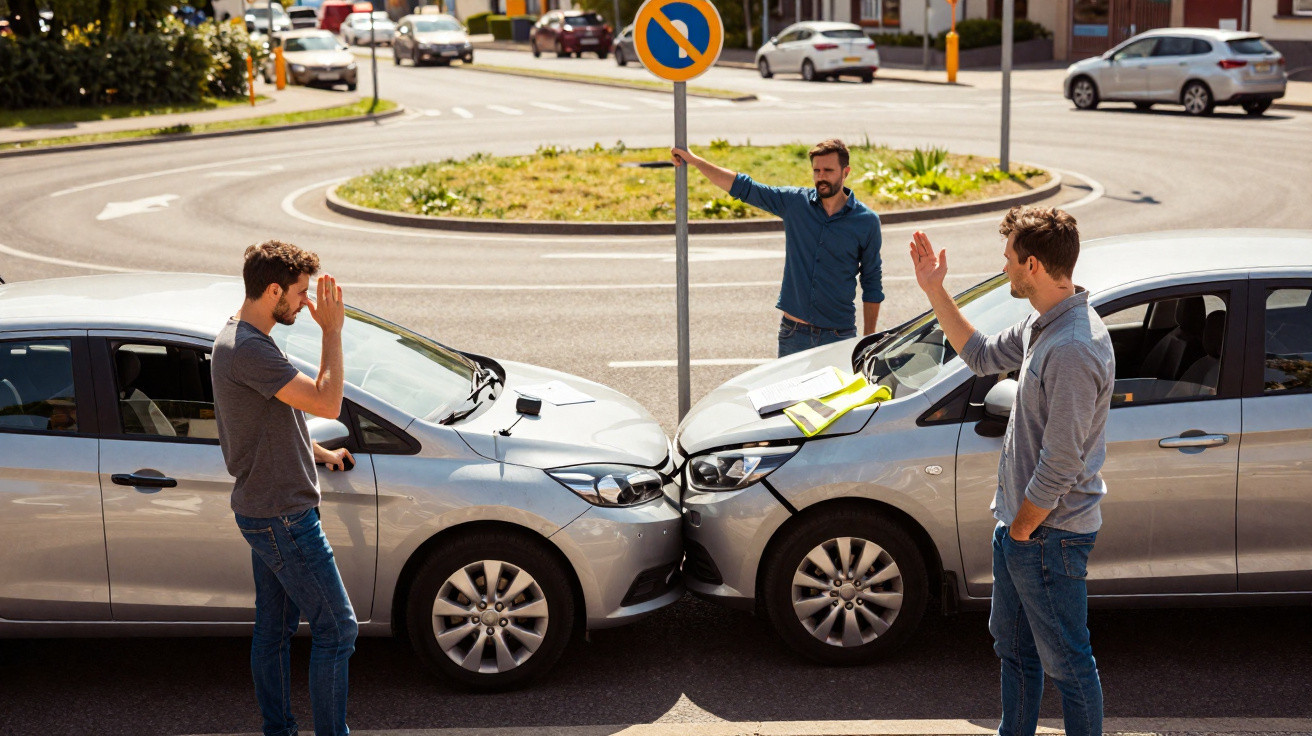
Windscreen wipers squealed, radios hummed, and everything felt a touch slower than normal. At the small suburban roundabout on the edge of town, Mark rolled up to the give-way line and noticed an elderly driver trying to join. Her indicator blinked; the car edged forward, then paused.
Without thinking-part habit, part kindness-Mark braked firmly and waved her through.
She hesitated once more. The vehicle behind Mark didn’t.
The jolt threw him forwards. The air freshener swung; coffee sloshed over the gearstick. Horns blared. Someone yelled. Within moments, traffic backed up around the roundabout, tightening into a knot. Mark climbed out, chest tight, automatically ready to say sorry.
A few weeks later, a curt email from his insurer dropped into his inbox.
They said the collision was his fault.
When politeness on the road backfires
On the face of it, Mark did what many of us would call “good driving”. He noticed another driver struggling and tried to be generous. He left a gap, caught her eye, and gave a clear hand signal. It felt decent-human. Exactly the sort of everyday courtesy people insist we need more of behind the wheel.
But in the world of insurers and the Highway Code, that single well-meant gesture placed him at the centre of a rear-end crash. He had stopped sharply where other drivers expected steady, predictable movement. The driver behind reacted too late, brakes biting on a wet surface, until metal met metal.
Mark kept running the moment back in his mind, arriving at the same question every time.
How can the “nice” choice still be the wrong one?
His experience isn’t rare. Across the UK and much of Europe, roundabouts rely on a straightforward idea: priority and predictability. You give way to the right (or to circulating traffic), then you commit and keep moving. The system starts to unravel as soon as someone decides to override those rules purely out of kindness.
That same logic shapes how insurers assess incidents. When the dashcam footage was reviewed, assessors didn’t see a considerate driver. They saw a car braking sharply without a clear hazard. They saw brake lights flare unexpectedly-on a wet day, with close-following traffic, in a space built for continuous flow.
Responsibility therefore shifted along the chain. The rear driver could still carry some blame for not leaving enough distance. Yet Mark’s sudden, unnecessary stop became the trigger that set everything in motion. In legal terms, he had created an avoidable risk. In everyday terms, his kindness turned into confusion.
Road safety analysts have a plain label for this kind of scenario: “courtesy collisions”. These are the crashes that happen when someone tries to be more accommodating than the rules anticipate-letting a driver in when they don’t have priority, waving a pedestrian across a busy dual carriageway, or beckoning a car out of a side road while traffic continues to stream through the next lane.
At a roundabout, the confusion escalates quickly. The drivers behind you cannot see what you see. They often have no idea who you are trying to “help”. All they register are brake lights where they expected movement. That fraction of a second of surprise can be the difference between a controlled slowdown and the crunch of plastic and glass.
How insurers really see a roundabout crash
In the days and weeks after the accident, Mark did what plenty of drivers quietly do: he fell down a rabbit hole of forums, legal sites, and insurance FAQs. He found dozens of accounts that mirrored his-an unnecessary “polite” stop, a puzzled driver behind, a near-inevitable rear-end shunt, and blame landing heavily on the person who tried to be kind.
In these cases, insurers aren’t scoring drivers on “kindness”; they are measuring predictability. Their opening question is stark: did the driver behave in a way another reasonable road user could foresee? Braking suddenly on or at a live roundabout lane to wave someone in rarely meets that standard.
One claims handler said it plainly on the phone, polite but unwavering: “Our position is that you introduced an unnecessary hazard.” Mark had never considered a gentle courtesy to be a hazard. That single word reshaped how he remembered the entire event.
On one UK claims database, rear-end shunts at or near roundabouts show a stubborn trend. They are often short, low-speed impacts, yet they can have outsized consequences for premiums. Even when liability is officially “split”, the person doing the unexpected thing frequently ends up carrying more of the fault.
Insurers also place heavy weight on clear responsibility. Roundabouts come with a built-in rulebook: right of way, lane discipline, signalling. When drivers follow it, collisions are easier to unpick. When someone improvises-however kindly-the edges blur. That’s when adjusters fall back on what the Highway Code says you should have done, rather than what your conscience urged in the moment.
This is the gap between how driving feels and how it gets judged. On the road, a split-second act of empathy can seem obviously right. On a claim, it looks like a departure from an established duty of care. And to an insurer’s algorithm, departures are expensive.
Driving “kind” without becoming the one at fault
There is a way to stay generous without turning yourself into the legal scapegoat. It begins with a simple change in mindset: on a roundabout, your job is not to “help” individual drivers. Your job is to keep the whole system safe, steady, and predictable.
In practice, that means letting the road markings, signs, and priority rules do the work. Manage your speed early on approach. Watch the whole circle, not only the hesitant driver in front of you. When it’s your turn, move smoothly rather than second-guessing yourself at the last second because someone appears uncertain.
If you do want to give someone a break, do it where a stop is expected-on the approach, not once you are already entering or circulating. On a roundabout, the kindest thing you can offer is consistency.
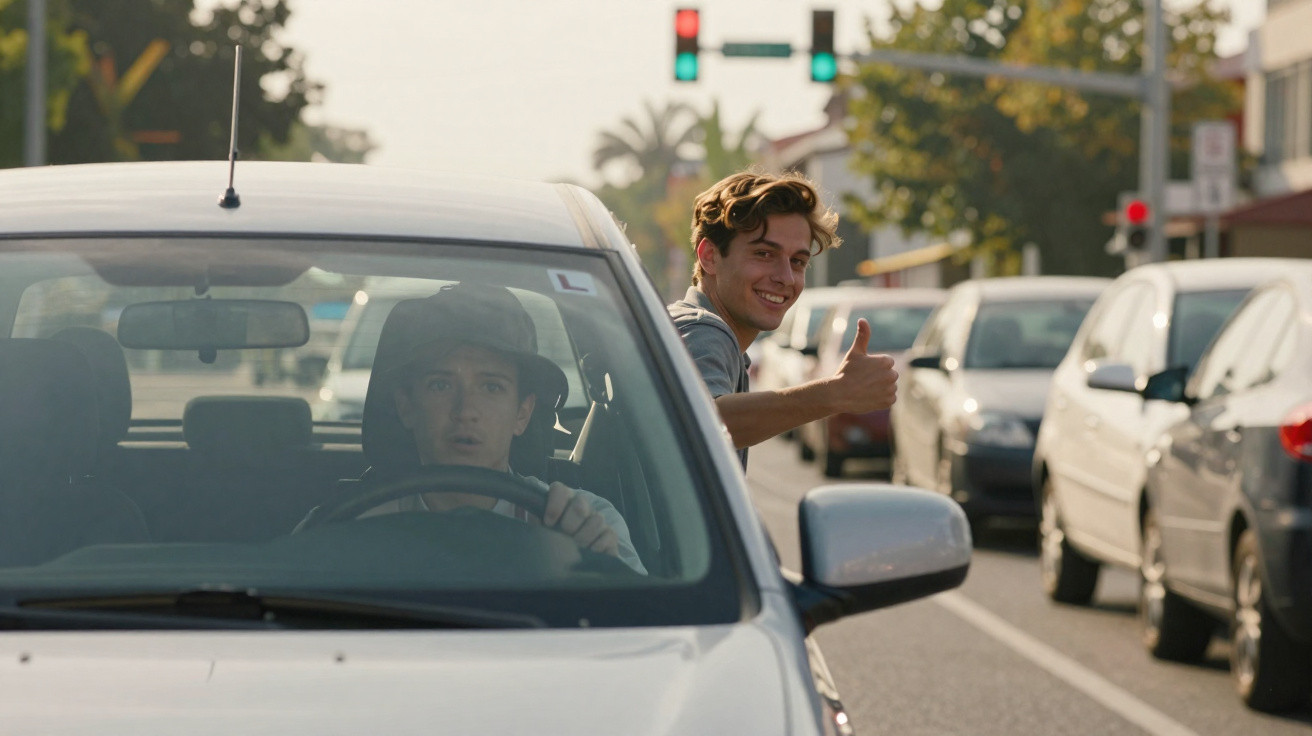
There is also a quieter emotional element at play. Many of us learned to be “nice” drivers from parents who blended folk wisdom with half-remembered rules: let others go, be generous, don’t be the aggressive one. That voice can be especially loud when the person waiting is older, a learner, or visibly nervous at the junction.
On a bad day, that instinct becomes guilt: “If I don’t let them in, I’m being selfish.” On a worse day, it turns into panic braking in the wrong place. Let’s be honest: nobody really sets off every morning by calmly re-reading the Highway Code before leaving the house.
Most of us have had that moment when we brake just a little too hard because we want to “do the right thing”. The key is to separate warmth from impulsiveness. You can still nod, still make eye contact, still leave space-so long as you do it from a predictable position, at a sensible speed, and without springing a surprise on the drivers behind.
“Courtesy is great between people,” a road policing officer once told me. “On a roundabout, the best courtesy you can offer is to be exactly where the other driver expects you to be, moving at roughly the speed they expect you to move.”
To stop courtesy turning into a claim form, it helps to run a few practical checks before you brake or flash your headlights:
- Ask yourself: “Would a driver behind me expect me to slow here?”
- Check your mirror first, then decide whether any gesture still makes sense.
- Use indicators clearly, rather than vague hand waves that confuse everyone else.
- Offer courtesy where slowing or stopping is normal: approaches, queues, clear give-way lines.
- If it feels rushed or forced, let the rules handle it instead of your conscience.
A crash, a lesson, and the quiet rules we drive by
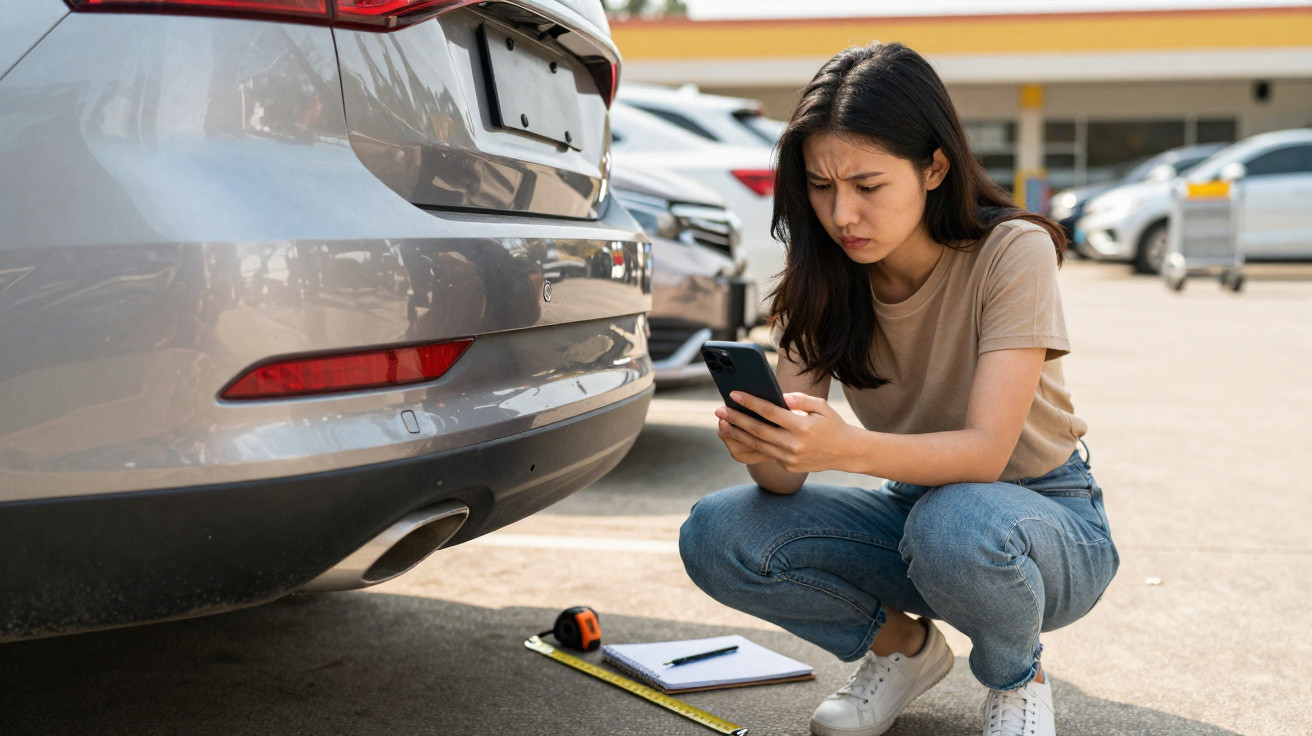
Months on, Mark still passes the same roundabout. The dent in his rear bumper has long since disappeared; his insurance premium hasn’t. These days he eases off earlier-not to wave anyone through, but to give himself room. He monitors the whole circle, not just the driver who looks anxious.
He remains a polite driver. He still lets people out at junctions and lifts a hand in thanks when someone leaves a gap. What changed is the place and the method. His “kindness” now shows up at the approach lines, at zebra crossings, and in slow-moving city traffic-settings where predictability and courtesy can genuinely sit side by side.
Crashes like his sit in an uncomfortable space between instinct and law. On one side are written priorities, clear rules, and diagrams in driving manuals. On the other is the messy human urge to help the person right in front of you, even if it nudges the rules. You don’t see that friction on the windscreen; you see it months later, quietly, in your renewal quote.
Perhaps that is the real question these collisions leave behind. Not “Who was right?” or “Who was nice?”, but “What sort of driver do we want to be when our reflex to help clashes with the quiet logic of the road?” It’s a question that doesn’t end with one insurer’s decision. It returns every time we roll up to that white line, glance right, and feel our foot hover between brake and accelerator.
| Key point | Detail | Why it matters to you |
|---|---|---|
| Politeness vs predictability | Roundabouts rely on clear priority rules that insurers use when assessing a crash. | Helps explain why “being nice” can still leave you at fault. |
| Courtesy collisions | Sudden, unnecessary stops to “help” others often trigger rear-end shunts. | Gives you a clear warning sign for risky polite gestures. |
| Safe ways to be kind | Offer courtesy where slowing or stopping is already expected. | Lets you stay generous on the road without paying for it later. |
FAQ:
- Why did the insurer blame the polite driver in a rear-end crash? Because he braked sharply in a place where traffic is expected to flow, his action was seen as introducing an avoidable hazard, making him a key cause of the collision.
- Is the rear driver always at fault if they hit the car in front? Not always. If the front driver brakes suddenly without a clear reason, insurers can split or shift liability toward the front driver.
- Can I be penalised for letting someone out at a roundabout? Yes, if your gesture involves unexpected braking or confusing signals that lead directly to a collision, your insurer may treat you as partly or mostly responsible.
- What’s the safest way to be courteous on a roundabout? Adjust your speed early on approach, respect right-of-way rules, and only offer space where slowing is natural and visible to drivers behind you.
- Will a small roundabout crash really affect my premium? Even low-speed shunts usually trigger a claim record, which can raise your premium for several years, especially if you’re held at fault.

Comments
No comments yet. Be the first to comment!
Leave a Comment