
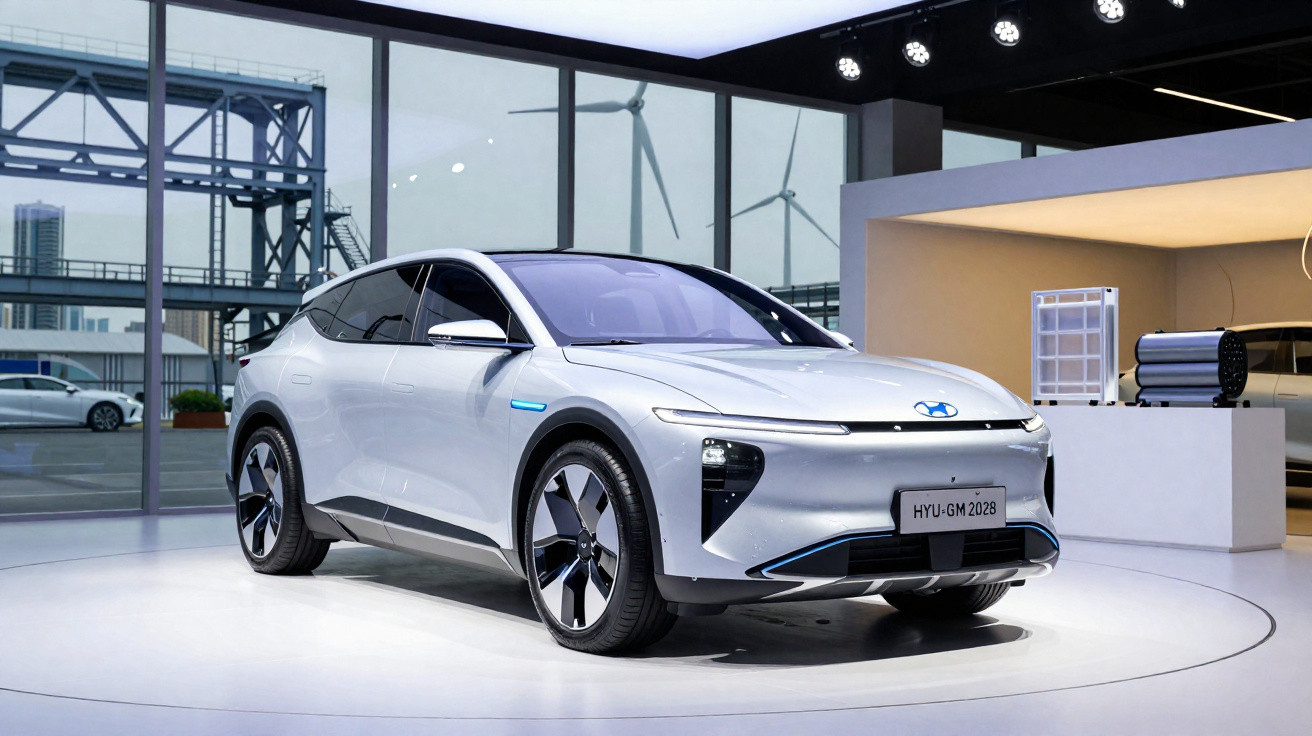
Hyundai and General Motors are set to work together on a significant scale. The two manufacturers have just formalised an alliance that covers the joint development of five new models and, once the partnership reaches “cruising speed”, annual production of more than 800,000 vehicles. As will become clear below, the scope goes beyond passenger cars.
Markets and model line-up for Central and South America
This memorandum of understanding is aimed primarily at Central America and South America, where electrification requirements are less stringent than in other regions - Europe in particular - and where growth potential remains high.
So far, two light passenger vehicles have been confirmed: an SUV and a saloon. Alongside these, there will be two pick-ups, one compact and one mid-size. Every model will be offered both with internal combustion engines and in hybrid versions. In addition, a 100% electric commercial van is also being developed for the United States.
A clearly defined Hyundai–General Motors strategy
The way responsibilities are split between the two groups reflects what each is strongest at in these markets. In practice, Hyundai will take charge of the compact models, while General Motors will lead development of the larger pick-up. Sales of the full range are expected to begin in 2028.
Although the deal has only just been signed, both companies have already spent months working on early-stage engineering and design. The vehicles will share platforms and structural components, while each brand will retain the freedom to shape its own exterior and interior styling. That approach delivers industrial efficiencies without blurring the identity of either manufacturer.
An alliance forged in steel
Away from the production line, cooperation also covers the sourcing of raw materials and components, including shared access to suppliers of low-carbon steel. It is worth noting that Hyundai is one of the few brands worldwide with the capability to produce its own steel - and is, in fact, one of the global leaders in industrial steel production.
Hydrogen fuel cells and the longer-term technology play
There is also a less obvious technological strand with medium-term implications: the two companies are exploring ways to collaborate on hydrogen fuel-cell development. This direction runs counter to Stellantis’ recent decision to cancel its projects in this field, and it underlines GM’s and Hyundai’s belief in hydrogen’s potential - particularly for commercial applications.
At a time when development costs are rising and speed to market is increasingly critical, the rationale for this partnership is straightforward: reduce expenditure, gain scale and accelerate processes. Hyundai strengthens its footprint across the Americas, while GM lowers the risk tied to new products. And as both brands have already hinted, these are likely only the first of several models that could emerge from this new alliance between two automotive giants.
Comments
No comments yet. Be the first to comment!
Leave a Comment