
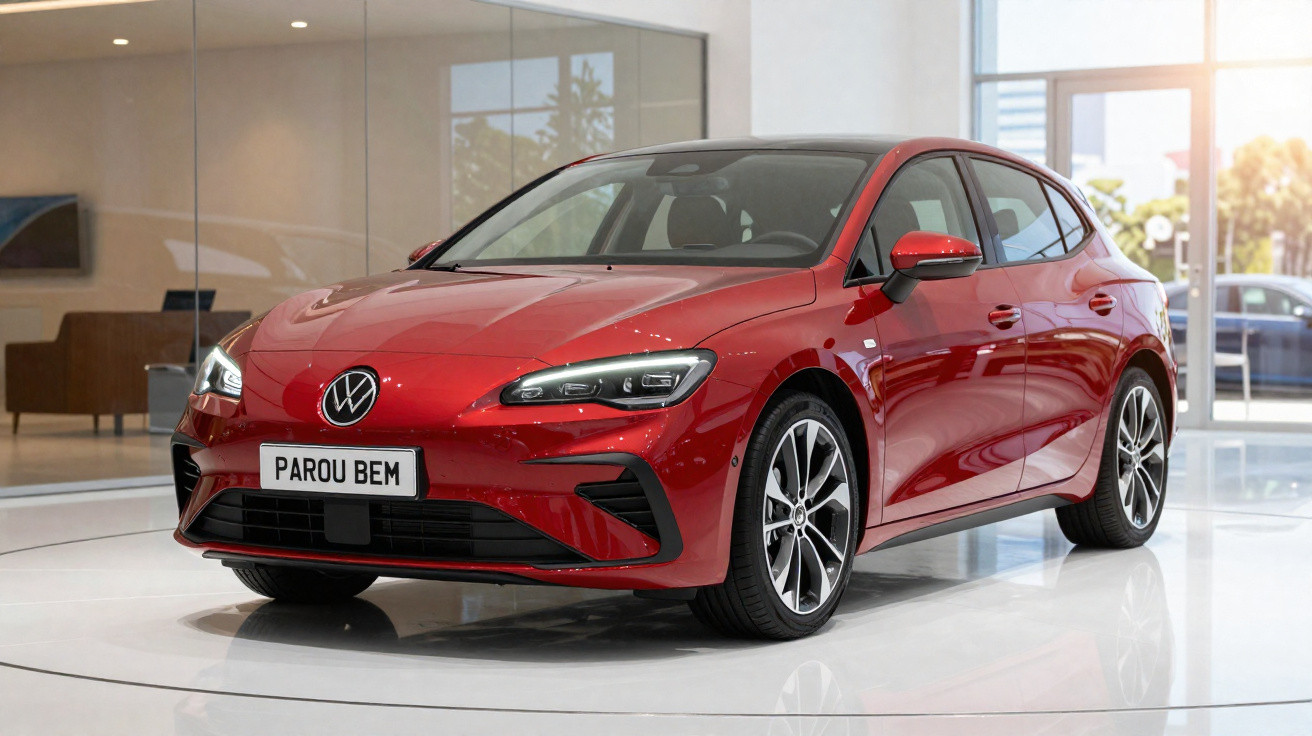
He lifted off the accelerator as the white stripes of the zebra crossing came into view. At the kerb, a woman pushing a pram slowed down, paused, then edged out-half a shoe into the road.
He did what we’re taught from the first time we take the wheel: he stopped.
The car behind him didn’t.
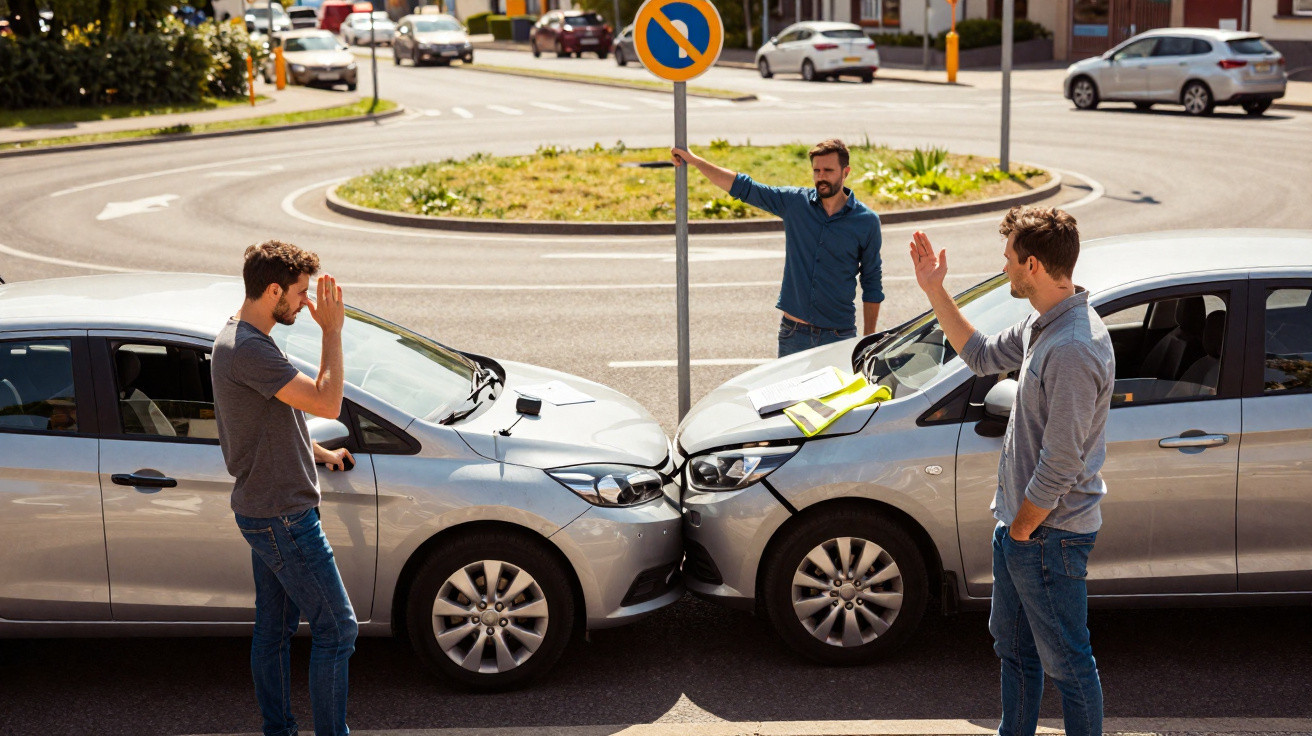
The hit landed with a flat, nauseating crunch-the sort that snaps your head forward and leaves your brain a beat behind your body. Horns went off. Someone yelled. The woman with the pram locked up in the middle of the crossing, one hand clamped over her mouth.
Afterwards, as they exchanged details and rang their insurers, the driver who’d struck from behind shrugged and said: “He stopped for no reason.”
That single line changed the whole tone of what came next.
“Why did you stop?” – when doing the right thing gets twisted
In theory, a zebra crossing is as straightforward as road rules get: painted stripes, a black-and-white beacon, flashing lights. You ease off, and if someone is waiting or stepping out, you stop. On the street, it’s rarely that tidy.
In the run-up, drivers are processing a dozen cues at once. Is that person genuinely about to cross, or are they just standing near the edge scrolling on their phone? Is a cyclist going to cut across? Is the car behind sitting too close? In that half-second, you’re not conducting a legal seminar-you’re reacting like a person.
That’s exactly what happened here. The driver in front saw movement at the kerb, read it as an imminent crossing, and braked. For him, it wasn’t an ethical debate; it was instinct-years of “better safe than sorry” turned into muscle memory. The driver behind, meanwhile, registered only a vehicle ahead “suddenly” stopping on a green light. Two interpretations, one impact.
A near-identical account on a UK motoring forum recently drew thousands of comments. A driver stopped at a zebra as a pedestrian approached the edge, then got rear-ended. The other motorist told the insurer he had “stopped for no reason”. Within hours, people were fighting over who was to blame, what the Highway Code actually requires, and whether today’s traffic has become too impatient for what used to be ordinary courtesy.
Under the jokes and rolling-eyes sits a recurring, serious issue. Rear-end bumps at crossings and junctions are anything but unusual. Insurers routinely place them among the most common collisions in towns and cities. The explanation is blunt: many drivers follow too closely and assume the car in front will behave like a machine, not a human responding to something they may not have noticed.
What makes it murkier is what gets said afterwards. That phrase-“no reason”-turns into a tool. It recasts a cautious stop as unpredictable, even reckless. It implies that slowing for a pedestrian who might be crossing is more questionable than tailgating along a busy high street. Language can reframe events, sometimes more forcefully than tyre marks ever could.
How to protect yourself when you stop – and the car behind doesn’t
Stopping safely at a zebra crossing now involves a quiet mix of law, judgement, and self-preservation. The legal bit is broadly consistent: if a pedestrian is on the crossing, or clearly about to use it, you give way. The human bit is where it gets complicated.
A useful mindset is to treat every zebra like an amber light you may need to stop for. Come off the accelerator early so any braking starts sooner and feels less abrupt. Check your mirror before you fully commit. If someone is glued to your rear bumper, begin with a light, earlier brush of the brake so your brake lights flicker and give them a warning.
It isn’t your legal responsibility to manage the driver behind you. Still, that small dose of anticipation can save you weeks of hassle, phone calls, and a sore neck. And yes, in practice it can mean rolling for a fraction longer before you stop completely, simply to give everyone an extra heartbeat to respond. That isn’t timidity-it’s realism.
One rainy Tuesday, a London commuter did exactly what the textbook says. As she approached a zebra, she slowed because a teenager lingered near the kerb with headphones on. She then braked firmly to make it clear he could cross. The SUV behind ran into her at low speed; the driver had been distracted by his sat nav.
He told her, and later his insurer, “You slammed on for no reason.” She had dashcam footage that clearly showed the boy stepping towards the crossing. That 120‑quid camera turned what could have become a drawn-out dispute into a short call: her insurer sent the clip, liability was accepted, and that was that.
Without video, it would have been her account versus his. This is where it often feels upside down: the driver who behaved more safely can end up with the heavier burden of proving they weren’t acting “randomly”. In claim notes and court paperwork, wording can carry real weight. “No reason” versus “pedestrian about to cross” can decide thousands of pounds-and who takes the blame and the higher premiums.
A traffic lawyer we spoke to put it bluntly:
“Rear‑end collisions are almost always the fault of the driver behind. The only way they wriggle out is by convincing people the car in front did something bizarre. The more clearly you can show a good reason to brake - pedestrian, hazard, road markings - the safer you are legally.”
So, beyond driving like an unpaid instructor, what actually helps? A handful of practical steps can tilt the odds your way-both in the moment and if insurers get involved later.
- Leave yourself a small buffer as you approach each zebra so you can slow progressively rather than slam on.
- Use early, gentle brake taps to illuminate your brake lights sooner.
- Think about fitting a straightforward forward-facing dashcam, not only an interior one.
Emotion, blame and that awkward feeling after the crash
After any shunt there’s a strange pause where time thickens. You sit with your pulse climbing, trying to work out whether you’re injured or simply shaken. Then the routine kicks in: hazards on, photos taken, details exchanged, voices kept level. That’s often when lines like “you stopped for no reason” appear.
The uncomfortable reality is that it’s seldom about logic. It’s usually about embarrassment, fear of the financial hit, and the urge to rewrite the narrative so the blame doesn’t land squarely where it should. On a bad day, most of us can reach for an excuse faster than for the plain truth. Let’s be honest: nobody manages perfect accountability every day.
In a busy town street, stopping for a pedestrian can feel oddly exposing. You press the brake because you’re trying to protect someone you’ll never meet, while knowing the person behind you may be inches off your bumper-late, stressed, and half-looking at a phone. A small act of courtesy ends up carrying real tension.
“I did exactly what the highway code says,” one driver wrote online after being rear‑ended at a zebra. “And I still spent six months fighting letters that implied it was my fault for not predicting the car behind me wouldn’t stop.”
The emotional after-effects of this kind of collision are rarely discussed. The neck ache may ease; the second-guessing can last longer. You start hesitating at every crossing. You replay the moment over and over: the pedestrian’s foot movement, the twitch of an umbrella, the step towards the stripes. Was that really enough to justify stopping? Am I the careful one-or am I the problem?
But that question smuggles in a bigger one: what sort of roads do we want to share? Roads where drivers only brake for officially recognised emergencies, or roads where there’s still space for human caution and kindness?
Most of us know that silent negotiation at a zebra: you inch in, make eye contact with someone waiting, and wordlessly decide who goes first. That fragile glance is the opposite of “no reason”. It’s one of the most human reasons there is.
The question that stays after the impact
The account of someone stopping at a zebra, being hit, and then being accused of “stopping for no reason” goes beyond a technical reading of the rules. It exposes a fracture in trust between people using the same strip of tarmac while living in different bubbles of stress, urgency, and fear of consequences.
On one side, the law is geared towards protecting pedestrians and expects the driver behind to keep sufficient distance. On the other, everyday driving is untidy: people step out late, body language is misread, and rush-hour impatience hangs in the air. Between those two worlds, pressing the brake can feel like a moral choice as much as a mechanical one.
In that tiny moment when you spot someone near a zebra crossing, you end up weighing two risks: the comfort of the car close behind, and the vulnerability of the person on the kerb. Most of the time you’ll brake. Some of the time, you’ll still be blamed.
Perhaps that is the real fault line here-not the technical cause of one specific crash, but how readily we decide another person had “no reason” to act with caution. The next time you approach those white stripes, you may find yourself checking not only the pavement, but your mirror too. And you may decide that letting someone cross safely is reason enough.
| Key point | Detail | Why it matters to you |
|---|---|---|
| Liability in a rear-end collision | The following driver is almost always held responsible, unless there’s evidence the braking was completely unforeseeable. | Understand how insurers and the law typically view this type of crash. |
| Pedestrians at the crossing | A pedestrian stepping forward or clearly showing an intention to cross is a valid reason to stop decisively. | Know when to stop without second-guessing yourself. |
| Evidence and a dashcam | A simple in-car camera can demonstrate there was a genuine reason to brake. | Reduce disputes and protect your no-claims bonus after a collision. |
FAQ:
- Who is usually at fault if a car is hit from behind at a zebra crossing?
In most situations, the driver who runs into the back of another vehicle is deemed at fault because they should have left enough room to respond to any lawful stop, including stopping for a pedestrian.- Can a driver be blamed for stopping “too suddenly” at a crossing?
It can be alleged, but where the braking relates to a plausible hazard-such as a pedestrian near the crossing, reduced visibility, or wet conditions-the front driver is normally considered to have acted reasonably.- Does a pedestrian have to be on the crossing, or just near it?
In many places, someone clearly waiting or moving to step onto the crossing should be treated as having priority. The exact wording differs by country, but hesitation at the kerb is often enough to justify slowing or stopping.- Will a dashcam really help in a dispute like this?
Yes. Footage showing the pedestrian, the road markings, and the timing of your braking can turn a word-against-word argument into a straightforward insurance decision.- What should I do right after a rear-end collision at a zebra crossing?
Keep calm, check for injuries, photograph the scene and the crossing, take details of any witnesses, and note what each driver says. Those immediate, unguarded words can matter later.
Comments
No comments yet. Be the first to comment!
Leave a Comment