
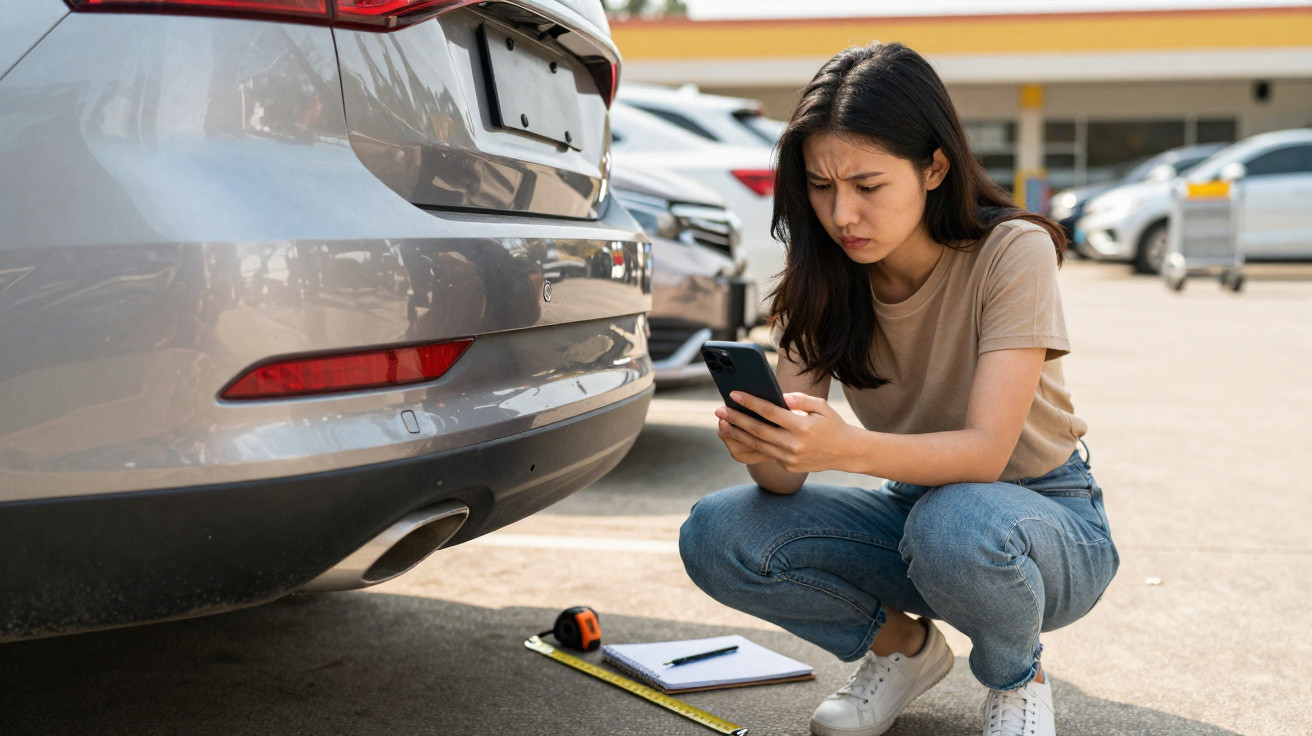
A mere ten minutes after it happened, the two drivers had exchanged a few strained words, snapped a quick picture and driven off. No raised voices, no theatrics - just that lingering, unpleasant aftertaste that follows a near-miss. A fortnight later, the tiny scuff had somehow become an official letter, an insurance claim for hundreds of pounds, and a rising knot in the stomach every time the post landed on the mat. One smudged photo was now being treated as proof of £1,800 worth of damage - and nobody could agree on what the image actually showed.
A tiny scratch, a big problem
It began in the most familiar way British car park taps often do: a crowded Saturday, a tight bay, and a hurried reverse. One motorist nudged another vehicle at very low speed, felt the bump and stepped out with that sinking feeling. The mark looked trivial - the kind of scrape you might shrug off on a ten-year-old hatchback. Names were swapped. A rushed photo was taken on an unsteady phone. Then, with shopping to do, both drivers went their separate ways.
What followed felt completely disproportionate. Not long after, one driver opened an email from their insurer: a claim for £1,800, referring to “extensive damage” and accompanied by a repair estimate that sounded more like a serious crash than a supermarket scrape. The supporting evidence amounted to a single grainy picture of a scuff, captured at a poor angle beneath a supermarket CCTV pole. They looked from the number to the photo and back again, trying to understand how a faint line had turned into a four-figure dispute.
This is far from a rare oddity. UK insurance figures show that low-speed bumps in car parks account for a large proportion of motor claims - and the totals can look wildly out of step with what’s visible on the bodywork. One scratched bumper can trigger a full panel respray, sensor recalibration, a courtesy car, and assorted administrative charges. That £250 “minor knock” swells the moment it enters the formal claims process. Often, at the centre of it all, sits one hurried photo - the sort most of us take without much thought, and later wish we’d taken properly once the costs start climbing.
How one blurry photo became a £1,800 argument
Here, the crucial image wasn’t even particularly readable. The scratch could almost be mistaken for glare. Light from the car park lamps caught the metallic paint and muddied the line between where the plastic ended and where the damage began. Yes, there was a faint mark - but little else. There were no close-ups from multiple angles, no wider shot to show the height or point of impact. Just a single snap, taken quickly in the middle of an awkward interaction.
As soon as the claim moved forward, that photo became the main piece of evidence. The claimant’s repairer reported a “deep gouge” requiring sanding, painting and blending across more than one panel. The insurer on the other side saw an indistinct scuff and challenged it, arguing that the estimate didn’t align with what the image actually showed. Emails went back and forth about pixels, reflections and paint depth - while the driver who took the photo found themselves wishing they’d spent an extra 30 seconds capturing it properly.
The situation then slid into a legal grey area. With no clear images, everything became a matter of interpretation. Was the mark already there? Was the repairer pricing in damage hidden behind the bumper? Was there additional harm that simply didn’t show in that single picture? The gap between “surface scuff” and “structural damage” can be worth hundreds of pounds, and with only one blurry photo, each side could argue its own version of events. The driver who caused the bump felt boxed in: accept a bill for something they didn’t believe, or risk a longer, more expensive fight that could drag on for months.
How to turn a car park scratch into a fair claim, not a nightmare
The bitter irony is that this entire dispute might have played out very differently if the evidence had been stronger from the outset. Taking decent photos is the last thing most people want to think about immediately after a stressful knock. Still, the habit that protects you later is straightforward: pause, steady yourself, and record the scene as though you were a calm third party. Begin with wide shots that include both vehicles, their positions in the car park, and the surrounding space. Those wider images provide the context that later arguments often depend on.
After that, move closer - but not so close that perspective becomes misleading. Photograph the scratch from several angles with the mark centred, and take one or two from slightly further back to show exactly where on the car it sits. If the lighting is poor, adjust your position so your own shadow isn’t obscuring the area. One photo almost never captures the full story. Ten quick but deliberate shots usually will. You don’t need to be a pro photographer, just someone who notices what they’ll want to see later when things get complicated.
Most of us don’t talk frankly about this. On an ordinary, overcast Tuesday - between school runs and carrier bags - it can feel ridiculous to act like a forensic investigator in the middle of aisle five’s car park. Let’s be honest: nobody truly does this every day. Yet small, practical steps make a real difference. Note the exact time and location. Ask politely for the other driver’s details and, if they’re willing, take a quick photo of their insurance details or their number plate. Take at least one picture that shows the registration plate and the damage in the same frame. It can sound fussy in the moment. It feels like self-protection when a straightforward scrape later arrives with a three-page repair estimate.
“The problem isn’t always fraud,” a former claims handler told me. “It’s that poor evidence leaves room for imagination, and imagination can be very expensive.”
When you’re standing there holding your phone, with your heart still going a little faster than usual, a few quiet checks can dramatically cut the risk of a future £1,800 shock:
- Photograph both cars from the front, rear and both sides - not only the obvious scratch.
- Take at least one photo that includes both vehicles together, with number plates visible.
- Record identifying features nearby: a shop sign, the row number, a pay-and-display machine, a CCTV pole.
- Make a note if the other car already has older dents or scrapes close to the same area.
- Send the images to yourself immediately so they don’t disappear in a cloud-backup muddle.
Why these small moments matter more than they seem
What looks like “just a scratch” can take on a life of its own once it enters a system driven by forms, estimates and standard repair routines. The person preparing the quote may never set foot in that car park. They see photos and a description, then follow a repair process that routinely adds paint blending, labour time and even courtesy-car charges. A single line on a bumper becomes one spreadsheet entry, then another, until three figures turn into four. At home, staring at a letter, you’re left wondering whether everyone has lost perspective - or whether you’re the one who failed to treat it seriously enough at the start.
There’s a quieter emotional weight too. Rationally, it’s “just money” and a procedure to navigate. Personally, it can feel like being misrepresented - or penalised for being straightforward. We’ve all had that moment where a small, everyday mistake suddenly grows far larger in our minds than it deserves. You replay the supermarket car park scene repeatedly, catching every detail you failed to record. The abandoned trolley in the next bay. The wet patch on the tarmac. How keen the other driver seemed to leave. Important details - remembered too late.
These stories spread quickly: through families, workplaces and social media. They make people guarded, and sometimes cynical, about exchanging details or admitting fault - which only makes the atmosphere around minor collisions worse. But another option still exists: take a minute, document what you can, speak plainly with the other driver, and seek clarity before everyone retreats behind email threads and claim references. A scratch in a supermarket car park will never feel like a good day - but with a handful of clear photos and a bit of presence of mind, it doesn’t have to become a £1,800 mystery either.
| Key point | Detail | Why it matters for the reader |
|---|---|---|
| Document broadly | Take wide and close photos from several angles | Cuts misunderstandings and overblown estimates |
| Keep the context | Include number plates, the location and the vehicles’ positions | Helps reconstruct the scene if there’s a dispute |
| Make notes immediately | Time, weather, what drivers said, any existing damage | Strengthens your account if an insurance battle follows |
FAQ:
- Can a tiny scratch really lead to a £1,800 claim? Yes. Modern bumpers often contain sensors, cameras and paint systems, and repairs can involve full-panel resprays plus recalibration, which quickly drives up the cost.
- Should I always tell my insurer about a minor car park bump? Many policies require you to report any incident, even if you don’t intend to claim, so you’re not caught out by a later dispute.
- What if I think the repair quote is exaggerated? You can ask your insurer for another view, challenge the itemised costs, or request an independent inspection of the damage.
- Is one photo of the damage ever enough? Seldom. A set of images taken from different distances and angles creates a far clearer record and leaves less room for argument.
- How can I protect myself without being confrontational? Keep calm, stay polite, explain you’re taking several photos for both your records, and exchange details clearly before leaving.



Comments
No comments yet. Be the first to comment!
Leave a Comment