

For months, smart, late‑model cars slipped quietly from rental fleets into the used market.
Only the paperwork revealed what was really going on.
What appeared to be routine second‑hand transactions in the western suburbs of Paris was in fact a neatly run scam aimed at hire firms and unsuspecting motor traders-until financial investigators, and then a police pursuit, brought it to a halt.
A quiet fraud hidden in plain sight
Investigators in France say a 39‑year‑old man created a profitable sideline by converting short‑term rental vehicles into used cars that looked entirely legitimate. Sources close to the case say the method was not classic vehicle theft, but the manipulation of the administrative steps that give a car its legal identity.
The affair began in the spring when the Saint‑Quentin‑en‑Yvelines financial brigade opened enquiries into irregular vehicle registrations. The trigger was an April complaint from the car‑buying company “Vendez votre voiture.fr”. Its staff had noticed that two vehicles they had bought were appearing in FOVeS, the French database used for stolen or otherwise flagged vehicles.
The same cars appeared both as fully registered and for sale, and at the same time as officially flagged as problematic. That contradiction set off the alarm.
Once that red flag was raised, investigators pieced together registration files, rental agreements and payment movements. A consistent pattern followed: the same individual repeatedly surfaced as the “new owner” of cars that, on paper, should have remained in rental fleets.
How the registration scam worked
According to the initial findings, the suspected fraud rested on three elements: renting in volume, using sham garages, and reselling quickly to professionals.
From short-term rental to fake ownership
Police believe the man hired vehicles from at least two specialist rental companies. The cars were recent, in demand on the used market, and typically still covered by the manufacturer’s warranty.
Rather than returning them, he is alleged to have relied on a network of fictitious garages to secure new registration certificates in his own name. In France, garages and intermediaries can handle registration formalities, normally as a legitimate time‑saving service for customers. Here, investigators say, that expedited route became the engine of the scheme.
By channelling everything through fictitious garages, the scammer gave the appearance of normal professional handling, while stripping rental companies of any traceable control over the vehicles.
Once the new registration documents had been issued, the vehicles no longer showed up as rentals in the usual systems. Administratively, they were presented as his personal property-providing the legal front he needed to sell them on, particularly to buyers who treat a proper French registration as evidence of clear title.
Quick resale, limited questions
The cars were then sold to motor‑trade professionals only days after being re‑registered. These purchasers-used‑car dealers and trade operators-often seek stock that can be turned around quickly. Late‑model vehicles with tidy paperwork and an appealing price seldom sit on a forecourt for long.
- Rental company: loses the vehicle, often without spotting it straight away.
- Scammer: pockets the difference between the rental outlay and the resale price.
- Dealer: believes they have bought a legitimate car with a recent registration.
- End customer: may end up driving a car later flagged, blocked administratively or seized.
Investigators estimate that roughly twenty vehicles moved through this pipeline, with losses of about €700,000. Several professionals in the used‑car sector are said to be among the victims, with some now holding vehicles that could be confiscated or frozen in administrative systems.
Failed arrest and a dangerous chase through the suburbs
As the financial enquiries progressed, detectives identified a principal suspect: a 39‑year‑old man living in the Yvelines department, west of Paris. Officers attempted an initial arrest in mid‑October at a travellers’ camp in Thiverval‑Grignon, but by the time they entered the site he had disappeared.
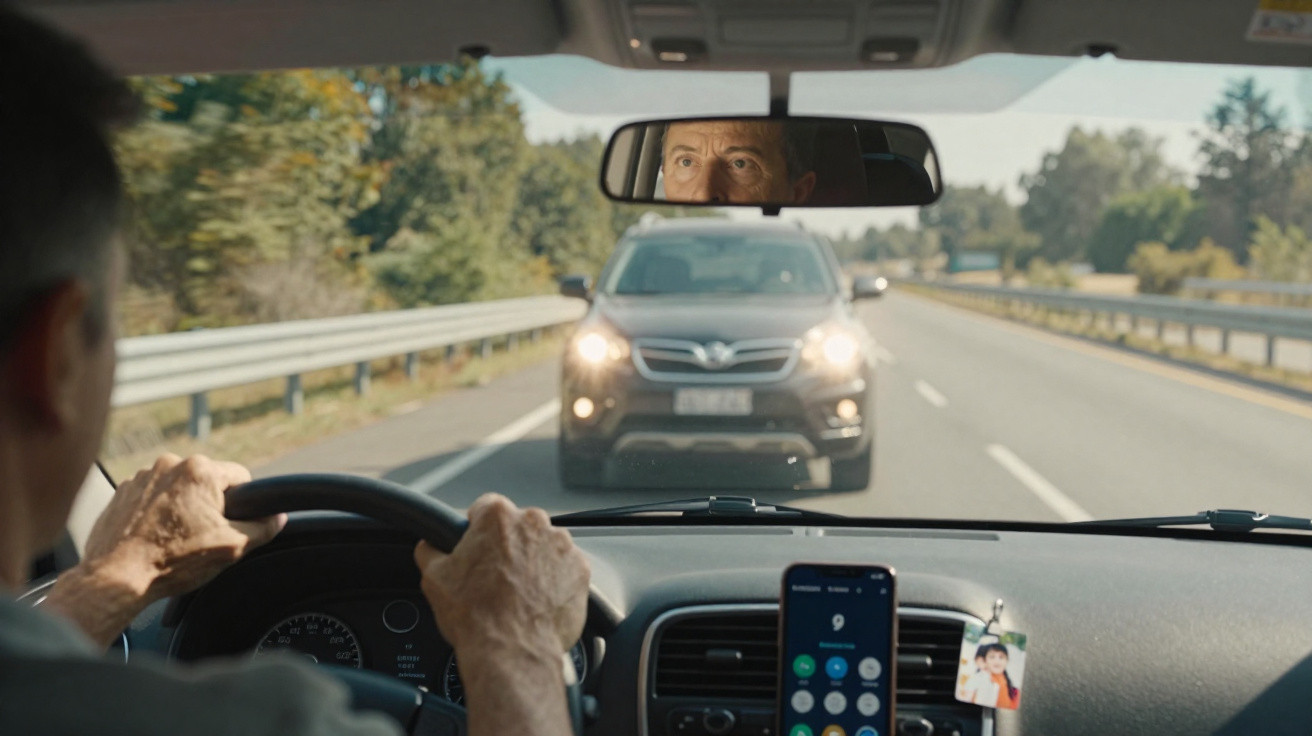
He later reappeared in Trappes. When police tried to detain him there, he allegedly opted for the most hazardous response-running. A police source says he got into a car and sped away, ignoring orders to stop and striking several vehicles as he forced his way out.
The case shifted in a few seconds from financial crime to road danger, with a suspect ready to risk collisions to avoid handcuffs.
The pursuit ended in Jouars‑Pontchartrain, where officers ultimately brought the vehicle to a stop. No serious injuries have been reported at this stage, although several cars were damaged. The suspect was taken into custody, and his wife went to the police station voluntarily a few hours later.
A wider network under scrutiny
Detaining the main suspect did not end the investigation. At the time of the chase and in the following operations, police also carried out coordinated searches across Yvelines and the neighbouring Oise department.
Four other people described as part of his close circle were arrested. Investigators believe their involvement differed: some may have helped set up or front the fictitious garages, while others may have assisted with moving cash or handling contacts with purchasers.
To reconstruct the financial set‑up, officers cross‑checked banking information and drew on support from the departmental aerial unit. Overhead surveillance is said to have helped track movements between camps, the “garages” that existed on paper, and the real parking locations where cars were kept before resale.
| Key element | Details |
|---|---|
| Number of suspect vehicles | About 20 cars |
| Estimated loss | ≈ €700,000 |
| Main suspect | 39-year-old man, Yvelines |
| Other arrests | 4 people from his entourage |
| Victims | Rental firms and professional resellers |
During interviews, the main suspect reportedly acknowledged the central mechanism of the fraud while attempting to minimise the role of those around him. Investigators now need to determine who acted as a mere intermediary and who helped design and run the scheme from the outset.
Why this kind of car fraud keeps spreading
The case reflects a wider development that concerns authorities across Europe: criminals moving from conventional car theft to manipulating a vehicle’s identity. Re‑registering a rental car through official channels can generate far fewer immediate warning signs than taking one from the street.
Although digitalised registration processes are convenient, they can also create blind spots. Fraudsters actively seek intermediaries-sometimes shell garages, sometimes corrupt professionals-who can process documents quickly. Once the new registration exists, a car effectively gains a fresh administrative trail that can mask its rental origins or any irregular status.
For buyers, the real risk no longer lies only in “stolen” cars, but in cars that look administratively perfect while carrying a hidden legal bomb.
France, Germany and the UK have all strengthened controls around logbooks, mileage histories and online checks. Even so, networks continue probing the boundaries, combining short‑term rentals, forged invoices and straw companies to push vehicles through legal filters.
How dealers and drivers can protect themselves
Trade buyers are often the prime target for these scams because a single deal can shift several tens of thousands of euros in one go. A handful of steps can substantially lower the risk:
- Check a vehicle’s history using national databases, not only the registration certificate.
- Request clear, documented proof of the chain of ownership, particularly where the seller has only recently obtained the title.
- Treat near‑new cars offered slightly below market value-especially with a rushed pitch-with caution.
- Verify the seller’s stated business activity against official company registers.
Private buyers can also take straightforward precautions: confirm the VIN (vehicle identification number) matches on the car and the documents, ask for prior servicing and maintenance invoices, and be wary where a seller cannot clearly explain why they own an almost new ex‑rental model.
Rental firms, meanwhile, may respond by tightening eligibility for high‑value hires, raising deposits, or using real‑time tracking more assertively. Such steps come with costs and raise privacy issues, but cases like this force companies to weigh customer convenience against financial exposure.
Beyond the figures and the legal terminology, the case underlines how quickly one person with a detailed grasp of administrative procedures can destabilise a whole segment of the car market. It also points to an expanding grey area where financial offending collides with road safety-when an attempted arrest can, in an instant, become a dangerous suburban chase on an otherwise ordinary weekday morning.





Comments
No comments yet. Be the first to comment!
Leave a Comment