
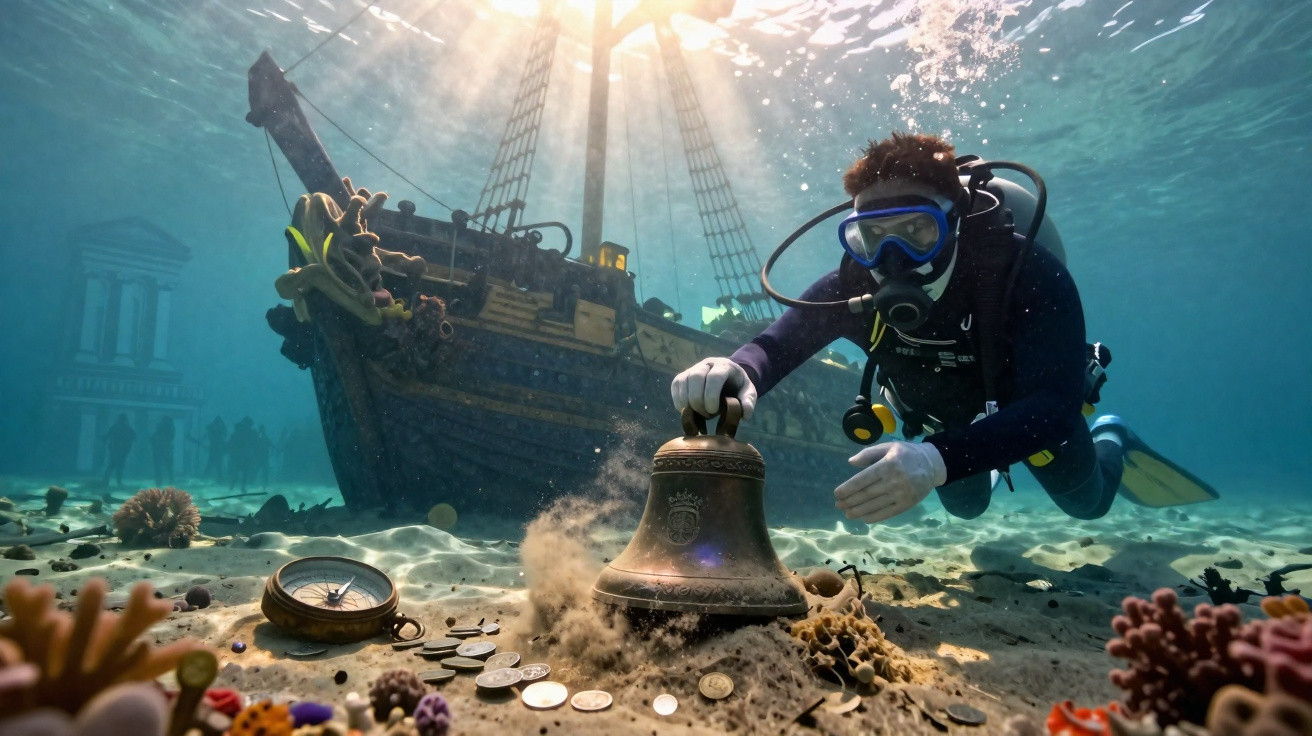
The footage begins with a jolt: the camera wobbles as bubbles slide past the lens, and all you can see is murky green water and the damp, rhythmic rasp of a diver breathing.
Then the seabed comes into view - pale, level, almost blank - until a dark, curved line pushes through the sand like ribs.
A voice breaks in over the radio: “There. That’s timber. That’s a hull.”
Up on the support vessel, technicians lean towards the monitor. Eyes widen. Pulses quicken. This is not a misplaced phone or a corroded anchor.
It is a ship: wooden, old, half-skeletonised, lying in mud.
No one says it outright, but the thought is shared.
Who does this ghost belong to?
When a shipwreck surfaces, so do old ghosts
The storybook version of a shipwreck glows with lanterns and groaning planks. In reality, it usually begins with an offshore survey: a contractor working to a deadline, a sonar trace showing an unexpected outline where there should only be sand.
A 250‑year‑old wreck that pops up on a scan is never only wood and metal. It brings money, legal claims, national identity - and injuries that never really closed.
On deck, the debate starts before a single artefact breaks the surface. Is this cultural heritage or buried treasure? Does it belong to Spain, Colombia, Britain, or the small coastal state that happens to be laying a new cable across the seabed?
Consider the San José, the Spanish galleon that sank off Colombia in 1708 and was located again in the 2010s. It went down amid cannon fire, carrying one of the colonial era’s richest cargoes: gold, silver, emeralds - a near-mythic fortune. When Colombia announced the discovery, Spain swiftly asserted a historic, sovereign connection. Indigenous groups argued the wealth was extracted from lands and people exploited under colonial rule. A US salvage firm maintained it had an earlier claim.
What first looked like a fairy-tale find became, almost overnight, a diplomatic chessboard.
Underneath these disputes sits a collision between two worldviews. On one side is the modern nation state - borders, flags, and very contemporary budgets. On the other is the idea of shared human history: the feeling that a 250‑year‑old wreck predates the passport in your wallet and the anthem sung at football matches. International law tries to stitch the gap together, through conventions dealing with “underwater cultural heritage” and the “state immunity” of warships.
Yet at sea, law is never only law. It is power - and power is about who can actually reach 700 metres down with a robotic arm.
Finding a middle ground between history and sovereignty
Specialists often recommend a practical starting point: ask three unglamorous questions first. Where is it? What was it? Who was on board? They sound like paperwork, but they quietly determine what happens next.
A wreck inside a coastal state’s territorial sea generally triggers that state’s authority. A former warship, by long-standing custom, remains the property of the flag state even after centuries. A merchant vessel can invite private claims - from insurers, or from those linked to the original owners.
Putting those layers in order does not resolve the moral problem. It simply prevents everyone arguing at the same time.
Many governments stumble at the next stage by sprinting towards a “treasure” mindset. Think of the innumerable wrecks commercially stripped in the 1980s and 1990s: coins dispersed through auctions, human lives flattened into catalogue entries. Coastal states, often short of funds, signed agreements trading away vast collections for an immediate share. Later, museum curators and historians arrived, stared at emptied sites, and realised whole passages of maritime history had been torn out and scattered.
Most people recognise that sinking feeling: the moment you realise you traded something that mattered for something flashy and brief.
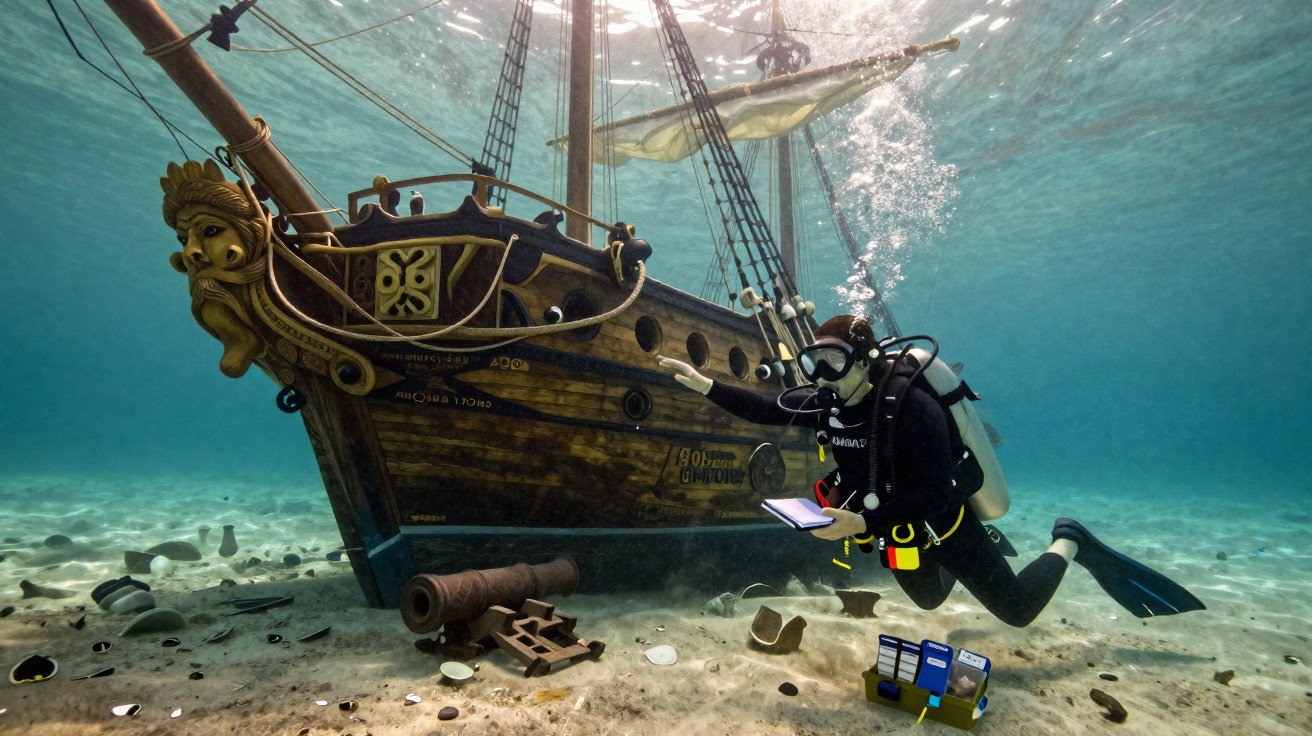
The more durable solution - argued softly in academic conferences and more forcefully in UNESCO forums - is to treat a 250‑year‑old wreck as a time capsule rather than a piggy bank. Archaeologists describe it as “context”: a frozen moment in which a spoon, a shoe buckle, and a shattered plate can reveal more than a chest of silver. That is why serious work proceeds slowly. Teams survey and map; they photograph; they conserve in laboratories instead of polishing items for quick display.
The plain truth is that this careful method seldom matches politicians’ appetite for headlines and ribbon-cuttings.
Who should speak for the dead, and who should share the story?
One choice can transform the tone of any discovery: widen participation from the first day. When a coastal state locates a wreck, it can call the original flag state before lawyers begin volleying letters. It can involve local fishing communities who have known “that strange patch where nets always snag” for generations. It can bring in historians from former colonies whose labour and lives helped create the cargo in the first place.
This does not cancel sovereignty; it recasts it as stewardship rather than ownership.
Many countries assume the story ends once a wreck is placed behind glass - or, worse, listed in a private sales catalogue. That is the familiar mistake. A better route is slower, messier, and more demanding. It means admitting that a British warship off Ghana’s coast also sits inside Ghanaian memory. It means recognising that a Spanish galleon loaded in Cartagena ties together modern Colombia, Spain, and the descendants of Indigenous miners in Bolivia.
Be frank: almost no one manages this perfectly, every time. It takes humility that states do not always reach for - particularly when cameras are pointed at the deck.
“Shipwrecks are not just about who owns the metal,” a maritime archaeologist once told me. “They’re about who owns the silence that followed the sinking. Who gets to fill that silence with a story.”
- Recognise layered identities
See a wreck as Spanish, Colombian, Afro-descendant, Indigenous, and global all at once. This layered framing makes space for shared exhibitions, rotating loans, and jointly written narratives. - Use joint stewardship agreements
States can strike arrangements that keep legal title with one party while sharing excavation, conservation, and display. In practice, the wreck then belongs to history - not merely to a press release. - Protect before you extract
The most responsible projects begin by protecting the site, restricting access, and recording everything. Recovery should come last, once there is a clear plan for what happens on land.
A 250‑year‑old wreck as a mirror of the present
When you stand in a shipwreck exhibition, you rarely think about court filings or diplomatic notes. You think about a sailor’s trunk that never made it home. A wine bottle still sealed. A ring buckled by salt. These fragments do not care which ministry claims them today. If objects can be said to care, they care about the hands that lift them now - and the stories those hands choose to tell.
So the dilemma - history, or the country that finds it - may be the wrong framing.
A sharper question is this: how much of our past are we prepared to hand over to borders that did not exist when these ships sailed? A 250‑year‑old wreck reminds us that nations rise and fall faster than oak timbers decay. The vessel may have flown more than one flag even before it sank. Across different voyages it might have carried enslaved people, religious icons, weapons, and wheat. Whose past is that, exactly?
Perhaps the most truthful answer is that any state that discovers such a wreck holds it in trust - not only for its own citizens, not only for allies, but also for those who will enter a museum a century from now and see themselves, unexpectedly, in a cracked bowl or a carved rosary. The law will continue to argue over titles and immunities. Divers will keep descending, cameras softly humming in the dark.
The rest of us have a quieter job: to keep asking who gets to speak when the sea finally gives something back.
| Key point | Detail | Value for the reader |
|---|---|---|
| Wrecks carry layered identities | A 250‑year‑old ship can link multiple modern nations, cultures and communities | Invites readers to see beyond simple “finders keepers” logic |
| Law and power shape outcomes | Territorial waters, warship immunity and technology access all decide who acts | Helps readers understand why some countries dominate underwater heritage debates |
| Stewardship over ownership | Joint projects, shared exhibits and protected sites balance national claims and global history | Offers a concrete way to imagine fairer treatment of future discoveries |
FAQ:
- Who legally owns a 250‑year‑old shipwreck?
There is no single answer. If the wreck lies within a country’s territorial waters, that state typically has control. If it is a former warship, the original flag state often keeps title. International conventions and domestic legislation then add further layers. - Does “finders keepers” still apply at sea?
Seldom for historic wrecks. Many states now treat older wrecks as cultural heritage rather than salvage. Professional salvage regimes still exist, but they are increasingly limited where a site has archaeological value. - What about the descendants of people who died on the ship?
Some communities argue they should have a voice, especially where the wreck involves enslaved people or migrants. Their legal position is often uncertain, but their moral claim is receiving growing recognition in public debate. - Can artifacts from a wreck be sold legally?
It depends on local law. Some countries permit limited sales under licence; others prohibit any commercial trade from protected sites. Museums and archaeologists generally oppose selling, arguing that it destroys context. - Is leaving a shipwreck on the seabed a valid choice?
Yes. Many experts support “preservation in situ” where recovery would harm the site or where there is no long-term conservation plan. Sometimes the most respectful option is to document the wreck and leave it undisturbed.



Comments
No comments yet. Be the first to comment!
Leave a Comment