
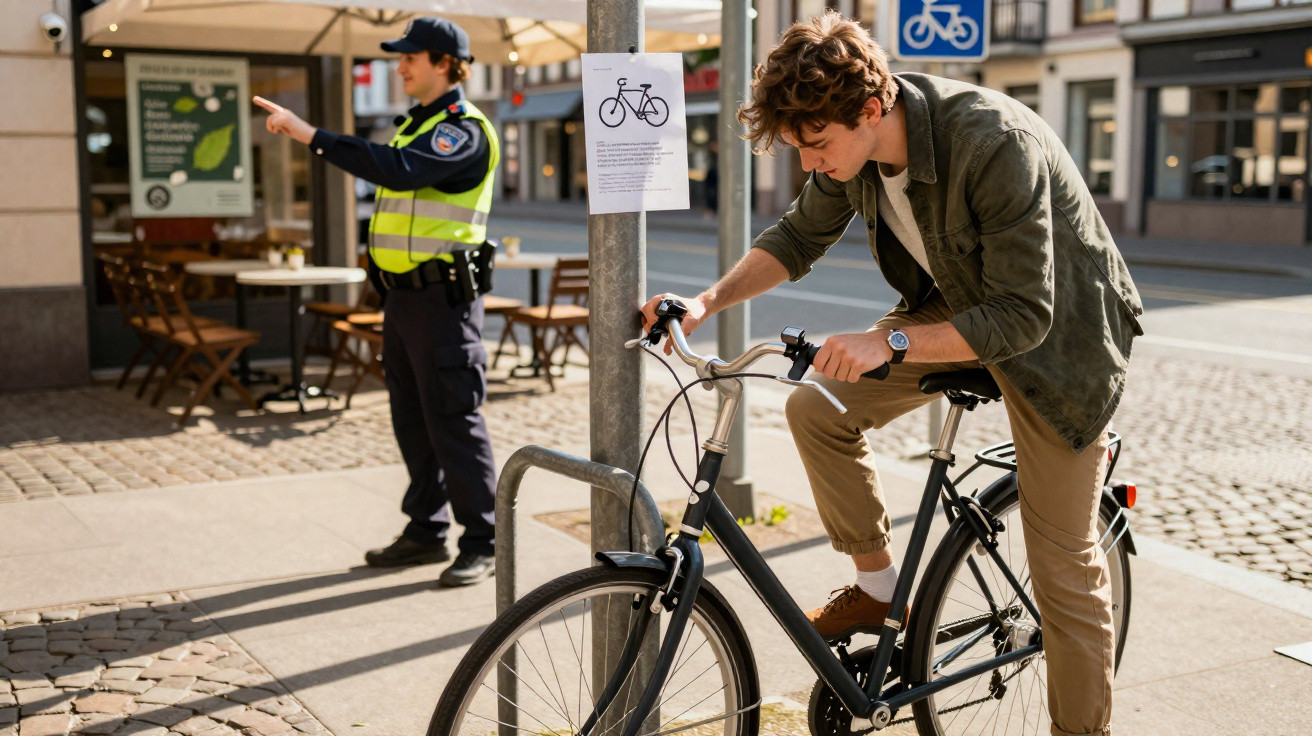
Eight hours later you come back - and where your bike was a moment ago there’s only that stupid, empty gap. A metal stand with a cut lock lying nearby. For two seconds you convince yourself you’ve just got the wrong spot. Then reality hits.
Anyone who’s ever stood in front of an invisible bike knows the cocktail: anger, helplessness, and that embarrassing self-blame. Should I have locked it better? Was the place too exposed, too hidden, too “perfect” for thieves? The police hear those questions all the time - and they understand exactly how professionals operate. And their approach to protection often looks different from what we imagine.
What the police really know about bike thieves
When officers talk about bicycle theft, it sounds less like “bad luck” and more like repeatable patterns. A lot of thefts aren’t impulsive at all - they’re routine: certain locations, certain times, certain types of bikes. And, over and over again, the same weak points in the way people lock up. You hear this from police officers at bike-coding events while they calmly scan frames.
We all like the dramatic image of a pro thief with an angle grinder and a van. But investigators say the reality is dominated by quick, opportunistic theft: bolt cutters in a pocket, a cheap combination lock in front of them, and an owner distracted at the office. Those “small” crimes add up to thousands of reports each year. And they hit precisely the people who “at least locked it with something”.
In many cities, police stations talk about a huge dark figure. Some owners don’t even report the theft because they don’t expect anything to come of it, or because the bike was already old. From the police perspective, that skews the statistics - but the patterns stay consistent: poorly secured bikes, identical mistakes, recurring hotspots at stations, university campuses, major junctions. Officers say they could walk certain streets almost with their eyes closed and still tell you which bike will disappear first.
The police method: how professionals secure a bike
When police prevention teams explain how to secure a bicycle, it almost sounds like a small ritual. First: a solid D-lock or folding lock, ideally with a tested security rating. Second: always lock the frame and at least one wheel to something fixed that can’t be cut or removed. Third: position the lock as far from the ground as possible and keep it tight, so tools have less room to bite.
For convenience, many people do the exact opposite. The thin combination lock that was “still lying around”. The lock placed low down, loose around the tyre, threaded through quickly so you can get on with your day. Let’s be honest: hardly anyone does it perfectly every single day. But the police are blunt about it: if you treat your bike like a £30 shopping bag, sooner or later it will “behave” like one. Small habits, big impact - especially when you repeat them daily.
A police officer who has run school bike-safety groups for years puts it dryly:
“Thieves love convenience. If you make it inconvenient for them, you’re often already out of the running.”
Her essentials sound simple, but they’re thought through with real consistency:
- Register the bike (frame number, photo, coding/marking).
- Use at least one high-quality lock - better still, two different systems.
- Never lock only the front wheel; always include the frame.
- Choose fixed objects that can’t simply be lifted out or cut through.
- Avoid leaving a bike parked overnight in public spaces at known hotspots.
Why the police method fits everyday life so well
What’s striking about the police view is how unromantic it is - practical, not sentimental. Officers don’t see “your favourite bike”; they see an object with a profile: brand, price, resale value, security, location. That cool perspective leads to clear priorities. Not every bike needs the same level of protection - but every bike should have a deliberate level of security.
Many prevention teams suggest asking yourself one quick question: if I lost this bike today, how much would it hurt financially, and how much would it hurt emotionally? Then you match your lock, parking spot, and effort to that answer. An old city bike outside the corner shop doesn’t need to be secured like an e-bike worth €4,000. That e-bike, on the other hand, deserves a strong lock, a bright place with footfall, and perhaps even a locked inner courtyard. That kind of tiering sounds obvious, but it stops you cutting corners on the bike that costs the most.
From a policing standpoint, every theft is like a quiet vote: on one side the offender’s effort, on the other your barriers. Noise, time, tool requirements, risk - all of it creates friction. The more friction you build in, the more likely the thief moves on to the next bike. The goal isn’t to be uncrackable, but to be unattractive. That’s the heart of the police method: you don’t need the safest bike in the city - just the dullest target for thieves on your street.
Practical steps: how to put the police method into practice today
The first step is surprisingly unglamorous: documentation. The police have been repeating it for years, and plenty of people still ignore it. Write down the frame number, take photos from several angles, store the receipt digitally, and, if available, use a police bicycle-pass app. It takes ten minutes, but it’s what gives investigators any chance at all of identifying your bike if it turns up.
Next comes the lock upgrade. A proper D-lock or folding lock isn’t a luxury - it’s the seat belt for your bike. Prevention teams advise: better to invest €60–€100 once in a strong lock than to buy an entire bike again every couple of years. If you want to go a step further, pair a D-lock with a second, lighter chain lock. Two different types of lock deter thieves because they’d need more tools.
Step three is your parking routine. Pick a regular spot that’s well lit, overlooked by windows, and has a stand or railing that’s firmly fixed in place. Avoid isolated back yards and dark corners behind bushes. The police often talk about the “social eye”: places where people constantly pass by or can look out. Your bike is allowed to be in other people’s line of sight - even if you don’t know them.
Typical mistakes police officers keep seeing
A lot of thefts happen with zero drama outside supermarkets, gyms, or bakeries. “I was only in there for a moment,” people say later at the station. Those three or four minutes are more than enough for thieves - especially if you don’t lock up at all, or you use only a thin spiral cable lock. Officers say they watch this same film every day, with the same cast: good bike, bad lock, rushed owner.
Another classic error is chaining up only the front wheel. It looks quick and convenient, but for thieves it’s a gift. A practised offender releases the quick-release front wheel, takes the rest of the bike, and leaves you the politely “secured” front wheel as a consolation prize. Equally risky are easily accessible basements or back yards without proper door security. Many people assume: “It’s inside the building - nobody can get in.” The police know how often that confidence is just an illusion.
Then there’s the emotional misjudgement: “Nobody will want my old bike.” Wrong, say experts. Plain, robust city bikes are popular precisely because they can be resold quietly or moved abroad with less attention. An expensive racing bike stands out; a grey-blue city bike often doesn’t. If you care about your bike, protect it - whether it’s Instagram-ready or not.
What police officers tell you when they’re being honest
When you speak to police officers without a camera pointed at them, they can sound like mildly irritated older siblings. They know how much disruption a stolen bike causes: commuting, carrying children, everyday logistics. And they also know prevention isn’t as exciting as a new helmet or stylish panniers. Still, they always return to the same point, with a bluntness that’s almost likeable.
One officer from a big city puts it like this:
“We can’t stand by every lamp post. But we can show you how to slow thieves down. The rest is something you have to do yourselves.”
If you take that seriously, you’re left with little choice but to look honestly at your own routine. Maybe it’s just a new lock; maybe it’s a different parking spot; maybe it’s that extra pause to chain the frame properly even when you can already see the bus in the distance. Small decisions that ruin a thief’s day.
The police method isn’t a glossy concept - it’s more like a toolkit of proven habits. It fits into everyday life if you let it. And it changes your mindset: “hopefully nothing happens” becomes “I’ve done what’s within my power”. In a city where things sometimes simply vanish, that can be a quiet, genuinely freeing thought.
| Key point | Detail | Benefit for the reader |
|---|---|---|
| Documenting the bike | Note the frame number, take photos, use a bicycle pass or app | Better chance of clearly identifying a recovered bike |
| High-quality security | D-lock or folding lock with a high security rating, possibly a second lock | Much higher effort for thieves, less attractive target |
| Smart parking location | Bright, visible places, solid anchoring, no isolated corners | Fewer opportunities for undisturbed theft, more social pressure |
FAQ:
- How expensive should a good bike lock be? Police prevention teams roughly recommend investing about 10% of the bike’s value in the lock. For very expensive bikes it can be a bit less, as long as the security rating is high and the lock is certified/tested.
- Does bike coding really help? Yes. It puts off many opportunistic offenders and makes it easier to match recovered bikes to their owners. The police don’t like seeing coded bikes in stolen-goods circles because they can be clearly linked to a specific owner.
- Is a GPS tracker worthwhile? For high-value e-bikes or cargo bikes, a hidden tracker can be an extra safety net. It doesn’t replace a good lock, but it can increase the chances of getting the bike back after a theft.
- Is bicycle insurance worth it? If your bike is expensive or you rely on it daily, insurance can pay off. The policy details matter: check the required lock type, parking time limits, and overnight clauses carefully.
- What should I do first after a theft? Report it to the police immediately, ideally with the frame number, photos, and proof of purchase. In parallel, it’s worth checking local online marketplaces and putting up notices in your neighbourhood - the faster you react, the better.




Comments
No comments yet. Be the first to comment!
Leave a Comment