
The light was already turning amber when the small silver hatchback ahead of me suddenly stopped dead. The driver - white hair only just visible over the headrest - looked completely stuck. The cars behind began to toot, a moped courier swerved alarmingly, and a young mum with a pushchair sprang back on to the pavement. The lights changed to red again, and then the older car crept forward as though nothing had happened.
These days, a moment like that hardly shocks anyone. We sigh, tighten our grip on the wheel, and carry on.
But that brief pause could have altered lives in an instant.
And we all know who people blamed without saying a word.
Are people over 60 really the main danger on the roads?
Before we start throwing stones at older drivers, it’s worth paying attention to what you actually see out on the road. The bloke scrolling on his phone at 120 km/h. The young woman touching up her make-up at a red light. The delivery driver who treats speed limits as friendly advice.
Our roads can feel like a circus - and every age group has its own clowns.
Pointing the finger at everyone over 60 is easy, a touch lazy, and frankly far too comfortable.
The truth is far more complicated, which is exactly why the argument becomes so heated.
France is a useful example. For years, insurers there have been saying the same thing: statistically, young drivers are the riskier group. Motorists under 25 are disproportionately represented in fatal collisions. By contrast, many older drivers - particularly those aged 60 to 75 - generally drive fewer miles, drink less, and speed less. In raw numbers they’re involved in fewer crashes, largely because they cover fewer kilometres.
However, when older drivers are in an accident, the outcomes are often harsher. Bodies are more fragile, reactions can be slower, and injuries tend to be more severe.
So the question subtly changes: are older drivers mainly a danger to other people… or chiefly to themselves?
There’s also a stark demographic factor. Populations are ageing, and people keep their driving licences for longer. That means more motorists in their 70s, 80s, even 90s, often driving cars bought fifteen years ago - without today’s driver-assistance features. Vision can narrow. Driving at night can become genuinely difficult. Junctions start to feel like traps rather than straightforward turns.
What once seemed like the rare exception is now an everyday sight in many towns and villages.
And that’s where fear and irritation begin to spill into headlines - and into family chats.
Driving after 60: where the real risk actually lies
The biggest danger often begins well before the dramatic crash everyone fears. It starts with small shifts that are easy to miss. Missing a turn more often. Taking a few extra seconds to locate the correct pedal. Feeling oddly tense at a busy roundabout.
These tiny signals are like the first creaks in an old house: you can pretend they’re nothing for a while.
Then, one day, the roof gives way - and everyone insists they “didn’t see it coming”.
Ask any grown-up child of an ageing driver and you’ll hear the same stories. The near-miss on a country lane. The dent that supposedly “came from the supermarket car park”. Sat-nav directions that somehow trigger panic. Many of us know the moment: you sit in the passenger seat and realise the parent who once taught you to drive is now the one you’re quietly monitoring.
It isn’t melodrama. It’s a slow, emotional reversal of roles that nobody really prepares you for.
Road-safety specialists keep coming back to the same point: age in itself isn’t the villain. The real issue is often a combination of factors - slower reflexes, unaddressed eyesight problems, certain medications, cognitive decline… plus a dose of stubbornness. Many people fight to keep their independence at any price. They’re scared of becoming a burden. And handing back the licence isn’t just a practical change; it can feel like surrendering part of who you are.
It’s hardly surprising that many older people hold on to their car keys as though they’re a passport to dignity.
How to keep seniors – and everyone else – safer on the roads
There are far kinder options than shouting, “people over 60 should stop driving”. One simple and effective move is to bring health into the conversation. Routine eyesight checks after 60. A frank discussion with a GP about medicines that cause drowsiness or slow reaction times. Brief cognitive checks when memory starts interfering with everyday life.
Not as a test designed to “take something away”.
But as a way to adjust driving habits before it becomes too late.
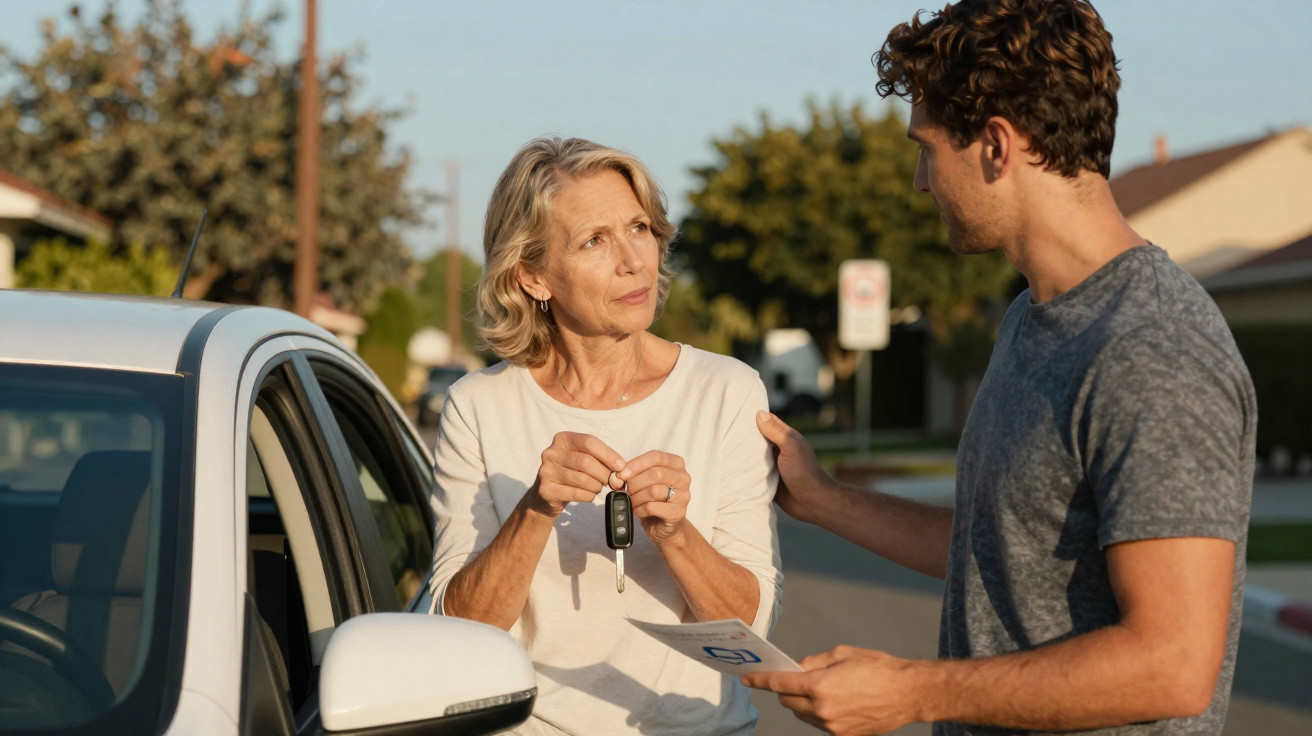
Families matter enormously here - and this is also where things often go wrong. Turning up on a Sunday and announcing, “Dad, you’ve got to stop driving, you’re dangerous,” is like striking a match in a petrol station. Pride flares up, anger follows, and the conversation collapses immediately. The more attacked someone feels, the more fiercely they’ll cling to their keys.
And let’s be candid: hardly anyone manages to do the daily, calm version - riding along now and then, noticing patterns, talking things through, and agreeing solutions together.
Yet that steady approach is the only one that tends to work in the long run.
Sometimes the most honest sentence you can say to a parent is: “I’m scared when I’m in the car with you, and I don’t want something to happen to you.” Not “you’re the problem”, but “I’m worried we’ll lose you”. That emotional shift changes everything.
- Ride along regularly: Suggest popping to the market or the doctor together. Notice how they drive, without commenting every five seconds.
- Start with small adaptations: Recommend avoiding night driving, motorways, or rush hour before raising the idea of stopping altogether.
- Offer concrete alternatives: Lift-sharing within the family, local transport services for seniors, grocery deliveries, taxi vouchers.
- Bring in a neutral voice: An occupational therapist, driving instructor, or doctor is often listened to more readily than a son or daughter.
- Prepare life “after the car”: Build new routines, plan weekly outings, arrange visits. Losing the car shouldn’t feel like losing the outside world.
A taboo we all need to face sooner or later
This subject hits a nerve because it forces us to confront ageing, dependence, and our own future. One day, we’ll be the ones whose children watch us drive with a clenched jaw and a fixed smile. The ones who get lost in a neighbourhood we used to know by heart. The ones who feel traffic has “suddenly become mad”.
Simply banning everyone over 60 from driving won’t address what’s really going on.
Learning to talk earlier, to adapt gradually, and to organise alternatives just might.
Society has responsibilities too. Safer road layouts. Lower urban speed limits. Public transport that’s dependable beyond the big cities. Insurance incentives for regular medical checks. Campaigns that speak to older people as adults - not as children to be “taken off the road”. The aim isn’t humiliation; it’s shared responsibility for safety.
Nobody wants to become the headline: “Elderly driver causes tragedy.”
But nobody wants to be shut indoors, watching the world carry on without them.
Between those extremes there’s room for nuance, compassion, and a bit of courage: talking before the first crash rather than afterwards; listening to older people who sense their limits and can say, “You know what, I don’t feel comfortable driving far anymore.” Accepting that stepping away from the steering wheel can be as significant a life change as getting a licence at 18.
Perhaps the real question isn’t “Should people over 60 stop driving?”
Perhaps it’s “How do we help every driver, at every age, recognise when it’s time to change how they use the road?”
| Key point | Detail | Value for the reader |
|---|---|---|
| Age is not the only risk factor | Accidents depend on health, reflexes, habits, and mileage, not just birth year | Helps avoid unfair generalizations and target the real problems |
| Early, honest dialogue in families | Riding along, sharing fears, proposing gradual changes instead of ultimatums | Makes difficult conversations more effective and less conflictual |
| Gradual adaptation of driving | Limiting night driving, complex routes, and high-speed roads before giving up entirely | Allows seniors to stay independent longer while reducing risks |
FAQ:
Question 1: Are people over 60 really more dangerous drivers than younger ones?
Not necessarily. Drivers under 25 cause more crashes per kilometre travelled. Many people over 60 drive more cautiously, but if health declines, the seriousness of collisions can rise. What matters is judging the individual, not applying blanket suspicion.Question 2: At what age should someone seriously reconsider driving?
There’s no magic number. The warning signs are more important: repeated near-misses, getting lost on familiar routes, confusion at junctions, trouble judging distances, or strong anxiety behind the wheel. These are signs to speak to a doctor and rethink driving habits.Question 3: Should there be mandatory driving tests for seniors?
Some countries already require them from 70 or 75 onwards. They can be helpful when they’re respectful and paired with real support (training, advice, alternatives). If they’re used to punish or stigmatise, they create resistance and fear rather than improving safety.Question 4: How can I talk to my parent about their dangerous driving without causing a fight?
Focus on your feelings rather than their “faults”. Refer to specific situations that frightened you. Offer to ride along and help with certain trips. Put practical options on the table before discussing giving up the car entirely. If you reach a dead end, suggest a professional driving assessment.Question 5: What can a senior do to keep driving safely for longer?
Have regular eye tests, review medications, avoid night-time and high-speed roads, take refresher driving lessons, and be honest about tiredness. Making small changes now often means keeping the wheel for more years - in safer conditions for everyone.





Comments
No comments yet. Be the first to comment!
Leave a Comment