
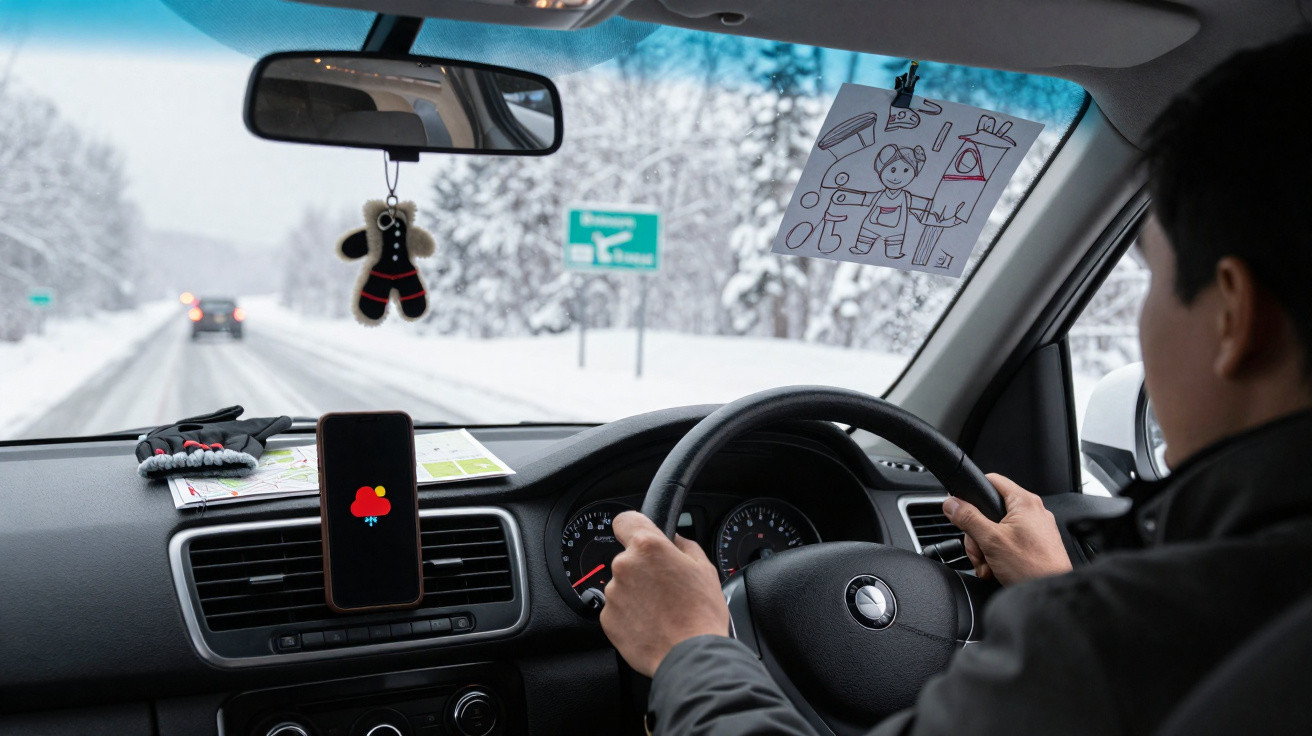
On the hard shoulder of the M1, the snow doesn’t drift down gently. It comes at you. Dense, sideways slabs rattle against windscreens, blotting out the taillamps ahead one by one until the carriageway becomes a smeared, neon-red haze. A jackknifed lorry is stranded at a skewed angle, its hazard lights pulsing in the dark like a metronome. Nearby, a family in flimsy coats bunch together for warmth, watching an endless line of cars that simply wouldn’t stay at home.
All day the radio had been clear: avoid non-essential travel, heavy snow, severe risk. Still the tailback runs for miles-engines ticking over, exhausts breathing pale ghosts into the frozen night. People swipe through their phones, moan in WhatsApp groups, upload stories about being “stuck for hours”.
Hardly any of them say the quiet part out loud.
Most of them decided to be here.
That’s the uncomfortable truth buried beneath the snow.
When the forecast shouts “don’t go”… and people go anyway
A major snow warning is hard to miss-almost aggressively so. Yellow alerts flip to amber, police tweets multiply, rolling live coverage fills the TV, and weather apps splash big red banners across the screen. The instruction couldn’t be plainer: expect disruption, avoid long journeys, and assume the roads may seize up.
And yet slip roads continue to feed the motorways with cars loaded for long trips. Suitcases in the boot, Christmas bags on seats, skis strapped to roofs, children already restless in the back. Somewhere between the push notification and turning the key, danger turns into background hum-something that happens to “other drivers”. Not us.
Look at last winter’s storm in the north. Met Office warnings had been in place for 48 hours. Gritters started early, schools shut ahead of time, and rail services were called off. By mid-afternoon the A66 was already perilous: drifting snow, near-zero visibility, and moorland stretches that turned vicious fast.
Even so, the traffic cameras still showed a steady stream pushing on-people “just popping over” for a birthday, heading to a late work meeting that “couldn’t be moved”, or trying for one last run to the outlet mall before the weekend. Several vehicles spun out. One family with young children endured nine hours in sub-zero temperatures, stuck between two jackknifed HGVs. They’d set off early to “beat the worst of it”.
That’s what heavy snow does: it lays bare the distance between what we understand and how we behave. In theory, everyone agrees that driving long distances in potentially life-threatening conditions is reckless. In practice, thousands of individual “just this once”, “we’ll be careful”, “we’ll take it slow” decisions stack up into gridlocked motorways and flashing blue lights.
The selfishness usually isn’t theatrical or openly cruel. It’s muted-bundled in justifications, deadlines, and plans that feel urgent. Still, every car that “had to travel” through a red-weather warning is a two-tonne wager placed on roads that are already on the edge. And the danger never stops with the person holding the steering wheel.
How to decide if your trip is worth other people’s lives
Before a snowstorm, there’s a single hard question that cuts through the excuses: if you ended up stranded for 12 hours on the motorway with the engine off, would this journey still feel worth it? Hold that scene in your mind. You, the children, the dog, maybe an elderly parent beside you. Dark. Bitter cold. No toilets. No reliable updates.
Put every long-distance plan through that test: the birthday meal, the outlet run, the half day in the office, the “quick drive to drop something off”. If the honest answer is no, the trip doesn’t survive the most likely reality of a blocked, frozen road. That’s your cue to cancel, rearrange, or stay nearby and shrink your world for a day.
People also get caught by pride and sunk costs. Plans were set weeks ago, hotels paid for, children excited, relatives expecting you. Calling it off can feel like weakness, or unnecessary drama. Some drivers quietly overrate their own ability too-sure they’re “good in the snow”, believing experience can outmuscle physics and black ice.
Then there’s the pressure to avoid being “that person”: the colleague who won’t trek across counties for a meeting, the cousin who won’t risk the motorway for a family lunch. But the real failure is becoming the reason emergency services had to rescue dozens of people from a frozen tailback. A bit of social awkwardness is nothing next to the moment you realise your car is the one that shuts the road.
We spoke to a veteran traffic officer who has spent 20 winters responding to pile-ups in snow.
“People think the risk is only to them,” he told me. “But that one car that decides to push on can cause a chain reaction. A slide into a barrier, a spin across two lanes, and suddenly you’ve trapped hundreds of vehicles behind you. Elderly people, newborn babies, diabetics with limited insulin, drivers who did try to act responsibly but got caught.”
His plain warning: “Your ‘essential’ trip might be the reason a paramedic can’t get to a real emergency.”
- Ask yourself: would the police class this as essential if they stopped me?
- Check live cameras and local reports, not just a general forecast.
- Prepare as if you will get stranded: blankets, water, food, power banks.
- Tell someone your exact route and timing before you set off.
- If you feel a knot of doubt in your stomach, listen to it. That’s your survival instinct, not weakness.
What this snow says about us
Every serious winter storm turns the motorway network into a mirror. It reflects not only the Atlantic weather system rolling in, but our routines, our egos, and a quiet sense of entitlement. We like to blame “other drivers”-the reckless ones, the idiots who cause crashes. Yet those miles of stranded cars aren’t full of cartoon villains. They’re full of people like us, who persuaded themselves the disruption was meant for someone else.
If we’re honest, the culture often rewards stubbornness: turning up regardless, refusing to be beaten by a bit of weather, “soldiering on”. There’s status in the Instagram shot of a snow-buried car, and in the later boast that “it took us seven hours but we made it”. There’s less glory in sending a message that says, “We’re staying put, it’s not worth the risk.”
And no-one behaves perfectly all the time. Nobody reads every warning, checks every update, or interrogates every journey. Life is busy, routines run on autopilot, and the car is simply how we get through the week. That’s exactly why the emotional framing of a big snow warning matters.
Treat it as background noise and we default to habit. Treat it as a hard reset-a rare day to stop and renegotiate movement-and something changes. Staying at home stops looking like cowardice and starts to look like a quiet, stubborn form of care. Not just for ourselves, but for the stranger 80 kilometres away who needs that ambulance more than we need that shopping trip.
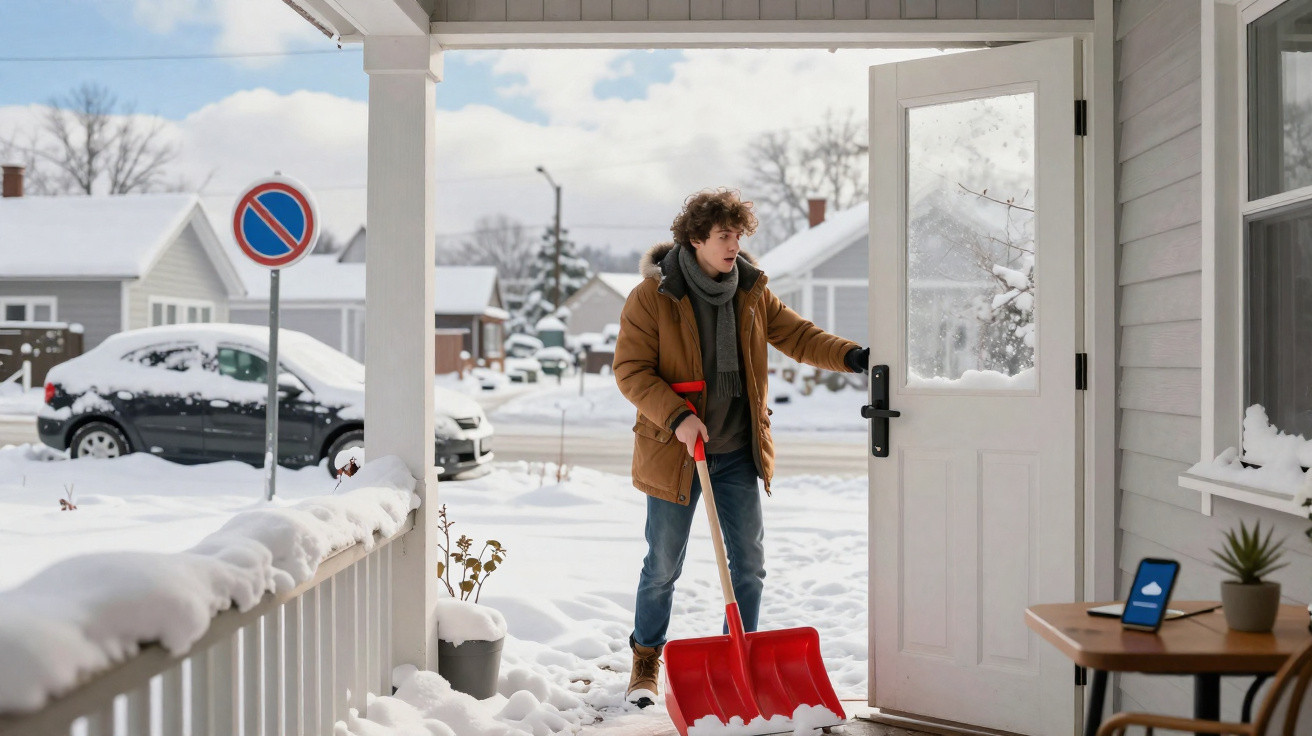
What if, this time, we collectively chose to break the pattern? The roads would still glaze with ice and the wind would still roar across open fields, but the tailbacks would be shorter and the rescue calls fewer. Nurses and carers would have a better chance of getting to work. Gritters could keep moving. The family already in a ditch might see orange lights sooner.
On nights like this, the most radical thing a driver can do is nothing at all: not turn the key, not join the convoy, not add another “just this once” vehicle to a story that nearly always ends the same way.
The snow will arrive whether we cooperate or not. The only question is whether we truly need to meet it halfway.
| Key point | Detail | Value for the reader |
|---|---|---|
| Rethink what “essential” means | Measure every long-distance journey against worst-case outcomes such as 12-hour tailbacks | Offers a simple mental test to avoid high-risk, low-reward travel |
| See the chain reaction | A single “selfish” trip can block emergency services and leave hundreds of other drivers trapped | Makes the unseen consequences of individual choices uncomfortably obvious |
| Prepare properly-or don’t go | If you can’t avoid travel, pack for a possible stranding and share your route with someone | Lowers risk and stress if conditions deteriorate without warning |
FAQ:
- Should I ever drive long distances in a red or amber snow warning?Only for genuinely life-critical reasons: urgent medical needs, essential care work, or if instructed by authorities. Social plans, shopping, and routine office work almost never qualify as worth the risk.
- What counts as “selfish” travel in heavy snow?Trips that could be postponed or moved online, but are pushed ahead anyway out of pride, convenience, or fear of disappointing others. If your journey adds to gridlock, it quietly gambles with strangers’ safety.
- Isn’t it fine if I’m a confident driver in snow?Skill helps, but it doesn’t cancel out black ice, other people’s mistakes, or jackknifed HGVs. The biggest dangers in heavy snow often come from conditions and vehicles you can’t control.
- What should I pack if I absolutely must travel?Warm blankets or sleeping bags, water, high-energy snacks, a torch, phone chargers, essential medication, and proper winter clothing. Also a fully charged phone and low expectations about arrival times.
- How can I push back when others pressure me to travel?Blame the forecast, not your courage. Point to official warnings, share live traffic images, and offer alternatives like video calls or rescheduling. A firm “I’m not risking other people’s lives for this” is a line that’s hard to argue with.

Comments
No comments yet. Be the first to comment!
Leave a Comment