
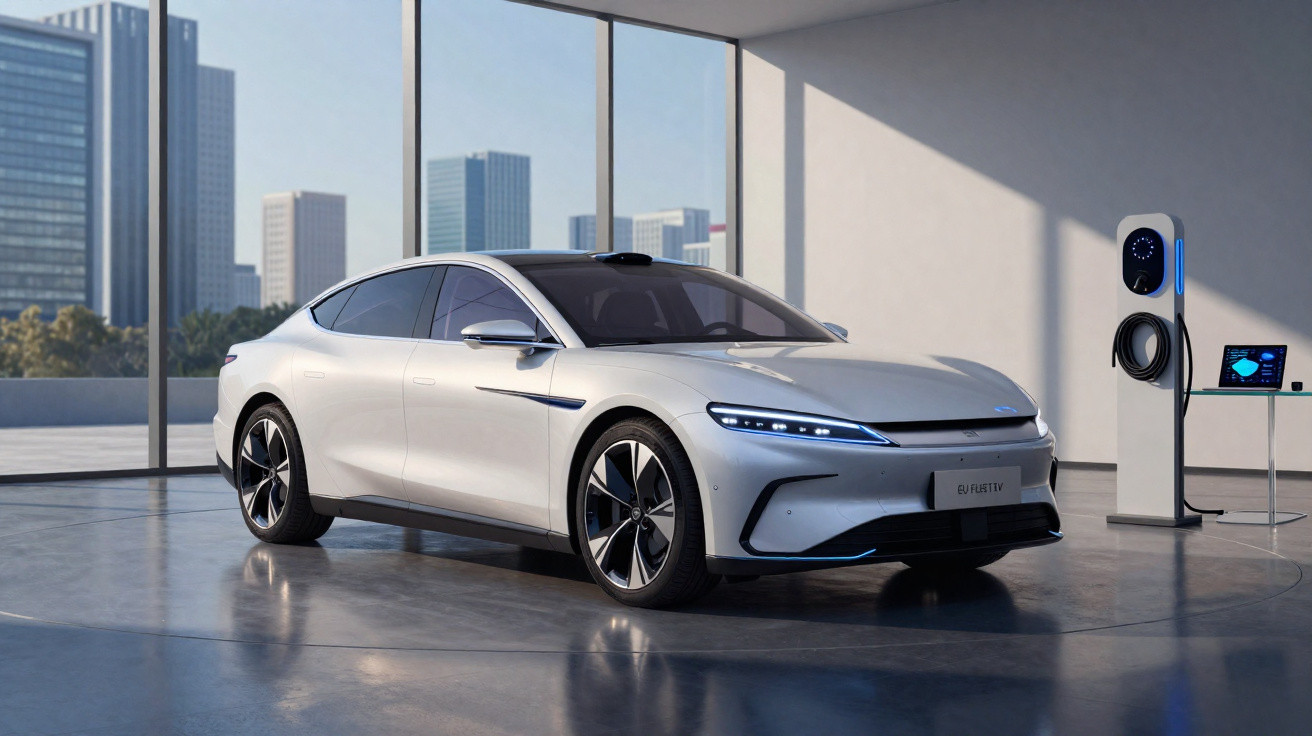
Yesterday’s new automotive package put forward by the European Commission (EC) is not aimed solely at manufacturers or emissions targets: large companies will now also face obligations for their fleets.
From 2030 onwards, large companies will be required to ensure that a minimum percentage of their vehicles - including light commercial vehicles - are zero- or low-emission. That percentage will vary depending on the Member State and how mature the local electric vehicle market is.
In addition, the proposal states that, from the same date, Member States must stop granting financial incentives for the purchase, rental, hire purchase or operation of corporate vehicles that are not low- or zero-emission and manufactured in the EU.
What is at stake?
The European Commission is positioning businesses as a lever to speed up electrification: after all, 60% of all car sales in the European Union are to companies. For light commercial vehicles, that share rises to 90%.
The Commission also argues that company vehicles are used more intensively than private ones and reach the used-car market sooner. This should increase the supply of electric and low-emission cars at affordable prices for private consumers, while also cutting overall transport emissions.
In practical terms, by requiring large companies to adopt clean vehicles - with small and medium-sized enterprises, for the time being, left out - the EU expects to strengthen and accelerate the shift towards electric mobility among private motorists.
If the regulation is approved, Member States will have to report to the European Commission the total number of corporate vehicles registered by large companies, breaking down the percentage of zero- or low-emission vehicles. These figures must be provided separately for passenger cars and light commercial vehicles.
What counts as a large company?
Under Directive 2013/34/EU, a company is classed as large if, in its latest accounts, it exceeds at least two of the following three thresholds: a balance sheet total above €20 million; net turnover above €40 million; and an average number of employees of 250 people or more over the period.
“By focusing on large companies, the proposal leverages their purchasing power, giving manufacturers greater certainty about demand for zero- or low-emission vehicles,” the Commission explained.
The detailed proposal will be presented to the European Parliament and the European Council over the next year, meaning adjustments and changes to the European Commission’s proposals may still be made.

Comments
No comments yet. Be the first to comment!
Leave a Comment