
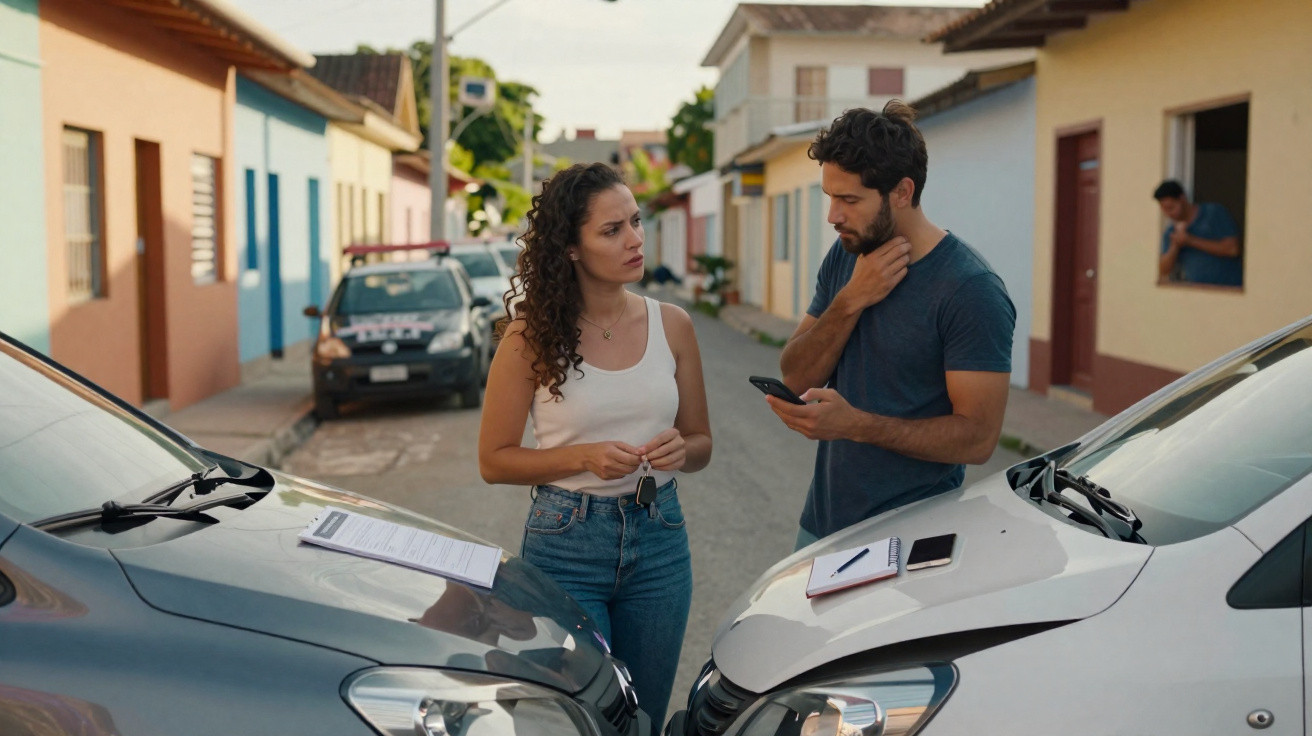
Barely a metre of clearance sat on either side, wheelie bins jutting out like onlookers. A car was stationary at the far end of the lane, its driver staring ahead with an unreadable expression, hands nowhere near the steering wheel. One inhale. Another. A gentle touch - softer than clipping a supermarket trolley. The tension drained from everyone’s shoulders.
Both drivers climbed out. There were no dents, no scratches, not even a faint rub on the bumper. “We’re fine, aren’t we?” she said - apologising regardless. The other motorist nodded, gave his neck a quick rub, then reached for his phone. Later that evening, an email landed in her inbox: he was alleging whiplash. No damage at all. Maximum theatrics. That near-silent tap had suddenly become an insurance headache.
When “no damage” suddenly means “neck injury”
On paper, it almost reads like a joke: a bump you can barely see, a road scarcely wide enough for a bicycle, and a driver who appears fine - only to report a serious injury from the comfort of their sofa. In real life, it’s exactly the sort of incident that has people lying awake at 2 a.m., replaying every second and wondering what they missed. The car looks untouched. Your nerves don’t.
These low-speed, “no mark” shunts have become motoring’s awkward grey area. They sit somewhere between genuine delayed pain and a calculated attempt at a payout. Insurers deal with them week in, week out. Drivers swap tales in WhatsApp groups and over the kettle at work. One hesitant reverse, and you’re searching “whiplash claim small impact no damage” at midnight - feeling both responsible and wary. That emotional cocktail is draining.
In the UK alone, insurers have flagged tens of thousands of soft-tissue injury claims arising from impacts under 10 mph. The kind of nudge that barely makes your coffee tremble. A woman in Manchester described being hit at walking pace at a junction; the driver offered to settle privately for a cracked number plate. A month later, he found out she’d lodged a whiplash claim worth more than his car.
Stories like that spread quickly. They make decent people bristle the moment someone says, “My neck’s a bit sore actually.” And yes - real injuries do happen. Bodies tense, muscles react, and symptoms can show up later. Still, the question hangs in the air: is it genuine pain, delayed pain… or an extremely costly embellishment?
Insurers have to walk a tightrope. Refuse too readily and they’re accused of dismissing real trauma. Pay too easily and costs balloon, pushing premiums higher for everyone. Solicitors sit comfortably in the middle with no-win-no-fee offers and well-practised terms like “soft tissue” and “long-term impact”. For an ordinary driver who’s merely brushed a bumper on a narrow street, it can feel like stepping into a game where everyone else already knows how it works.
What to do in those tense, confusing minutes after a tiny bump
After a low-speed knock, embarrassment usually hits first. People often start saying sorry before they’ve even checked the cars. Try turning that instinct on its head. Your immediate job isn’t to grovel - it’s to capture what’s true. Get your phone out. Keep your voice steady. Look around. Photograph both vehicles, the road layout, the angle of contact, and any skid marks - or the clear absence of them. Record the “no damage” while it’s still indisputable.
Then pay attention to the people involved. Not with suspicion - just with presence. Ask politely whether anyone is injured and listen to what they say. Notice whether they move normally: bending, twisting, lifting a bag. This isn’t about playing detective; it’s about preserving the reality of the moment before nerves, time, or outside advice starts rewriting it. Those tiny observations can matter later.
A simple habit can spare you a lot of grief: within an hour of getting home, write down what happened. A quick note on your phone - time, place, speed, what each of you said, and how the other driver appeared. Let’s be honest: hardly anyone does this routinely. But on the occasions you do, it’s invaluable. Combine it with your photos and, if it’s safe, a short video walking around both cars to show there’s no visible damage.
If the other driver mentions discomfort, recommend they seek medical advice and tell them you’ll notify your insurer. Stay courteous and don’t get dragged into a kerbside debate about “how serious” it is. Arguments at the scene almost never help. Keep it simple: what occurred, what you observed, and what you’ll do next. You can deal with the emotions later - once your hands have stopped shaking and your mind has moved out of survival mode.
“The smallest collisions can trigger the biggest stories. Documentation is how you keep your version grounded in reality, not memory.”
To feel a bit more in control after a low-speed bump, many road safety specialists suggest a straightforward mental checklist:
- Photos first: every angle, both cars, the street and surroundings.
- Names and details: drivers, passengers and any witnesses.
- Short notes: speeds, vehicle positions, lighting and weather.
- Neutral words: describe what happened; don’t argue or accuse.
- Fast contact: report it to your insurer while it’s still clear in your head.
Living with the doubt between real pain and clever claims
Beneath the headlines and the horror stories is a quieter truth: most motorists don’t want to harm anyone. They just want to get home without a huge bill or a letter from a solicitor. Yet a small reverse in a tight lane can make you doubt your own recollection. Was it heavier than you believed? Did you overlook something? Can someone really be injured by a gentle tap that left no mark?
The emotional gap here is stark. On one side are genuine whiplash sufferers who, days later, can barely turn their head - even when the impact looked trivial. On the other are inflated or entirely fabricated claims that leave ordinary people tense and suspicious behind the wheel. We’ve all had that moment where a simple mistake suddenly feels like a legal trap.
What sits between the two is messy nuance. Whiplash is real, yet it’s also difficult to see. Modern cars are sturdier, with bumpers engineered to rebound from light knocks. Human bodies aren’t built the same way. A vehicle can appear unscathed while a neck quietly objects. That mismatch between what we can see and what someone says they feel is where mistrust takes root. Drivers begin second-guessing every wince, every hand rubbing a neck, every “I think I’ll get this checked out.”
So the real task isn’t becoming an armchair barrister - it’s building a calm, almost boring process: document, report, and step back. Let professionals weigh the speeds, forces and medical notes. Your role is to hold on to what you experienced: the narrow lane, the slow reverse, the silent contact, the unmarked bumper - and the person who walked away, only to return later with a version on paper that didn’t quite match what you saw.
These incidents travel quickly through friends and workplaces not because people love drama, but because they touch a deeper fear: that even doing everything “right” might not protect you. That you can be careful, moving at a crawl, and still end up paying for years because someone else controls the narrative. So people exchange tips, share dashcam clips, discuss legal cover, and quietly change how they handle tight streets.
Perhaps that’s the uncomfortable lesson from that cramped, quiet lane. We’re not only navigating traffic now - we’re navigating stories, incentives and fragile trust between strangers who share the same road for thirty seconds. Next time you reverse into a space that barely fits your car, you may feel the thought at the back of your neck: it’s not just the impact that matters, it’s what someone might turn it into later.
| Key point | Detail | Why it matters to you |
|---|---|---|
| Document even minor knocks | Photos, quick notes, contextual details | Strong evidence if an unexpected claim appears |
| Observe reactions at the time | Posture, movement, what’s said after the impact | Helps judge whether a later account matches what actually happened |
| Keep calm and hand it over | Inform your insurer, avoid disputes at the scene | Less stress and fewer chances of a legal misstep |
FAQ:
- Can whiplash really happen with no visible car damage? Yes. Modern bumpers can soak up low-speed impacts without leaving marks, while neck muscles and ligaments are more vulnerable and can still be affected.
- What should I say at the scene if someone claims neck pain? Keep your composure, show concern, encourage medical advice, exchange details and say you’ll report it to your insurer. Don’t argue about whether they’re “really” injured.
- Will my insurance go up if there’s a whiplash claim against me? Potentially. Even after minor incidents, a personal injury claim can affect your renewal premium, particularly if your insurer pays out.
- Do I need a dashcam for low-speed bumps? It’s not required, but it can help. Footage showing speed, distance and immediate reactions can support your account if a later claim doesn’t match the scene.
- Can I refuse to give my details if there’s no damage? No. If a collision has occurred and someone may be injured, you’re legally required in many countries to exchange details and remain if asked.



Comments
No comments yet. Be the first to comment!
Leave a Comment