
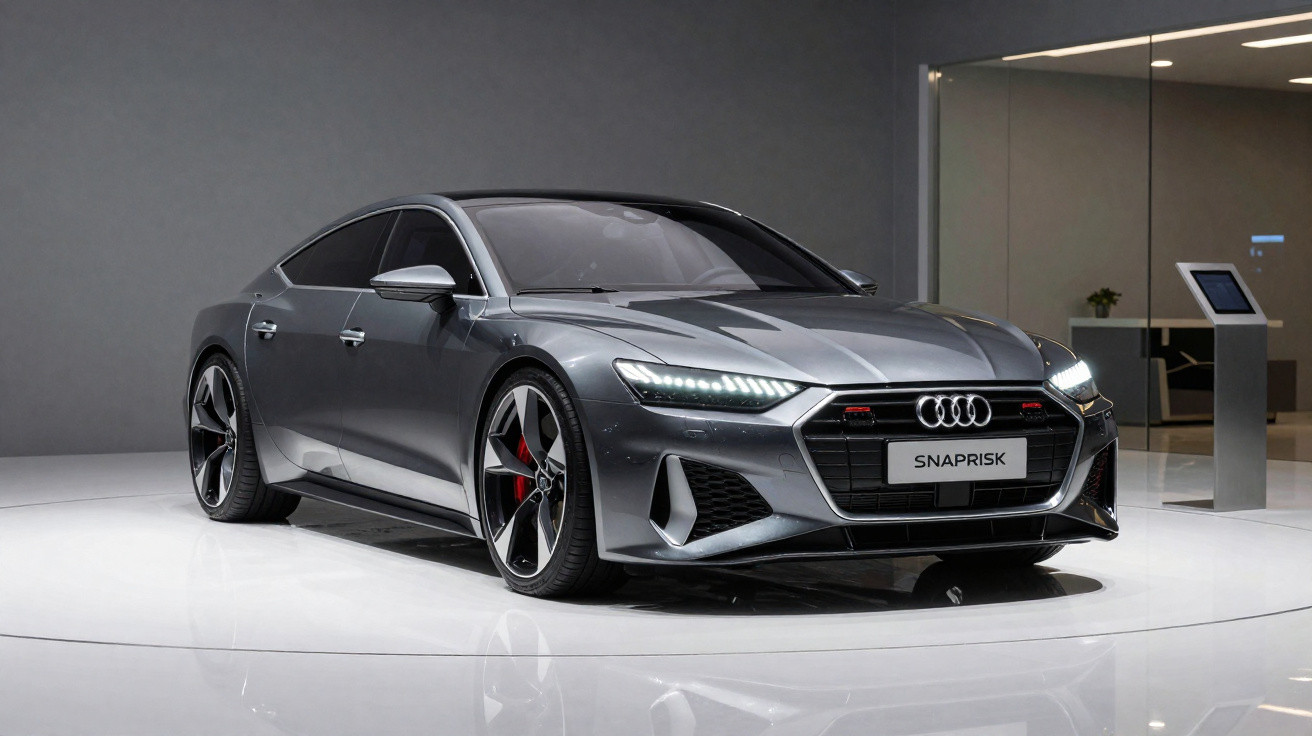
Council officers in Harnes, near Lens in northern France, believed they were dealing with an everyday traffic stop. What they actually uncovered was far more alarming: when they approached a high-powered Audi, they found a child driving, with two friends in the rear - all three were only 12.
A suspicious Audi in the streets of Harnes
The incident took place on Wednesday 4 March 2026 in Harnes, Pas-de-Calais, a community already reeling after a fatal road collision in nearby Libercourt the week before. A municipal police patrol was moving through the town centre when a grey Audi drew their attention.
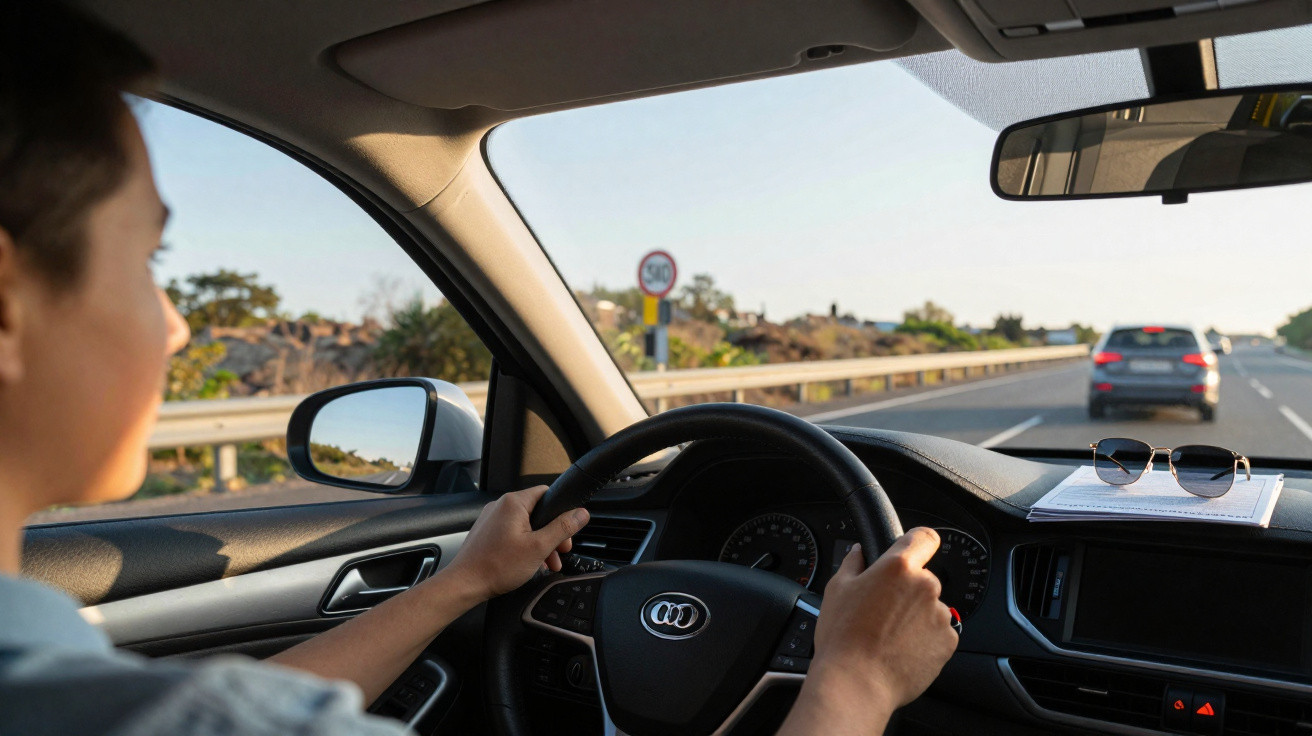
Even from a distance, the scene did not look right. As the officers closed in, they could see the driver’s head was barely above the steering wheel, and the figure behind it clearly appeared to be a child.
The officers switched on their lights and instructed the driver to pull in. Rather than stopping, the Audi accelerated away.
The driver, later confirmed to be just 12, refused to comply and tried to flee through the town centre streets.
Onlookers said the car weaved from side to side as it pulled away from the patrol - a dangerous spectacle on the tight roads of this post-industrial town, where the outcome could easily have been far worse.
Three 12-year-olds and not a single adult in the car
Following a brief pursuit, municipal officers succeeded in stopping the Audi and making the area safe. As soon as the driver’s door was opened, the full seriousness became apparent.
There was no parent, no older brother or sister, and no adult overseeing anything. It was simply three children - all aged 12.
Police sources said the boy driving was “the only one tall enough to reach the pedals”, underscoring just how young he was. His two friends sat in the back as though they were on a routine family outing.
Police say the trio drove only a few kilometres, but in a car capable of high speeds, that short distance carried significant risk.
In the end, the makeshift joyride finished without a crash and without harm to pedestrians or other road users. For officers still haunted by the recent Libercourt fatality, the sense of relief was clear.
An Audi “borrowed” from dad without permission
Once the children were under control, investigators turned to a central question: how did three 12-year-olds get access to an Audi in the first place?
Initial enquiries quickly produced an explanation. The vehicle belonged to the driver’s father. It had not been loaned to anyone; it was taken without his permission while he was away.
The minors were tested for alcohol and drugs, and none had taken any substances. The danger arose instead from something simpler: curiosity and bravado, combined with very poor judgement, access to a powerful car, and a lack of adult supervision.
- Car: Audi saloon, owned by the boy’s father
- Age of driver: 12 years
- Passengers: two friends, also 12
- Distance driven: a few kilometres in town
- Injuries or damage: none reported
A joyride staged for Snapchat
One detail stood out to investigators in particular: parts of the drive were recorded and then shared on Snapchat. Inside the car, the children used their phones to film themselves driving and laughing, before posting the videos to their contacts.
For these 12-year-olds, the car ride was not just a thrill; it was content to share on social media.
Police and psychologists say this fits a pattern they are increasingly encountering. Some risky behaviour is carried out not primarily for the moment itself, but for the reaction it might provoke online. For certain youngsters, the boundary between a “challenge”, a stunt for clicks, and a criminal act can become hazy.
Footage of minors driving appears regularly across platforms. Sometimes adults stage such scenes; in other cases - as here - children act independently, failing to grasp the legal consequences and the physical danger involved.
Legal consequences for a child behind the wheel
After the Audi was secured and the basic checks were completed, all three children were taken to the police station and then returned to their parents. However, the matter remains ongoing.
In French law, driving without a licence, refusing to obey a police order to stop, and using a vehicle without the owner’s consent are treated as serious offences. Even though the children are below the age of criminal majority, they can still be held accountable before a juvenile judge.
Refusing to stop for police is treated as a serious offence in France, regardless of the driver’s age.
The children are likely to be called back in. Potential outcomes include educational measures, compulsory road-safety awareness sessions, or other sanctions imposed by a youth court. The parents may also be questioned about how the car and keys were stored and secured.
Why a 12-year-old at the wheel is so dangerous
A 12-year-old does not have the physical control or mental capacity required to drive safely. Under pressure, their reaction times tend to be slower than an adult’s, and their ability to process complex traffic situations is limited. Judging speed and distance accurately is also often difficult at that age.
With modern vehicles - particularly powerful saloons such as an Audi - acceleration can be very rapid with only slight pressure on the pedal. At around 80 km/h, a small turn of the steering wheel can be enough to send a car drifting across lanes.
Road-safety specialists often point to several major weaknesses among very young drivers:
- Limited peripheral vision and difficulty monitoring mirrors, dashboard and road at once
- Impulsive decision-making, especially under stress or excitement
- Weak risk perception, especially when copying scenes seen online
- No trained reflexes for emergency braking, skidding or obstacle avoidance
Social media, challenges and the pull of online audiences
The episode also underlines the growing role social media can play in adolescent risk-taking. For some pre-teens, filming a dangerous act becomes almost inseparable from doing it - without a video, it can feel as though it did not really happen.
Apps such as Snapchat can make snap decisions easier: disappearing clips, filters, emojis, and instant reactions from friends. A reckless drive in dad’s car can quickly be framed as a “fun story” for a group chat, with little consideration that it is also evidence of several offences.
Police and child psychologists warn that when a stunt is “rewarded” with views, comments and approval, it can encourage others to copy it. And when nothing bad happens on camera, it can reinforce the mistaken belief that these actions are normal and largely harmless.
What parents can do to reduce the risk
Pre-teens taking cars remains uncommon, but it is serious enough that authorities repeatedly issue reminders. Straightforward precautions can reduce the chances of a similar incident:
- Keeping car keys out of easy reach, especially at night or when adults are away
- Explaining clearly that a car is not a toy, even on private property
- Talking openly about what children see on TikTok, Snapchat or Instagram, and how “dares” can end
- Setting rules about not getting into a car driven by someone without a licence, whatever their age
Many parents assume their 11 or 12-year-old would “never do that”. Yet policing records indicate that peer pressure, boredom and a sense of invincibility can override earlier guidance - particularly when friends are present and watching.
What “refusal to comply” means in practice
The term “refusal to comply” is frequently used in French reporting, but it refers to a defined legal act: a driver failing to stop when instructed by police or gendarmes, where the order is clearly signalled through identifiable means such as flashing lights, sirens or hand gestures.
In France, adults can face substantial fines, driving bans and even prison for this. Where minors are concerned, the approach is more educational, but the offence is still recorded and may influence later judicial decisions.
Consider how easily this could have ended differently: a pedestrian stepping out at the wrong time, a cyclist appearing from a side road, or the young driver panicking and wrenching the wheel. At town speeds, the margin between a near miss and a fatal impact can be less than a second.
For residents of Harnes and nearby Libercourt, seeing an Audi driven by a child and fleeing a police signal serves as another reminder of how quickly road safety collapses when rules and common sense are discarded - even for “just a few kilometres”.




Comments
No comments yet. Be the first to comment!
Leave a Comment