
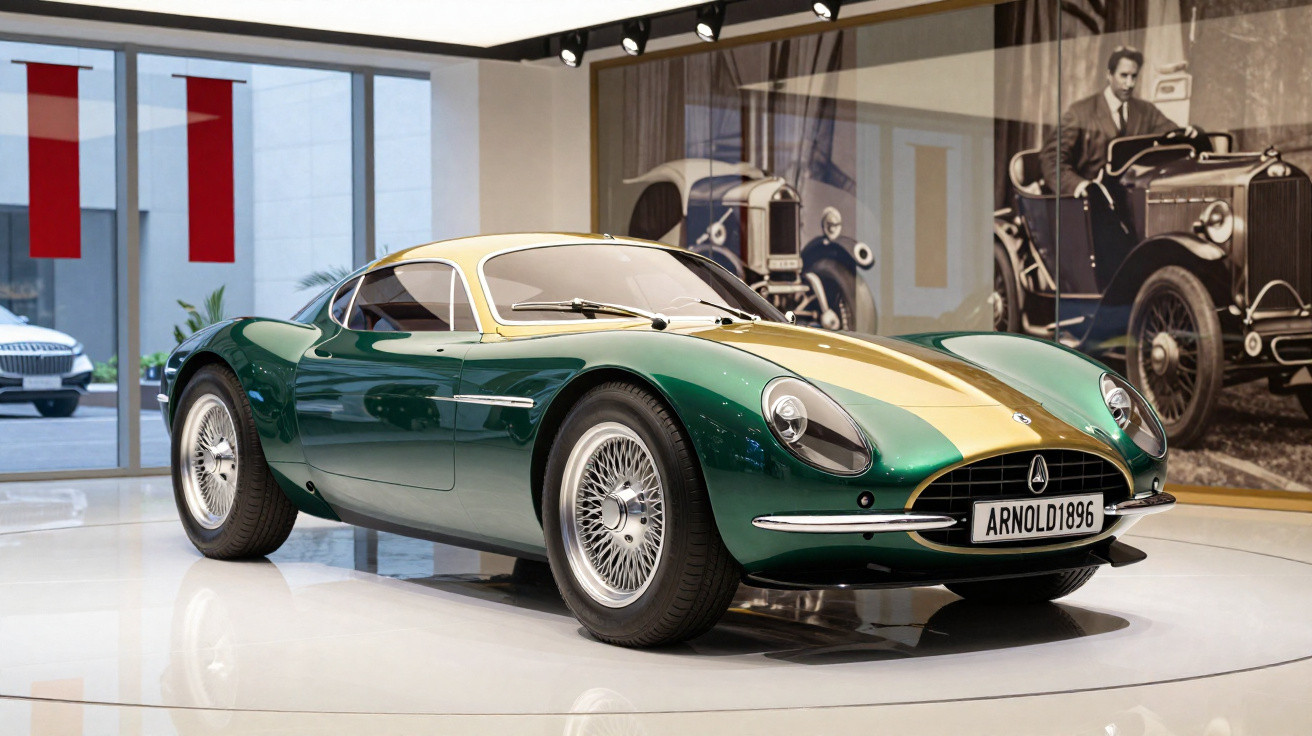
Even though speed limits feel like a modern certainty - and breaking them today can mean a fine or even a driving ban - the early days of motoring were, surprisingly, not so different.
Speed limits at the dawn of the motor car
When talking about the “dawn of the motor car”, it really does mean the dawn: still in the 19th century, in 1896, barely a decade after the first “horseless carriage” appeared.
Cars on the road were rare. Even so, London already imposed speed limits on motor vehicles. The rules were not only extraordinarily strict - just two miles per hour (3.2 km/h) - but also required a man to walk in front of the vehicle, waving a red flag to clear the way. Practical? Hardly.
Walter Arnold and the first speeding fine
Walter Arnold - who, among other ventures, secured a licence to build Benz motor cars and set up the Arnold Motor Carriage - would enter history as the first driver to be fined for speeding. His car, known as the Arnold Benz, was based on a Benz 1 1/2 hp Velo.
His offence was twofold: there was no red-flag man ahead of the car, and Arnold was travelling at a speed four times the legal limit - a “staggering” eight miles per hour (12.8 km/h). A madman! He was stopped and issued with a summons by a police officer travelling by… bicycle.
From the Red Flag Act to the Emancipation Run
After the incident at Paddock Green in Kent, Arnold was convicted and ordered to pay one shilling, plus administrative costs. Fate being what it is, the speed limit would soon rise to 14 mph (22.5 km/h), and the red-flag requirement would be removed from the law.
To mark that change, a London-to-Brighton motoring run was organised, later becoming known as the Emancipation Run, and Walter Arnold took part. The event still takes place today and is open to vehicles built up to the year 1905.
Arnold Benz on display at Concours of Elegance
The car for which Walter Arnold was fined will be shown at this year’s (Editor’s note: 2017, the original year of publication) Concours of Elegance, held at Hampton Court Palace in September.
Providing a striking contrast to the Arnold Benz, the display will also include the Jaguar XJR-9 that won Le Mans in 1988, along with a McLaren F1 GTR in Harrods livery - although not the same example as the one that will be exhibited.

Comments
No comments yet. Be the first to comment!
Leave a Comment