
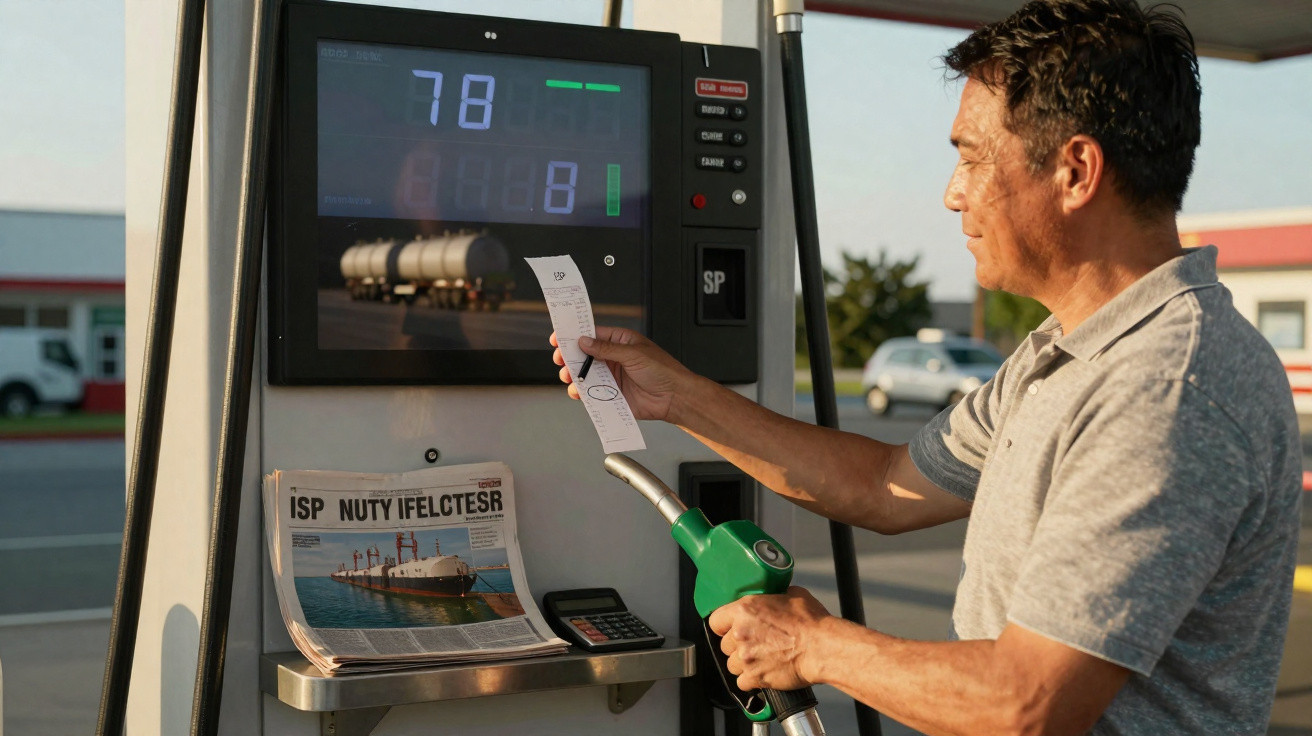
The conflict in Iran, followed by the closure of the Strait of Hormuz - a route that handles roughly 20% of global crude oil trade - has been one of the main reasons why fuel prices have seen sharp increases.
Fuel prices jump as the Iran conflict disrupts the Strait of Hormuz
Monday, 9 March, began with a rise of 17.2 cents per litre in the price of standard diesel, and 6.9 cents per litre for standard petrol. As of yesterday, the average price of these fuels stood at 1.834 €/l and 1.779 €/l, respectively (source: DGEG).
If there are further increases, the Government has already indicated that the discounts applied to the Tax on Petroleum Products and Energy (ISP) may be strengthened.
That assurance was given by the Minister of Finance, Joaquim Miranda Sarmento, who said in Brussels that the compensation mechanism via the ISP could be extended - and even increased - should the energy crisis worsen.
How the ISP compensation mechanism works (reference date: 6 March)
Discounts may stack with further rises
According to the minister, the mechanism operates cumulatively against the reference price recorded on 6 March. In other words, if fuel prices rise again, the gap between the current price and the level recorded on that date may translate into additional ISP discounts, on top of those already in place.
As he explained, “if next week diesel rises again, that difference again gives the right to a cumulative ISP discount, plus the VAT effect”.
In practical terms, the system is designed to soften the impact of increases on the final price paid by consumers, by adjusting the level of tax whenever fuels register fresh rises.
In parallel, Sarmento also acknowledged that, if the price of petrol increases by more than 10 cents in the coming weeks, the same mechanism will be applied, with the discount calculated over the full amount of the increase.
What is the current discount?
After industry forecasts pointed to record increases in fuel prices, this week began with an extraordinary discount applied only to standard diesel - since it was the only fuel to rise by more than 10 cents - of 3.55 cents per litre.
This “tax discount” on the ISP is added to the relief that has remained in place since 2022, introduced to reduce the impact of higher fuel prices following Russia’s invasion of Ukraine. Since then, it had been gradually withdrawn, also in line with European Union requirements.
On the European Commission’s stance regarding this new discount, the minister said the Government had already “informed the Commission” and he expects there will be no “objection” to this extraordinary, temporary measure.
“I believe all the other countries will also end up taking some measures if this conflict drags on for longer,” Sarmento concluded. In a statement, the European Commission spokesperson for the economy, Balazs Ujvari, said Brussels will “closely monitor the impact of the ISP discount.”




Comments
No comments yet. Be the first to comment!
Leave a Comment