
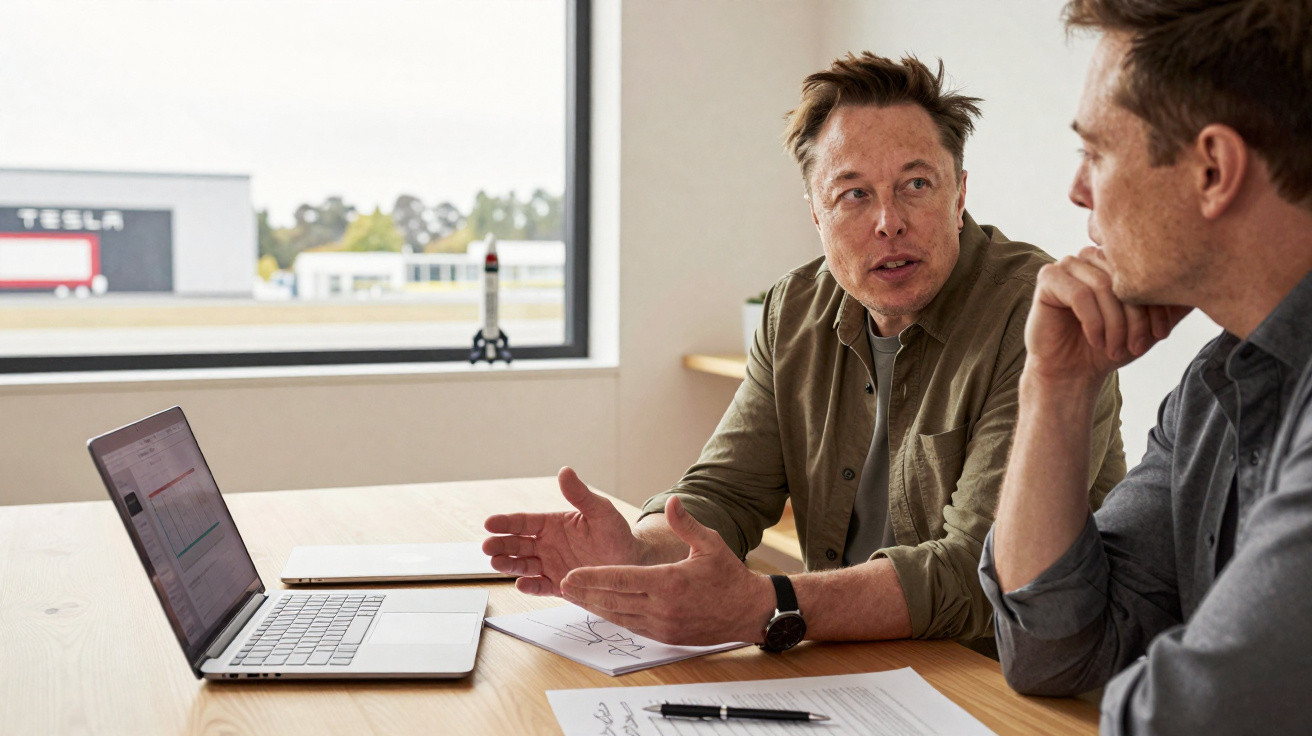
Tesla boss Elon Musk has explained what he genuinely pays attention to.
CVs packed with big-name roles, glowing references and flawless pitches can easily dazzle HR teams. Elon Musk, who leads Tesla, SpaceX and X, admitted in a podcast that he has personally been misled more than once by impressive CVs - and that he now hires in a very different way.
Why CVs no longer impress Musk
Speaking with tech entrepreneurs, Musk described a common assumption he used to make: if someone has worked at a brand such as Google or Apple, they must automatically be a top performer. He now sees that mindset as a trap.
The well-known entrepreneur believes CVs are overrated - for him, what matters is the real conversation, not the perfect document.
In his view, a CV can look outstanding: carefully structured, filled with prestigious stops and great-sounding job titles. But he now treats that as only marginally useful. If, after about 20 minutes of talking, there is no convincing momentum, he takes it as a clear warning sign - regardless of how impressive the paperwork appears.
Many recruiters will recognise the pattern: candidates who are exceptionally polished speakers can put on a show in meetings, yet fall short in day-to-day delivery. At the same time, quiet or nervous people can struggle with interview formats even though they would excel in the role. This is exactly where Musk’s advice comes in.
The key criterion: conversation beats paper
Musk advises employers to weight the face-to-face exchange far more heavily than any application pack. He puts it bluntly: if the conversation does not hold up, even the most impressive career history counts for little.
For him, an open and candid discussion reveals signals no document can capture:
- How does the person think when they have to respond on the spot?
- How do they handle follow-up questions, criticism or uncertainty?
- Can they explain complex ideas simply?
- Do they come across as sincere or rehearsed?
Notably, Musk says he is not primarily looking for quick wit or a performance. What matters more is whether what the person says is consistent, whether there is real substance behind it, and whether they can openly acknowledge their own mistakes.
What Musk really looks for in candidates
The tech billionaire describes a kind of checklist he uses to assess applicants. Technical knowledge can be developed, he suggests - but certain character traits are far harder to build. These are the qualities he prioritises:
The entrepreneur looks for people who are talented, motivated, reliable and, at their core, kind-hearted. The team can add technical depth later.
Four qualities that are decisive for Musk
| Quality | What Musk considers important about it |
|---|---|
| Trustworthiness | Keeping promises, no games, no political manoeuvring inside the company. |
| Talent | Demonstrable strength in an area, measurable outcomes, not just theory. |
| Motivation | Self-drive and willingness to push through difficult phases. |
| Kind-heartedness | Respectful behaviour, no destructive egos, a positive baseline attitude. |
Musk explicitly underlines kind-heartedness, saying it is something he personally underestimated for a long time. In fast-growing companies, destructive personalities can drag entire teams down even if they are technically strong. His lesson: it can be wiser to hire someone slightly less experienced if they are emotionally steady and dependable.
Efficiency as a personal benchmark
In typical Musk fashion, he frames his stance in practical terms. He likes people who deliver results. Those who work efficiently earn his respect; those who drag tasks out or create blockages fail his test. It may sound tough, but it fits his reputation as a no-compromise decision-maker.
For candidates, that means relying on buzzwords and empty phrases is unlikely to work. Showing concrete outcomes - and being able to explain how you achieved them - is far closer to what Musk wants to hear.
What recruiters can learn from Musk’s approach
Musk is not a conventional HR professional, but his observations hit a nerve that many people in recruitment recognise from experience. A few practical takeaways are clear:
- References are not a guarantee: the name of a previous employer says little about how someone will perform in a new environment.
- Take the quality of the conversation seriously: if there is no real connection after half an hour, it should not be brushed aside.
- Assess soft skills intentionally: how does someone handle conflict? How do they talk about former colleagues and managers?
- Check team fit proactively: talent without loyalty or respect can do more harm than good over time.
One practical method is to ask about specific situations: where the candidate solved a problem, moderated a conflict or processed a setback. The way those stories are told often reveals far more than a glossy presentation of one’s “strengths”.
How candidates can align with Musk’s logic
For applicants, it is worth shifting focus. A perfectly designed PDF on its own is not enough. Anyone who wants to match Musk’s criteria could approach it like this:
- Prepare concrete examples: projects where you achieved measurable results - with numbers, timeframes and obstacles.
- Speak honestly about mistakes: don’t smooth everything over; show what you learned.
- State your motivation clearly: why this role and why this company? Generic lines stand out.
- Name your values: where do you draw boundaries personally, and what does trust mean in your day-to-day work?
If you stay authentic in the conversation rather than playing a part, you align much more closely with Musk’s expectations. His message comes through: he wants people he can rely on when it matters - not perfect show performers.
How radical is this approach, really?
Even if Musk expresses it provocatively, his central point is close to modern recruitment trends. Many organisations are questioning rigid filters such as grade averages, employer prestige or perfectly linear CVs. In their place, practical skills, willingness to learn and team behaviour are moving to the forefront.
At the same time, Musk’s profile helps make this debate more visible. When one of the world’s best-known entrepreneurs openly says he is not impressed by CVs, traditional HR routines come under greater pressure. Particularly in sectors facing skills shortages, companies that pay closer attention to the quality of conversations and to personality may gain an advantage over time.
One risk remains: Musk’s strong focus on efficiency can make it easy to overlook quieter talent - for example, introverted specialists who do excellent work without being loud about it. Anyone applying his thinking to their own hiring should deliberately broaden their lens: conversation over paper, yes - but with space for different personality types.



Comments
No comments yet. Be the first to comment!
Leave a Comment