
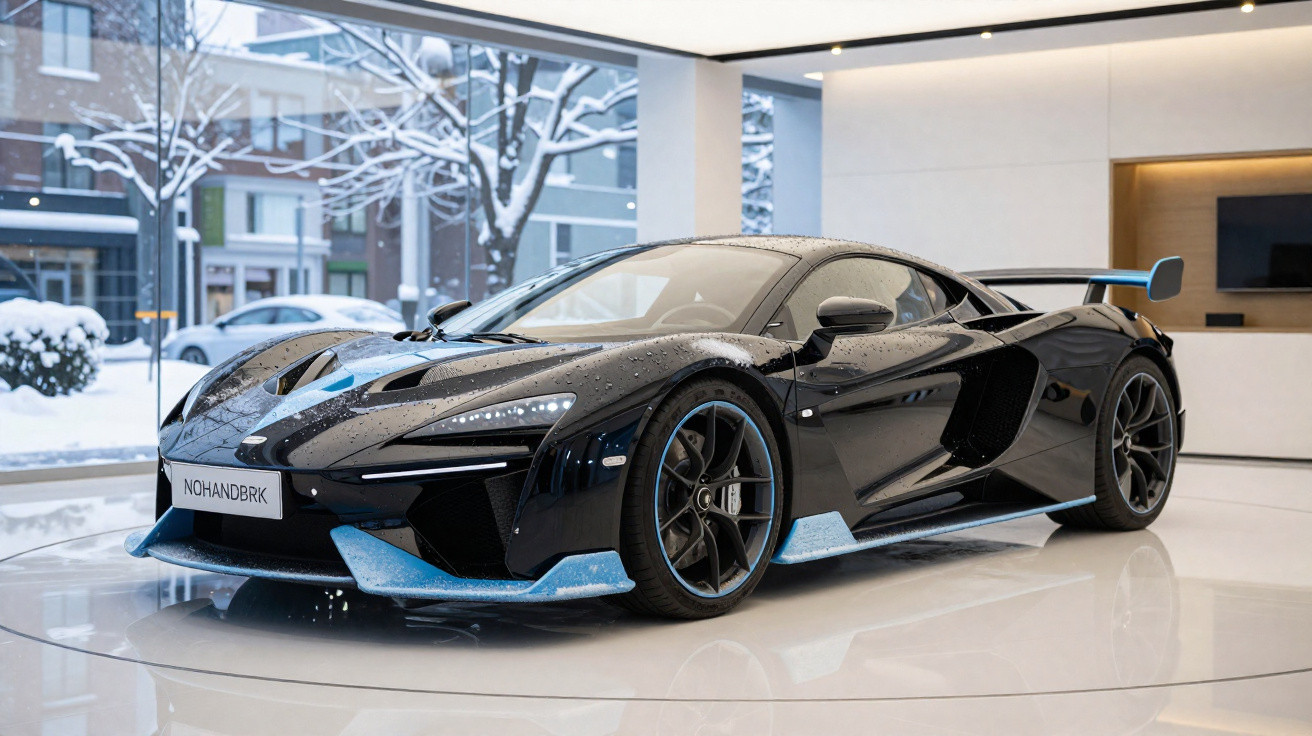
Your car is sitting there, locked in place beneath a pale crust of frost that almost makes it look calm. You approach with a coffee in one hand and your keys in the other, focused only on getting to work on time. You fire up the engine, clear the windscreen, and wait for the heater to start doing its job. Usual stuff. Familiar. Seemingly harmless.
Then you select a gear and press the accelerator.
Nothing.
The car doesn’t budge.
A quiet flicker of panic hits your chest. You tug a little harder, glance at the wheels, mutter a few choice words about the weather. What you can’t see is the small mechanical mess unfolding inside the frozen brake system. That’s where the real problem begins.
When the brake becomes a trap in the cold
Most motorists treat the parking brake as a basic safety reflex, much like fastening a seatbelt. You stop, you pull the lever or tap the button, and you stop thinking about it. In milder conditions, that habit is fine. During a proper cold snap, though, it can turn on you without warning.
Moisture works its way into cables, pivots and brake components. The temperature drops. Water turns to ice, and ice behaves like adhesive. The brake you set “to be safe” can end up holding the car fast long after you need to drive away.
Last winter, on a quiet side street in Minneapolis, a neighbour tried to move his saloon after it had sat parked for four days at -15°C. He’d applied the parking brake out of routine. When it was time to leave, the rear wheels simply would not roll. He gave it more throttle. The engine revved, the front end jolted, and the rear stayed pinned in place.
In the end, he rang for a recovery truck. Later, the mechanic pointed out what had happened: brakes that had overheated, cables that had stretched, and rear pads that had literally snapped loose. The cost? A few hundred dollars, all from parking “properly” in the wrong conditions.
The underlying cause is straightforward physics, helped along by a bit of wear and neglect. Parking brake systems use cables or electronic actuators to clamp pads or shoes against metal surfaces. If there’s moisture in the system and temperatures fall well below freezing, tiny clearances can fill with ice crystals.
Apply the brake when it’s cold and damp, and the pad can press onto a drum or disc and freeze together-like two bits of metal left to stick in a freezer. When you try to pull away, the brake doesn’t really “release”; it resists. And when it’s metal versus frozen friction, it’s usually your wallet that loses.
How to park safely without freezing your brakes
If you want to reduce the risk of a frozen parking brake during a long, hard freeze, the simplest approach is to depend more on the transmission and wheel position. With an automatic, select “P” and, if you’re parked on even a gentle slope, turn the front wheels slightly towards the kerb. With a manual, leave it in first gear (or reverse if you’re facing downhill) and again set the wheel angle.
If forecasts suggest temperatures will stay below 0°C for days and the car will be left standing, keep the parking brake off unless you’re on a steep hill. In icy cities, plenty of mechanics will tell you the same thing quietly: in multi-day deep freezes, the handbrake can be more trouble than it’s worth.
On flat ground, that’s usually enough. If you’re parked on a mild incline and you want extra reassurance, add a simple back-up: a wheel chock-anything from a proper chock to a solid rubber wedge-placed firmly behind a tyre. It’s old-fashioned, but it works.
On steep streets or underground ramps, pay attention to any designated winter-parking areas. Some car parks even display notices recommending you don’t use the parking brake in severe cold. It sounds odd until you’ve seen a row of drivers stranded because their rear wheels are locked solid.
Drivers can feel uneasy about skipping the parking brake, especially if they were taught it should be used every single time. So let’s be honest for a moment: most people don’t faithfully pull the handbrake on level ground anyway. In a serious freeze, that’s not just laziness-it can be sensible.
“Winter doesn’t just test your car,” explains a veteran tow-truck driver from Montreal. “It tests all the bad habits you forgot you had - and all the good habits that no longer work.”
- During multi-day freezing spells, avoid the parking brake unless the slope is genuinely steep.
- Make Park or first gear your main safeguard, rather than the handbrake.
- Angle the front wheels towards the kerb to create a natural stop.
- Keep the braking system maintained so moisture and corrosion don’t build up.
- If the brake feels stuck, don’t force it-warm it, wait, or get professional help.
What to do when winter and routine collide
Once you’ve watched a car held to the road by its own brakes, it sticks with you. The picture is nearly always identical: tyres spinning, a faint smell of something overheating, and a driver fuming while trying to work out what they did wrong. That’s the strange part of winter motoring-it can punish habits that normally protect you.
We’ve all had that moment where you pull a familiar lever without a second thought, only to realise later that this time the rules were different. The weather changed them when you weren’t looking.
So you adjust. When the forecast is calling for several days of deep freeze, you change how you park, not just how you drive. You start thinking about moisture and duration: were the brakes wet when you stopped? Will the car sit for 48 or 72 hours? Are the cable housings already ageing and gritty?
After a while you notice the pattern. The vehicles that struggle in the cold aren’t always the oldest. They’re the ones whose owners treated a week at -10°C as if it were just a mild autumn drizzle. Winter tends to reward small doses of anticipation-minor, almost invisible tweaks to routine.
None of this is complicated. It’s simply not the way most of us learned it in driving school. Those lessons were given in bright classrooms, not on a dark street at 7 a.m., fingers numb, already running late. And the reality is, no one is going to come out and rewrite your local driver’s handbook just because the climate swings harder now.
Instead, the know-how spreads quietly: from mechanics who’ve dealt with too many seized components, from recovery drivers who’ve dragged too many cars away from icy kerbs, and from neighbours who offer a quick warning at the postbox. It’s modern winter folklore for cars-the kind that saves money, time, and that sinking feeling when the car refuses to move and the thermometer won’t shift.
| Key point | Detail | Why it matters to you |
|---|---|---|
| The parking brake can freeze | Moisture in cables, pads or drums solidifies in sub-zero temperatures | Helps you see why the car may stay stuck after days in the cold |
| Use the transmission instead | Rely on Park or first gear plus wheel angle on level ground or gentle slopes | Lowers the risk of frozen brakes without sacrificing safety |
| Adapt habits in deep freeze | Avoid applying the brake for multi-day parking; use chocks if needed | Builds an easy winter routine that can prevent expensive repairs |
FAQ
- Can I ever use the parking brake in winter? Yes. For short stops or in mild cold it’s usually fine. The risk increases when temperatures remain well below freezing and the car sits for many hours or days-particularly if the brakes were wet when you parked.
- What if my parking brake is already frozen? Start by gently warming the car: let it idle, use the heater, and-only if it will move at all-try lightly rocking it back and forth. If the wheels stay locked or you notice a burning smell, stop and contact a professional rather than forcing it.
- Do electronic parking brakes freeze too? Yes, they can. Even if the control is electronic, the mechanism and pads are still physical parts exposed to moisture and cold. The same principle applies: avoid using them for multi-day parking in severe freezing conditions.
- Is leaving the car in gear safe enough? On flat ground or a slight incline, generally yes-especially if you also turn the wheels towards the kerb. On steep hills, combine careful positioning, wheel angle, and, if possible, physical chocks.
- Should I get my brakes checked before winter? It’s a sensible idea. A quick inspection can reveal rusty cables, sticky linkages or worn pads that are more likely to seize once snow and ice arrive. That small check is often cheaper than a single recovery call-out after a cold snap.

Comments
No comments yet. Be the first to comment!
Leave a Comment