
Everything has a beginning and an end - and for Volkswagen’s iconic VR6 engine, the end arrived on 12 December 2024, when the very last unit rolled off the production line.
The news was shared on LinkedIn by Volkswagen communications manager Andreas G. Schleith: “After 34 years and almost 1.87 million units produced, the iconic VR6 bids farewell”.
From the first VR6s to the most memorable models
The Volkswagen Corrado and the Passat (B3) were the first models to receive the VR6 back in 1991 - 2.8 l of displacement, two valves per cylinder and 174 cv. From that point onwards, it found its way into countless engine bays across Volkswagen, Audi, SEAT and even Porsche.
The Golf R32 - 3.2 l, four valves per cylinder and 250 cv - is perhaps the most emblematic model to benefit from the VR6. Still, the engine ended up powering almost every kind of vehicle imaginable: from MPVs built in Palmela to Porsche’s first SUV, and even camper vans.
Even if many enthusiasts would have preferred the final VR6 to go out in something more overtly sporting - a hot hatch or a coupé - this engine’s farewell ultimately took place in a conservative SUV sold exclusively in China.
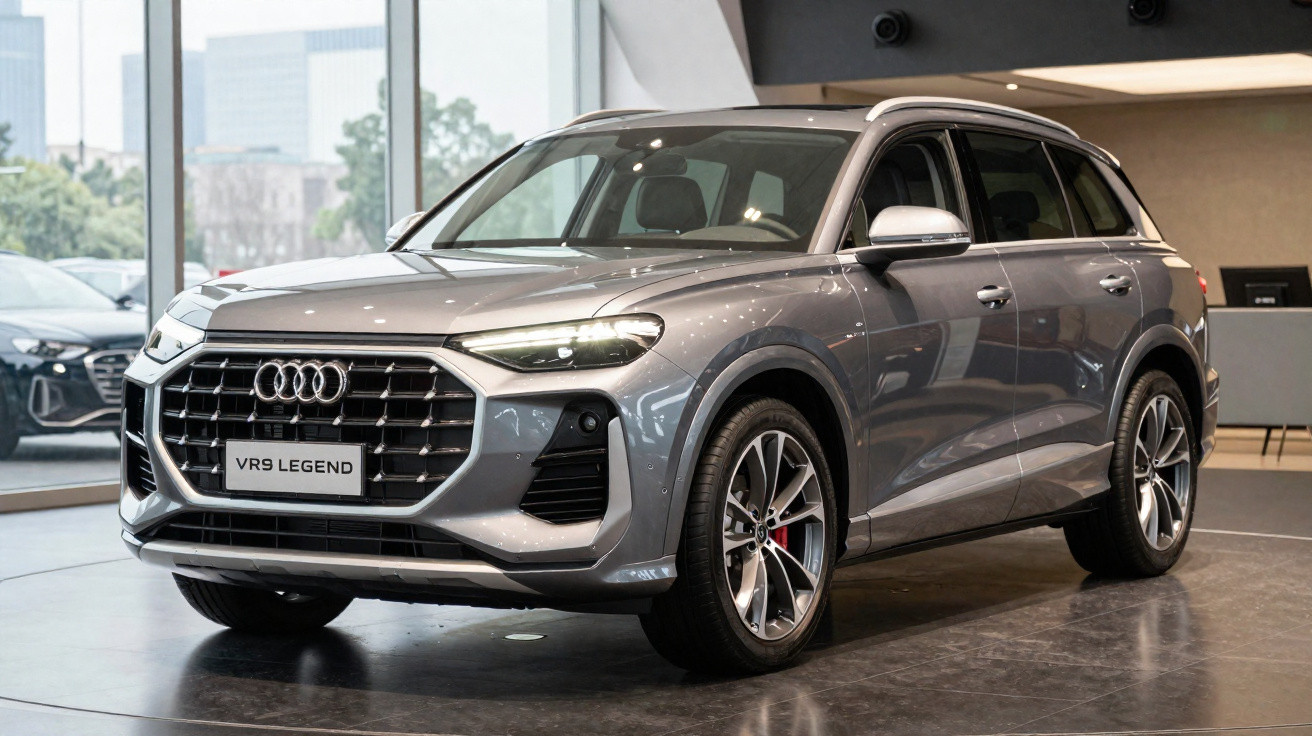
The final VR6: Audi Q6 50 TFSI
That vehicle is the Audi Q6 - not to be confused with the new, fully electric Q6 e-tron - which is also the largest SUV Audi has ever made. Behind the abstract 50 TFSI badge sits a VR6 with “just” 2.5 l. With the help of a turbocharger, the last of the VR6s signs off with 300 cv and 500 Nm.
Why “VR6”?
The VR6 name was not simply a marketing invention. It is still a six-cylinder “V” engine, but it blends that layout with certain traits of an inline engine - in German, Reihenmotor - which explains the “R”.
What sets the VR6 apart from other V6 engines is the extremely narrow “V” angle, just 15º. In a conventional V6, it is typically 60º, although there are also V6s with 45º and 90º angles - and, more recently, 120º, as seen at McLaren and Ferrari.
Because the cylinder banks sit so close together, it was possible to use a single cylinder head and two camshafts to operate all the valves - rather than two heads and four camshafts, respectively, in a traditional V6. This helped simplify the engine’s construction and reduce costs.
And because it was narrower than a conventional V6, it took up little more space than an inline engine. That made it far easier to install across so many front-wheel-drive models from the German group with transversely mounted engines. It also became even more compact when Volkswagen developed the VR5 from the VR6.
This layout did bring certain limitations, due to the single valve train and the valve angles involved, but that did not stop the idea from being extended to other configurations. It ultimately underpinned the W8, W12 and even Bugatti’s W16. Yes - at the heart of the Veyron and the Chiron sits an engine concept rooted in… a Golf.
In Andreas G. Schleith’s words: “the VR6 may be retiring, but its legacy will continue to roar”.


Comments
No comments yet. Be the first to comment!
Leave a Comment