
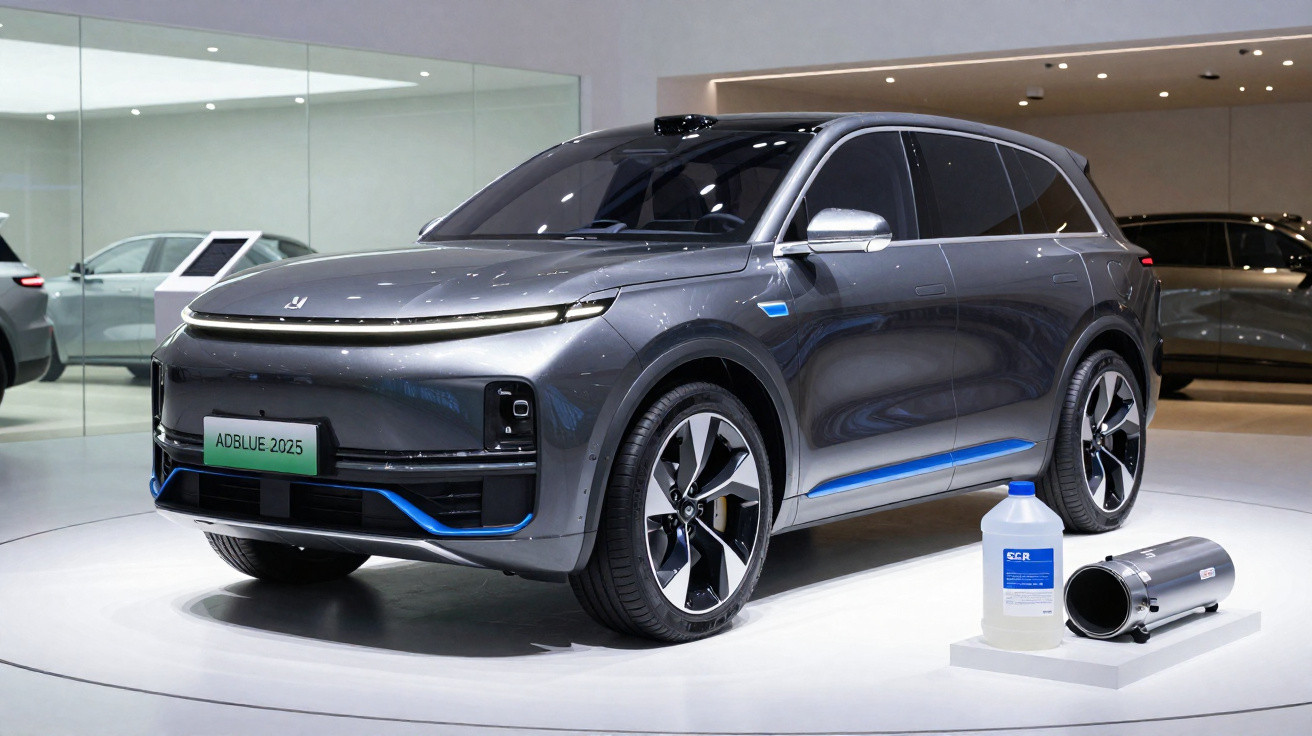
Diesel motorists across Europe are dealing with a new reality: higher day-to-day running costs and the growing chance of a painful new penalty. What used to be a behind-the-scenes technical feature - the AdBlue system - is now central to environmental regulation and, increasingly, to household motoring budgets.
What is AdBlue and why regulators care so much
AdBlue is a urea-based liquid used in newer diesel cars and vans equipped with SCR (selective catalytic reduction). The SCR set-up sprays AdBlue into the exhaust stream, where it reacts with nitrogen oxides (NOx) - widely regarded as some of the most damaging pollutants produced by road traffic.
If everything is working as intended, the NOx is converted into harmless nitrogen and water vapour. This chemistry is a key reason many diesel vehicles can meet the strict Euro 6 standards that apply to new cars sold across the European Union and the UK.
AdBlue has become as central to modern diesel engines as fuel itself: no fluid, no clean exhaust, and increasingly, no legal right to drive.
From January 2025, the rules tighten further in several EU countries. Regulators are moving away from treating AdBlue as a mere “good practice” for diesel engines. For many vehicles, keeping the system in regular use becomes a firm legal requirement, supported by tough sanctions aimed at anyone who tries to get around it.
How the new obligation works
The new approach is designed to tackle a quiet but growing issue from the last decade: some drivers - or workshops - have been disabling AdBlue systems to save money or dodge repairs. Once the system is taken out of action, emissions can jump dramatically, even though the vehicle may look and drive perfectly normally.
To curb this, authorities are introducing a minimum AdBlue consumption requirement. One figure often referenced is at least 15 litres for every 10,000 kilometres travelled. In regulatory terms, that level of use suggests an SCR system that is genuinely operating, rather than a “ghost” installation that remains physically present but is being secretly bypassed.
- Targeted vehicles: modern diesel cars and vans with SCR technology
- Core rule: minimum AdBlue use over a set mileage (e.g. 15 L / 10,000 km)
- Enforcement: technical inspections and on-board diagnostics
- Risk: fines that can climb to €7,500 for proven tampering
Inspection centres are also upgrading their tools to identify interference, including altered software, unplugged sensors, or emulator devices designed to trick the vehicle’s computer into believing the system is still functioning.
Drivers who remove or deactivate their AdBlue system now face penalties of up to €7,500, a figure that suddenly makes a few tanks of fluid look very cheap.
Useful but not trouble‑free
In principle, the AdBlue story is straightforward: cleaner diesel exhaust at a modest additional cost. In day-to-day ownership, however, many motorists describe a set of recurring problems that help explain the current pushback.
The technical issues drivers complain about
AdBlue can crystallise within the exhaust or injection components, particularly in cold weather or when the car is mainly used for short journeys. As deposits build, injectors can become blocked and sensors can fail. When that happens, the engine management system typically triggers warnings and fault messages - and on many models it can even stop the engine from being started until repairs are completed.
Costs can escalate quickly. Swapping injectors, level sensors, or an entire AdBlue tank can readily run into four figures. For vehicles that are out of warranty, owners frequently report estimates above €1,500. For an older family car, that sort of bill can feel punishing.
| AdBlue-related issue | Typical consequence | Potential cost |
|---|---|---|
| Crystallised AdBlue in lines | Fault codes, warning lights | Cleaning or part replacement |
| Failed injector or pump | Reduced power, no-start condition | Several hundred euros |
| Defective AdBlue tank or sensors | System shutdown, inspection failure | Up to €1,500 or more |
These bills go a long way towards explaining why some owners - annoyed and short of money - have opted for illegal bypass solutions. From 2025, that “quick fix” becomes considerably more dangerous than it used to be.
The financial hit for everyday drivers
AdBlue itself is relatively inexpensive. Across many European countries, it commonly costs between €0.70 and €1 per litre when bought in bulk at service stations. A typical motorist driving 20,000 kilometres per year might get through roughly 30 litres, which comes to about €30 a year.
By itself, that sum is not likely to blow a household budget. The difficulty is that it lands alongside a wider set of new or rising motoring costs expected in 2025 - including higher motorway tolls, stricter low-emission zones, pricier insurance, and increased list prices for new vehicles.
For many diesel owners, the frustration does not come from AdBlue’s price per litre, but from the feeling of yet another obligation landing on a stretched budget.
In places where wages are flat and inflation continues to bite, the choice can sound stark: pay for the fluid, pay for possible repairs, or face a penalty that could erase months of income. For many, it feels less like environmental policymaking and more like financial pressure.
How to limit the cost without breaking the rules
Motorists who want to remain compliant while keeping spending in check still have a few practical steps available:
- Buy AdBlue from supermarkets or fuel stations rather than dealerships, where the price is often higher.
- Refill before the tank gets very low, helping reduce the chance of air entering the system and harming components.
- Stick to SCR-related servicing schedules, particularly for work vehicles that cover high mileage.
- Try to avoid leaving the car unused for long periods during very cold weather, which can worsen crystallisation.
These measures do not remove the new legal requirement, but they can lower the odds of a costly failure that leads to both repair bills and an inspection refusal.
Why governments are betting on tougher enforcement
Regulators treat NOx pollution as a public health concern, not a niche motoring issue. Elevated NOx levels contribute to respiratory illness, smog, and premature deaths, especially in densely populated towns and cities. After the diesel emissions scandals of the past decade, authorities are under pressure to demonstrate that they are taking real-world roadside pollution seriously.
Severe penalties for tampering are intended to send an unambiguous signal to both drivers and workshops that might be tempted by shortcuts. Officials are betting that a handful of high-profile cases will discourage the sale of illegal bypass devices and steer garages back towards legitimate repairs.
The new fine level does not just punish individual cheaters; it aims to kill off a small but persistent industry built around disabling pollution controls.
For vehicle manufacturers, the tougher stance also brings increased scrutiny of their own systems. If AdBlue hardware proves too fragile in everyday conditions, it risks testing public patience and strengthening resistance to future environmental rules.
What this means if you own a diesel car today
For anyone deciding what to do next, the situation is more complex than a single headline about a €7,500 fine. The calculation now has multiple layers, including running costs, what the car might be worth later, and whether city centres remain accessible as emissions rules become stricter year after year.
Owners of older diesels without SCR are already under pressure from low-emission zones, facing bans or significant daily charges. Newer diesels that rely on AdBlue are still permitted in many areas for the moment - but that access comes with the conditions set out above: compulsory fluid use, the likelihood of repair bills, and far tougher punishments for any attempt to defeat the system.
Some drivers - particularly those doing high motorway mileage - still see a modern diesel as a sensible choice. Fuel consumption remains efficient, and AdBlue usage tends to be stable and predictable. Others, whose driving is mainly short urban journeys, may increasingly consider petrol, hybrid, or fully electric models for their next car, simply to avoid this additional layer of mechanical risk and legal complexity.
The row over AdBlue reflects a broader change in transport policy. Rather than relying solely on bans or fuel taxation, governments are now focusing on the finer details of how engines clean their exhaust. For motorists, that means the era of emissions equipment quietly working out of sight has passed. From 2025, letting that “invisible” system fail can hurt almost as much as driving without insurance.






Comments
No comments yet. Be the first to comment!
Leave a Comment